I myself have plenty of reasons not to leave Telegram, and I’ve explained in detail whether it’s worth switching from Telegram to MAX. But when I asked the same question to my friends, the answers turned out to be more interesting than my own. Some talk about habit and work, some about muscle memory, some about friends with iPhones, and some are ready to go even to ICQ — but only when things get really dire. I collected six honest answers about why users don’t leave Telegram despite all the problems, and I analyze each one on its merits.

I asked my friends why they don’t leave Telegram
Why Telegram Is Irreplaceable for Work and Communication
People don’t want to replace Telegram with another app because of work
The first friend basically gave the fundamental answer:
Well, I’ve already gotten used to Telegram over all these years. All my conversations are here, I have paid Premium, I work here. VKontakte, for example, is way behind in terms of convenience. Just imagine: there’s no Telegram — where do you message a client for work? On Viber or something?
The most honest argument of all. About Viber, by the way — that’s a miss: it was blocked in Russia back in 2024, along with Signal, so messaging a client there won’t work no matter how much you want to. But the point is clear: work correspondence isn’t something you migrate in one evening. Ten years of archives, contacts, files, a customized interface. Even a paid subscription with premium stickers and no ads — all of that is genuinely hard to give up. And there’s no joke here.
Work chats don't move with a snap of the fingers — they're archives accumulated over years.
But I’d clarify one thing here. Nobody is suggesting switching from Telegram to MAX entirely. You can keep both, and that’s exactly what I do — especially since half of my clients and contractors have already moved there themselves, because calls don’t work in Telegram. And at that point, the argument “where do I message a client” starts working in the opposite direction.
Why Telegram Is More Convenient Than MAX and Other Messengers
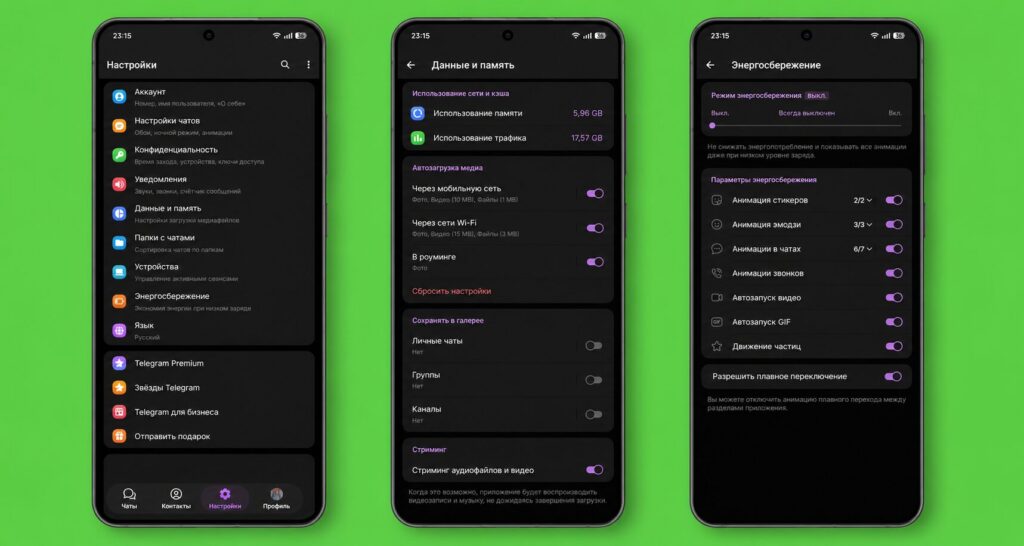
Telegram really does have a convenient and familiar interface. After all these years!
There was also this interesting take, related to habits.
Telegram has become intuitively clear over many years. Where to tap what — it’s already obvious. How to read messages without being noticed, how to edit a picture, how to buy a subscription — I can already do it with my eyes closed. Getting used to something new is hard.
This isn’t about the messenger — it’s about muscle memory. People said the same thing about Windows XP, Nokia button phones, and radio music, and then they switched anyway. By the way, MAX’s interface resembles Telegram for a reason: the same chats, folders, reactions, voice messages — all for user convenience and a smooth migration. Setting up MAX on Android takes about ten minutes, and getting used to it happens faster than you’d think. In my opinion: habit isn’t an argument, it’s just a one-or-two-month delay before switching.
iMessage as an Alternative to Telegram on iPhone
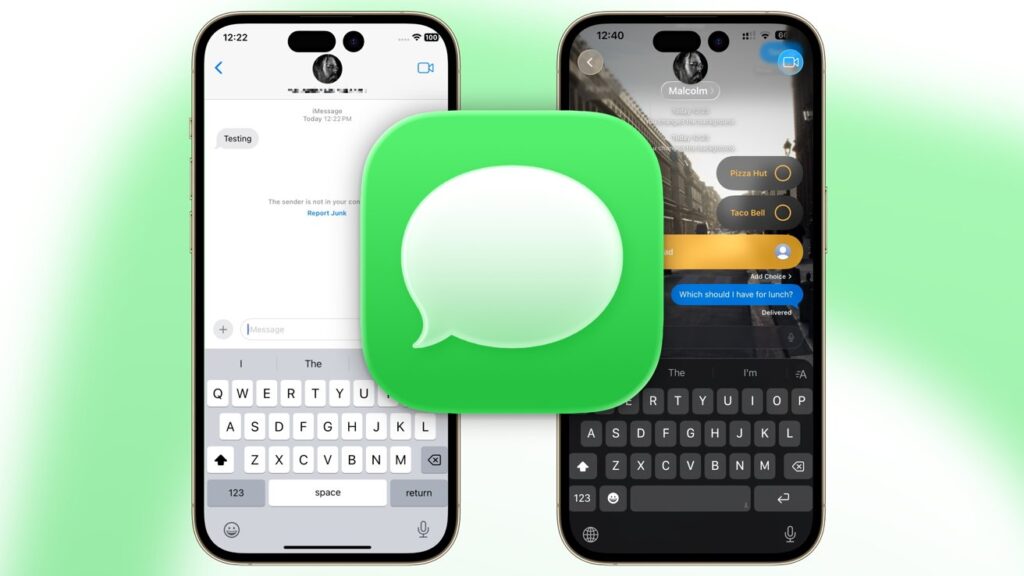
Some people keep iMessage as a backup option
For some, leaving Telegram isn’t as scary because there’s iMessage. Though with its own nuances.
My friends and I have a backup option — iMessage, everyone has Apple devices one way or another. They seem to improve it with every iOS update, but it’s still not as convenient. We use it during Telegram outages. Friends don’t want to switch anywhere, so there’s nowhere we can “meet up.”
An interesting argument: a backup messenger instead of Telegram exists, but we don’t use it. iMessage does indeed work reliably for iPhone owners and doesn’t depend on Russian regulators — it’s an Apple service that nobody has touched yet. But the problem is that it’s a closed club. One friend with Android — and the entire chat turns into regular SMS. You’d have to buy an additional message package.
The main thing in this story isn’t even iMessage instead of Telegram, but the phrase “friends don’t want to switch.” This is the core retention mechanism: each person individually is ready to leave, but all together — no. In short, as long as everyone is on Telegram, nobody will leave first. And when they do leave — they’ll all leave at once.
Why Telegram Continues to Work in Russia

Pavel Durov and his team do what they can to keep Telegram alive in Russia. The rest just gave up
Some people note the messenger’s attitude toward users. And this is incredibly important.
You talk about Telegram’s security, but I’m not 100% confident in it. But whatever. What’s more important is that Durov’s team does everything possible to keep it working one way or another, even if barely. Other messengers simply dropped off — that’s ugly, WhatsApp acted like total jerks. That says a lot.
This is the most emotional argument, and I understand it. Viber, Signal, and Discord indeed surrendered without a fight. WhatsApp is also being gradually blocked, and its extremist parent company isn’t putting up much resistance. Against this backdrop, Telegram, which continues to push through via workarounds, truly looks admirable.
But there’s a nuance here. Telegram is trying to work in Russia not out of love for its users, but because our country is a large market it doesn’t want to lose. It’s business, not heroism. But emotionally, I understand my friend.
What Will Happen If Telegram Gets Blocked in Russia