Over the weekend, I was chatting with a programmer friend — and he told me a very curious thing about the MAKS messenger. No, he didn’t bash it or praise it. He simply explained why, despite wanting to, he can’t fully switch to it from Telegram. And it’s not about habit, not about politics, and not about the buttons being the wrong color. The reason is far more serious — and it applies not just to programmers.

Why do people who are ready to switch to MAKS still choose Telegram?
What Limitations Do Bots Have in MAKS
The guy is an experienced developer, and he has a calm attitude toward MAKS. A messenger is a messenger, he says. The interface is clear, messages get delivered, calls work. In general, for regular chatting — it’s a perfectly fine app. You’d think you could just pick it up and use it. Especially since the government is actively promoting MAKS: starting in 2026, the messenger comes pre-installed on new smartphones, and integration with Gosuslugi (Government Services) makes it attractive to a mass audience.
But here’s the catch. He has nearly a hundred bots in Telegram. These aren’t just toys or fun little things for downloading music. These are working tools: server monitoring, CI/CD notifications, task trackers, report generators, file converters, reminders, automated backups, and even a bot that parses job listings with specific keywords. Over several years, he built an entire automated ecosystem around himself — and it all lives in Telegram.
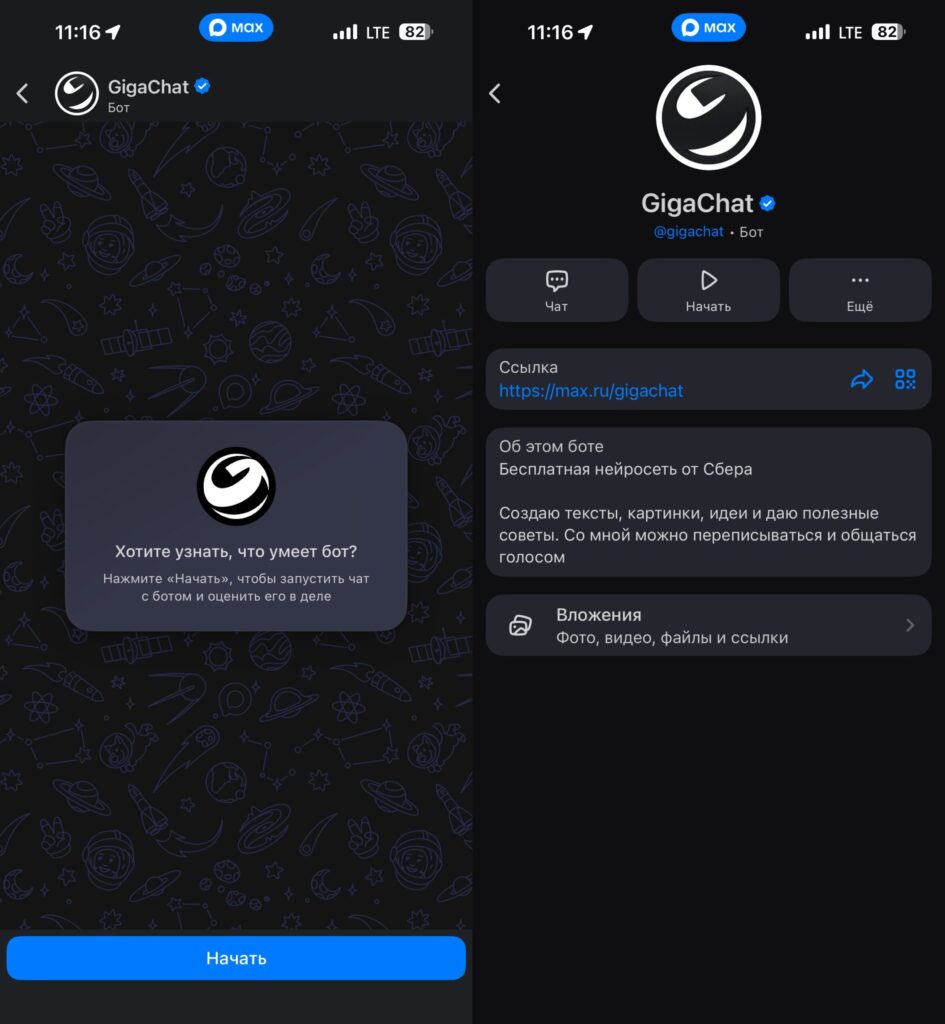
Bots in MAKS are currently only available to large companies, and ordinary users can’t access them
Now imagine that in MAKS, only legal entities and individual entrepreneurs who are residents of the Russian Federation can create bots. Self-employed individuals, private persons, and non-residents are not yet allowed to create bots. And each organization can register a maximum of five bots. For a regular user, this might not be a problem. No bots — so what, you came to the chat to talk. But for a developer, the difference is enormous. And it’s not about being picky — it’s about how the modern workflow is structured.
In Telegram, anyone can create a bot in five minutes through @BotFather. You get a token — and off you go, write your logic in Python, Node.js, or whatever you like. No legal hassles, no moderation, no verification through Gosuslugi. That’s exactly why Telegram has thousands of bots for every occasion — from spell-checking to smart home management. And there’s also a test environment for debugging and deep linking support — things that simply don’t exist in MAKS yet.
In MAKS, everything is set up differently. The platform is clearly oriented toward the business segment: a bot must pass moderation, its username is automatically generated from a template, and the bot’s profile must include organization details and support contacts. For corporate use, this might be the right approach — safer, more transparent, less fraud. But for a developer who’s used to building small tools for specific tasks, it’s a wall. You can’t just write a bot for yourself and your friends — first you need to register a legal entity.
My friend compared this to a situation where you need to get a media license to publish a blog post. The logic is technically understandable, but in practice, it kills the entire grassroots ecosystem.
What’s Missing in MAKS After Using Telegram
Bots are the main, but not the only complaint. My friend named two more things that annoy him in daily use. And both are related to chat organization.
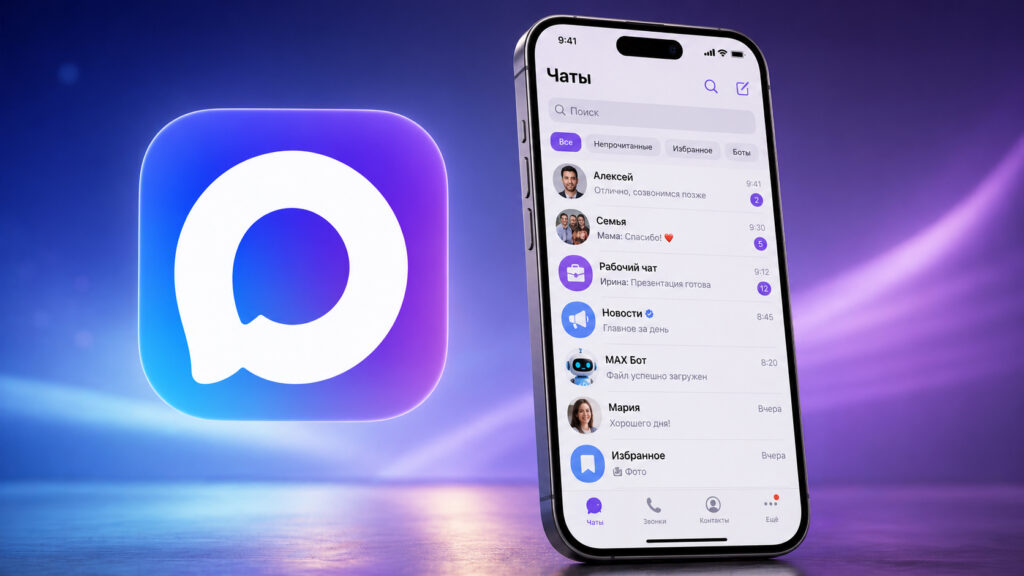
Without an archive in MAKS, it’s simply terrible
The first is the lack of a proper chat archive. In Telegram, the archive is a familiar feature. Swipe a chat to the left, and it flies into a separate folder. It’s out of sight but always within reach. You can even set it so the chat stays in the archive even when a new message comes in — very convenient for channels you read once a week. In MAKS, the main page of the app essentially serves as the archive. That’s not great. When you have dozens, sometimes hundreds of chats and channels, it starts to get mildly annoying, to say the least.
The second problem is navigation between folders on a smartphone. In Telegram, you can switch between folders with a simple left-right swipe. This gesture has become so natural that you don’t even think about it. Work, Personal, Channels, Bots — one-two, and you’re in the right section. In MAKS, folders also exist and are displayed at the top of the chat list, but you can’t quickly switch between them with a swipe — you have to tap on the tab. A small thing? When you use a messenger for several hours a day and constantly jump between contexts — not anymore.
Is It Worth Switching to MAKS
I’d put it this way: MAKS is a messenger with ambitions. Integration with Gosuslugi, Digital ID, transfers via SBP (Fast Payments System), built-in GigaChat — it all sounds impressive. For regular communication, the app works fine, and for some people it’s even more convenient than Telegram thanks to its connection to government services. Book a doctor’s appointment, verify your age, transfer money — all in one place.

Which way did you go?
But if you’re used to the Telegram ecosystem with bots and automations, you’ll have to keep both messengers for now. MAKS covers communication and government services, while Telegram covers automation and development tasks. Juggling both is inconvenient, but there’s no alternative yet.
My programmer friend summed it up concisely: the messenger is ready for users, but not ready for developers. And until MAKS introduces the ability to create bots without a legal entity and fixes the small but irritating interface issues, a significant portion of the technical audience will view it as an additional app rather than a Telegram replacement.