Telegram bots can now send small interactive apps that run directly inside a chat message. With the Bot API 10.4 update, released on November 9, developers can build HTML widgets that display inside the message itself and respond to user actions without opening a separate window. For now, the feature is limited: widgets work only in private chats with bots. Support for groups, forwarding and inline bot sending is available only on Telegram’s test server.
What you need to know
- Telegram released Bot API 10.4 on November 9, and Pavel Durov announced a new technology for interactive HTML widgets that appear inside messages.
- According to the source, such a widget weighs 4 KB in compressed form.
- Widget code runs in an isolated environment without free internet access. Updated data is delivered through the Telegram bot.
- At launch, widgets work only in private chats with bots. Groups, forwarding and inline sending are available only on Telegram’s test server.

Pavel Durov and a visualization of apps inside Telegram chats
What Telegram announced
On November 9, Telegram shipped Bot API 10.4. In a post on his channel, Pavel Durov described the new technology for interactive HTML widgets. Bot developers can now create small applications that are displayed directly inside a message.
The source offers some examples. A delivery service could send an order card instead of a plain text message. The user could check the status, tap a button and see updated information. Or a friend could share a poll whose results change inside the message, with no extra page to open.

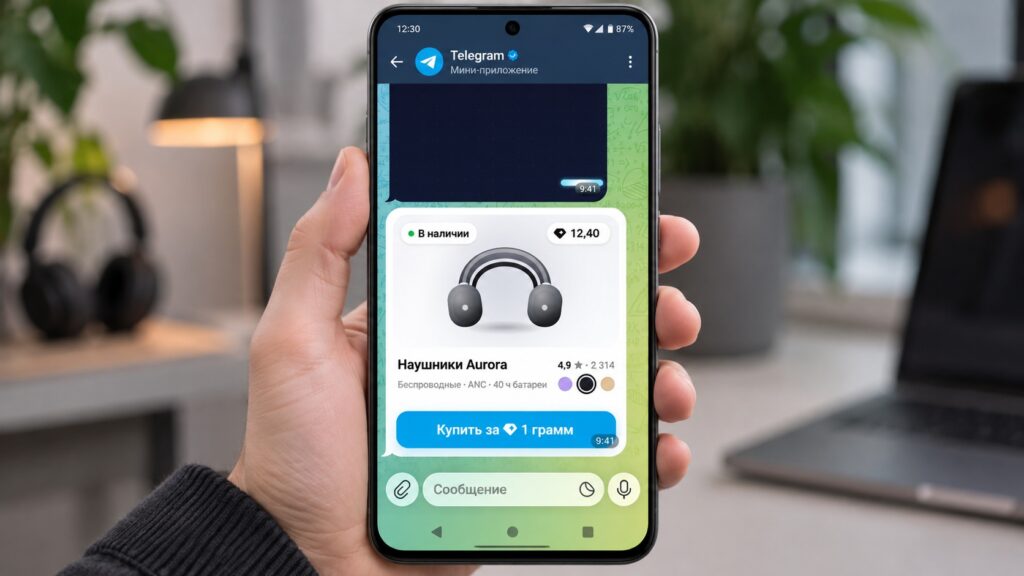
Visualization of a micro-app inside a Telegram chat
How small these apps are, and how they differ from mini-apps
According to the source, such a program weighs 4 KB in compressed form. By comparison, ordinary Android apps can take up hundreds of megabytes, and sometimes several gigabytes. The two are not comparable in capability, but the new format is enough for simple tasks.
Telegram has offered mini-apps for some time. However, those required opening a separate interface. The new widgets instead become part of the conversation itself.
A new layer of interaction in chats
The source frames the update in terms of competition with MAX, a Russian messenger that is also trying to grow into a broader platform. MAX already has bots and mini-apps, but they follow the more familiar model: the user taps a button in the chat, and a separate app window opens.

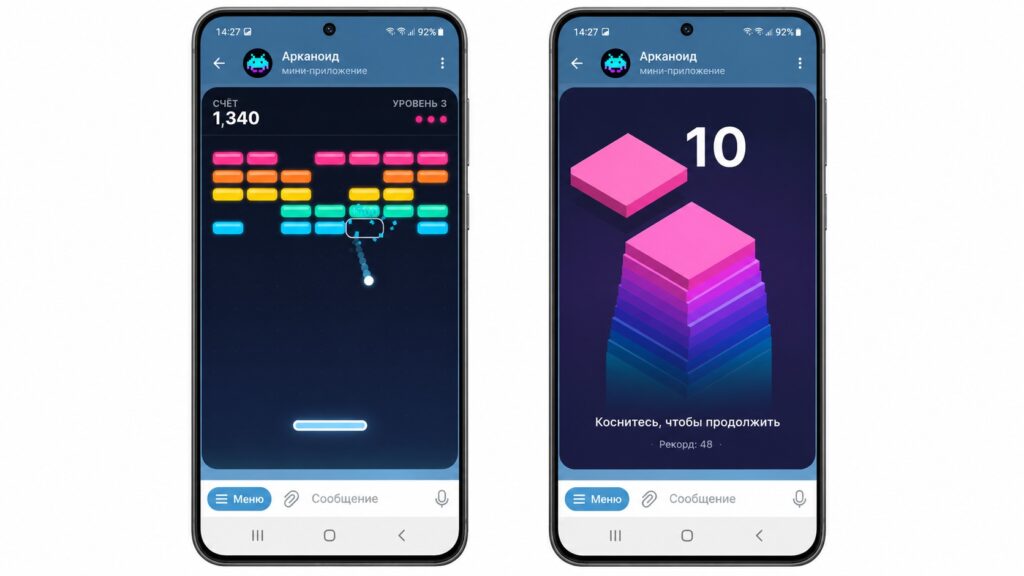
Visualization of mini-games inside Telegram chats
Telegram’s widgets add another level of interaction. The interactive element sits among the messages, looks like part of the chat and responds to user actions. Users do not have to keep switching between the conversation and a separate app.
The source also notes that MAX’s developers recently promised features Telegram adopted long ago, such as multiple pinned messages. In the source’s view, MAX is still closing old gaps while Telegram is experimenting with new formats, gradually changing what a message can be.

What the widgets can be used for
The widgets are designed for small interactive tasks. Developers can build games, polls, calculators, charts and other tools that do not need a full application. The source lists these example scenarios:
- polls with results that update inside the message;
- small games with interactive controls;
- calculators for simple computations;
- order cards with up-to-date information;
- interactive charts and dashboards.
Built-in restrictions
A widget does not get free access to the internet. Its code runs in an isolated environment, and updated data is passed through the Telegram bot. This design limits what a widget can do and keeps it from accessing arbitrary device resources.
Availability: a gradual rollout
Despite the prominent announcement, users cannot yet open Telegram and send a friend an interactive app. The technology arrived in Bot API 10.4, but it is rolling out gradually. In the first stage, widgets work only in private chats with bots, and the bot must create and send the message to the user.
Support for groups, widget forwarding and sending through inline bot search is currently available only on Telegram’s test server. The source suggests group chats could become a particularly interesting use case, such as a board game played among the messages or a shared poll with results that change in real time. These scenarios are already planned by the developers but are not yet available in the main version of Telegram.