POCO’s two new phones, the POCO X8s and the POCO C95 Pro, are aimed at very different buyers. The compact X8s is the more capable device on paper, with a better screen, faster chip and stronger cameras. The cheaper C95 Pro has a larger 6.9-inch display and the bigger battery: 7,500 mAh against the X8s’s 6,330 mAh. The author of the original article compares the two by choosing the X8s for himself and the C95 Pro for his father. He concludes that neither phone is the universal winner. The right choice depends on what the owner actually needs.
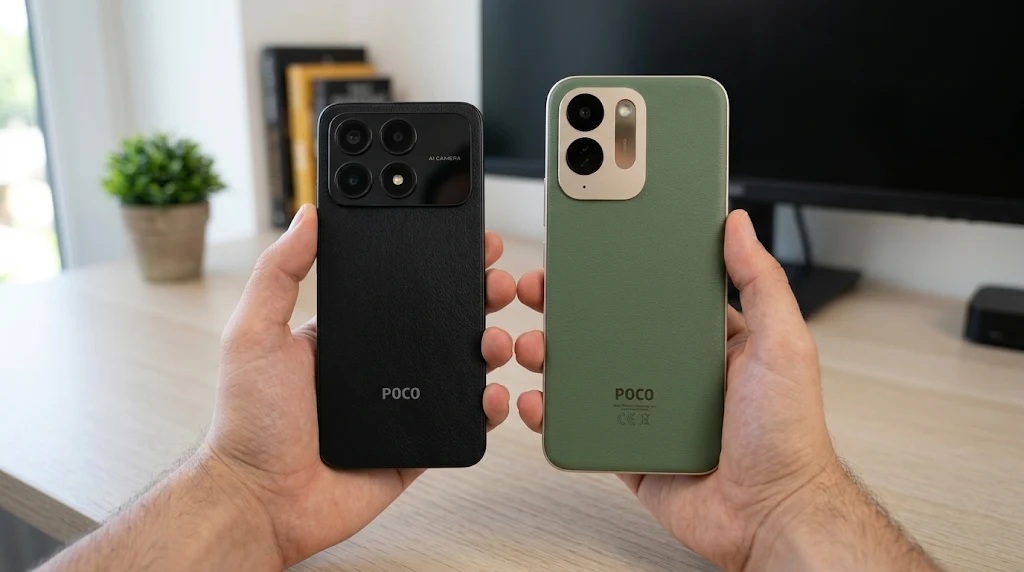
The new POCO X8s and POCO C95 Pro smartphones
What you need to know
- The POCO X8s has a 6.35-inch AMOLED screen and a 71.8 mm-wide, 187 g body. It packs a 6,330 mAh silicon-carbon battery with 100 W charging.
- The POCO C95 Pro has a 7,500 mAh battery, 1,170 mAh more than the X8s. POCO claims up to two days of moderate use, and it charges at up to 45 W.
- The X8s runs on a Snapdragon 7 Gen 4 and has a 50 MP telephoto camera with 2.5x optical zoom. The C95 Pro uses a modest MediaTek Helio G91-Ultra and has no telephoto lens.
- The C95 Pro’s 6.9-inch display is an LCD panel with a resolution of only 1600 × 720. It does add microSD support up to 2 TB and a 3.5 mm headphone jack.
POCO X8s: a compact phone without major compromises
The author notes that POCO has usually been associated with large phones. The X8s breaks that pattern. Its screen measures 6.35 inches, its body is 71.8 mm wide and it weighs 187 grams. That makes it small by the standards of most current Android smartphones. The author says he values being able to reach the top of the screen without shifting his grip, and having a phone that does not feel bulky in a jeans pocket.
The smaller size does not come with a weaker display. The X8s uses an AMOLED panel with a resolution of 2656 × 1220 pixels and an adaptive refresh rate of 1–120 Hz.
Battery and charging
The most notable spec is the battery. POCO has fitted a 6,330 mAh silicon-carbon cell into the compact body. The source says that is more than most large smartphones offered until recently. The X8s supports charging at up to 100 W. It can also act as a power bank through reverse wired charging at up to 22.5 W.

Performance
The X8s is powered by the Snapdragon 7 Gen 4, a 4 nm midrange chip from Qualcomm. The source describes it as not Qualcomm’s most powerful processor but a serious midrange option. In the author’s assessment, it should comfortably handle browsing, messaging, photo editing and most games. POCO’s 3D IceLoop cooling system is meant to keep the phone from throttling too quickly under load.
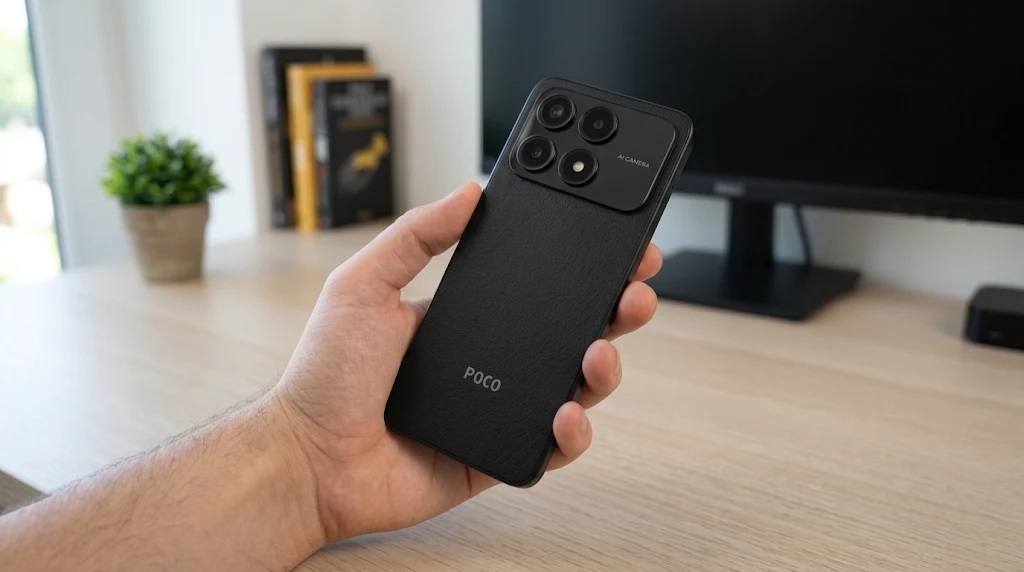
The POCO X8s in hand
Cameras
Many inexpensive phones pair the main camera with low-value extra sensors. The X8s instead includes a real 50 MP telephoto camera with 2.5x optical zoom. It sits alongside a 50 MP Light Fusion 800 main camera with optical image stabilization and an 8 MP ultra-wide module. The phone can also record 4K video.
The author says this setup suits portraits without wide-angle distortion and shots of distant subjects. He adds an important caveat: final judgments on image quality should rest on real sample photos. On camera hardware alone, the X8s looks stronger than a typical budget phone.
Other features
- ultrasonic in-display fingerprint scanner;
- IP68 water and dust resistance;
- stereo speakers with Dolby Atmos;
- 5G, NFC and eSIM support, subject to regional restrictions.
The author chose the version with 8 GB of RAM and 256 GB of storage.
POCO C95 Pro: a big screen and the larger battery
The author’s father had the opposite priorities. He uses his phone to watch videos, read news, message relatives and take occasional photos. For him, large on-screen content and a battery that does not need charging every evening matter most.

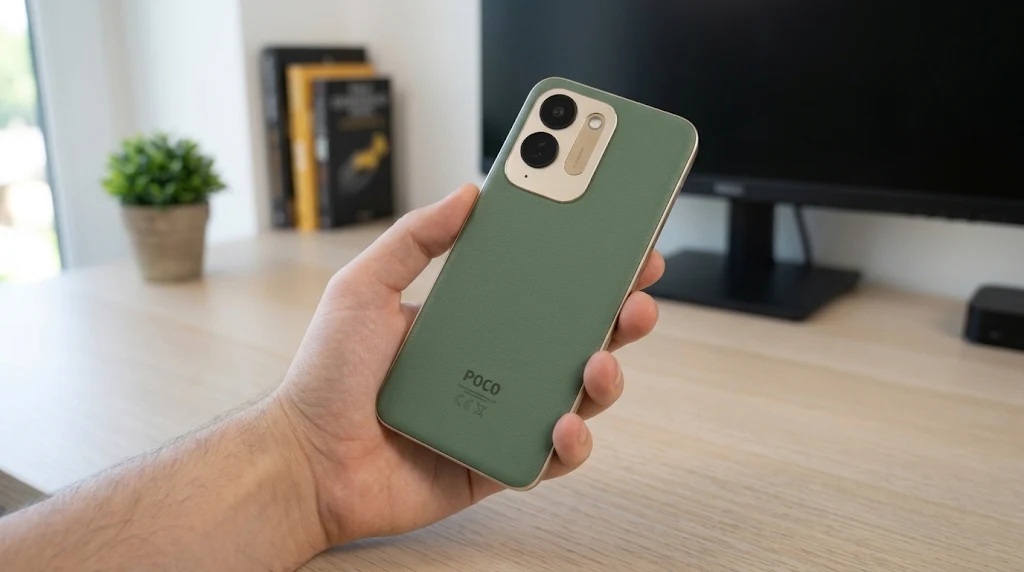
The POCO C95 Pro in green
Display
The C95 Pro has a 6.9-inch screen with a refresh rate of up to 120 Hz. That suits reading long messages and watching videos. However, the panel is LCD rather than AMOLED, and its resolution is only 1600 × 720 pixels. The source notes that it is noticeably less sharp and less contrasty than the X8s display. The glass is protected by Gorilla Glass 7i.
Battery and charging
The C95 Pro’s main selling point is its 7,500 mAh battery, which is 1,170 mAh larger than the X8s’s. POCO claims up to two days of battery life with moderate use. The source points out that real-world results will depend on workload and settings. The phone charges at up to 45 W and also supports reverse wired charging at up to 22.5 W.
Where the C95 Pro saves money
The big screen and battery at a lower price come with trade-offs. Instead of a Snapdragon chip, the C95 Pro uses a MediaTek Helio G91-Ultra. The source describes it as a fairly modest processor designed mainly for everyday tasks such as social media, messaging, browsing and video. The author would choose a more powerful device for demanding games.
The cameras follow the same pattern. The main sensor is 50 MP, but there is no separate telephoto lens and optical stabilization is not listed. The author expects the setup to be enough for document photos, family pictures in good lighting and video calls.

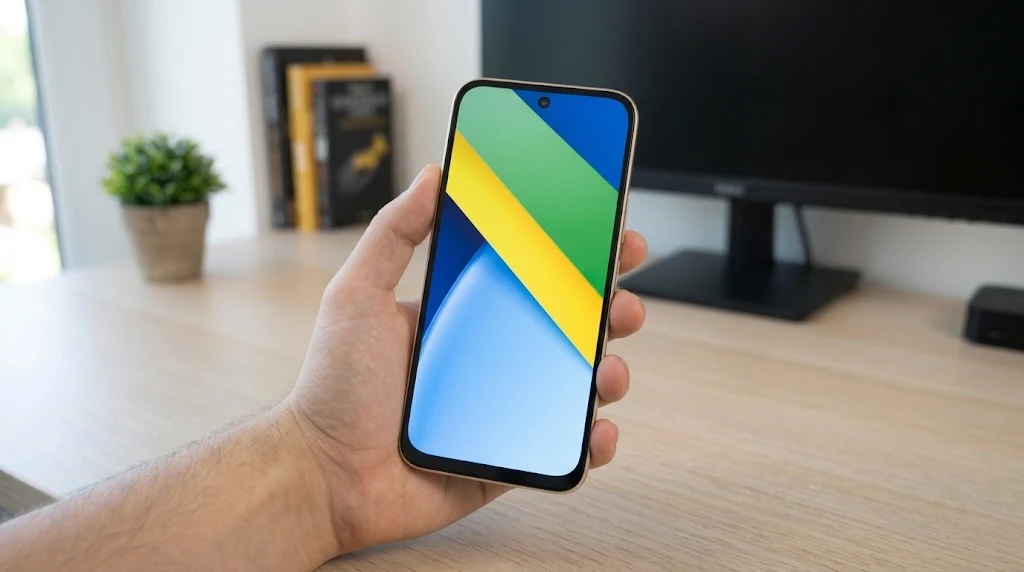
The POCO C95 Pro’s display has wide bezels
The source highlights several features of the budget model that suit this kind of user:
- storage expansion via microSD cards of up to 2 TB;
- stereo speakers for video and calls;
- IP64 dust and splash resistance;
- a 3.5 mm jack for wired headphones.
A caveat on memory
The author says memory is the one area where he would not cut corners. He notes that the version with 6 GB of RAM and eMMC 5.1 storage has fairly limited performance headroom. Buyers should not expect it to feel as fast as more expensive devices. The source mentions a 6 GB/128 GB configuration of the C95 Pro and describes the phone as substantially cheaper than the X8s. Actual prices vary by retailer, promotions and order terms.
Verdict: no universal winner
On specifications alone, the POCO X8s wins in almost every category. It has the better display, a faster processor, more versatile cameras, a more compact body and faster charging. The source argues that most of those advantages matter little to someone who mainly watches videos and reads messages and does not want to charge the phone often. For that kind of user, the C95 Pro makes more sense. It has the bigger battery, a noticeably larger screen and a much lower price.
The author would still pick the X8s for himself. He notes that a modern compact Android phone with good cameras, a reasonably powerful processor and a 6,330 mAh battery is hard to find, especially at a relatively reasonable price. His conclusion is that either model can be a sensible purchase, but only if buyers know their priorities in advance. Paying extra for features you will not use is unnecessary.