A white layer on houseplant soil is not always mold, so reaching straight for an antifungal product can be a mistake. Sometimes the cause is ordinary tap water, which leaves behind the same minerals that form scale in a kettle. In other cases, the white growth really is fungal mycelium. Telling the two apart matters because each needs a different response. Salt deposits point to your water and fertilizer, while fungal growth points to soil that stays too wet.
What you need to know
- A dry, hard, chalky or crystalline crust usually points to mineral salts. A fluffy, cotton-like or web-like coating usually indicates fungal mycelium. Dried mycelium can also form a crust, so the test is not foolproof.
- Salts build up from minerals in tap water, mainly calcium and magnesium compounds, and from overused fertilizer. According to University of Maryland Extension, excess salts can make it harder for roots to take up water and can damage them.
- Surface mycelium is usually not dangerous to the plant itself. The bigger risk is the constant dampness that lets it grow, because persistently wet soil raises the risk of root rot.
- Loose white granules that look like crumbled foam may be perlite. It is a normal ingredient in commercial potting mix and does not need to be removed.
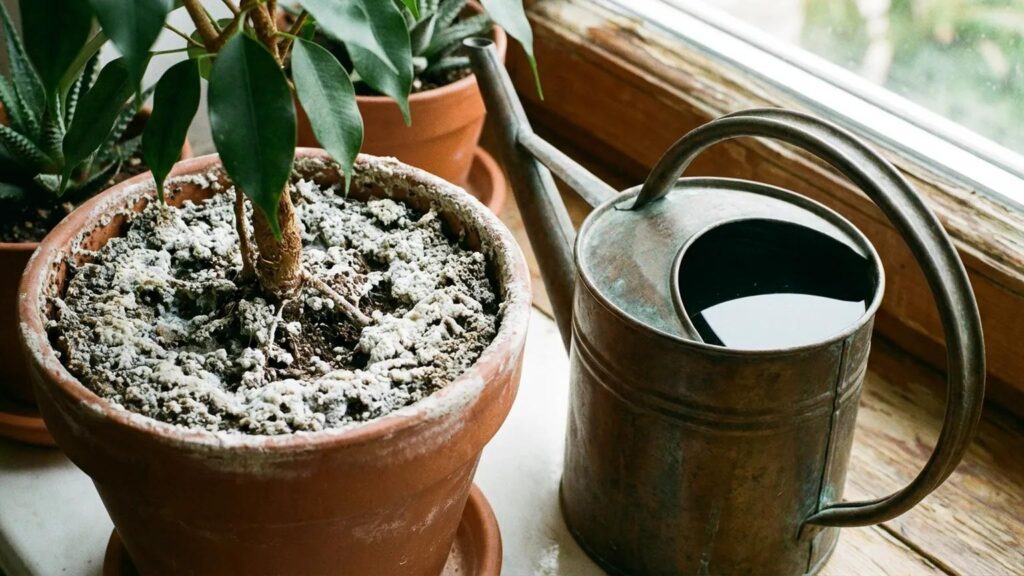
A ficus with white mineral deposits
Step one: identify what has turned white
Look closely at the surface of the soil. If the coating is dry and hard, and looks like chalk or fine crystals, it is most likely mineral salts. These can form a thin crust on the soil, collect along the rim of the pot and even appear on the pot’s outer walls, as in the image above.
A white or grayish fuzz that resembles cotton wool or fine cobwebs is a different matter. That is typically what fungal mycelium looks like. A dry crust more often indicates salts, while a fluffy coating more often indicates fungus. This is not a definitive test, however, because dried mycelium can also form a crust.
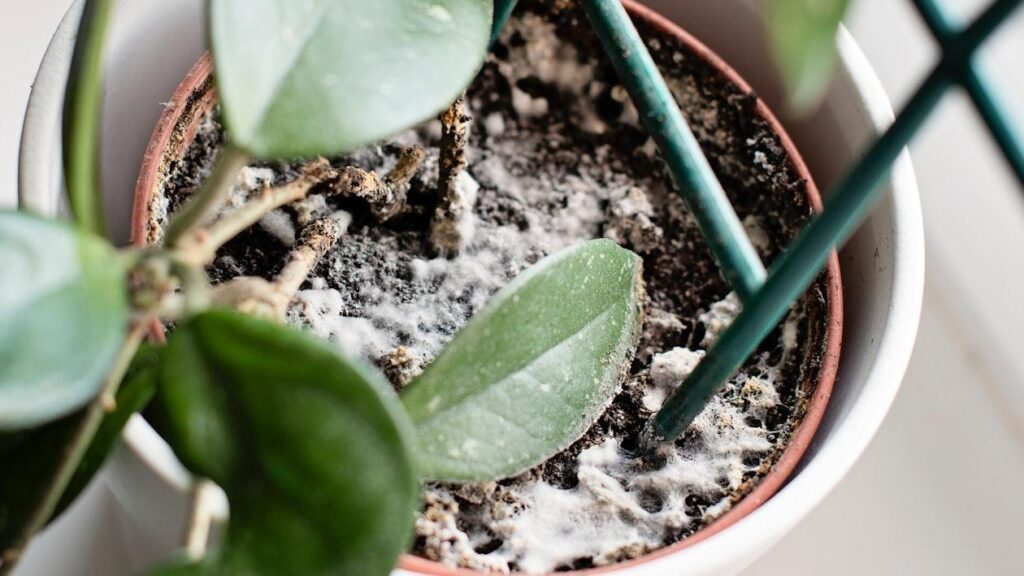
Mycelium:
a fluffy white coating covers the soil surface around a plant
There is also a third possibility. Individual white granules that look like crumbled foam may be perlite, which is deliberately added to commercial potting mix to keep the soil loose. This white additive is completely normal and does not need to be removed.
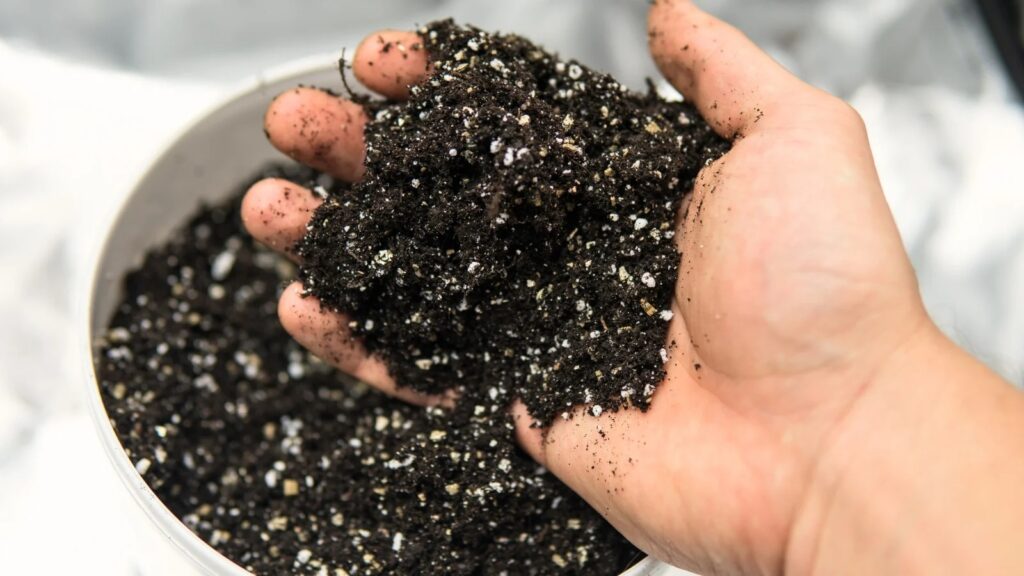
Perlite:
white granules among soil particles, a common component of potting mix
How mineral salts build up in a pot
Tap water contains dissolved minerals, chiefly calcium and magnesium compounds. As some of the water evaporates, these minerals stay behind in the soil, and over time a whitish film forms on the surface. The effect is especially noticeable with hard water.
Fertilizer is the second source of salts. If a plant is fed too often or given more than the recommended dose, the residue also accumulates. When a plant is consistently watered from the saucer, salts can be carried up to the surface along with the moisture.
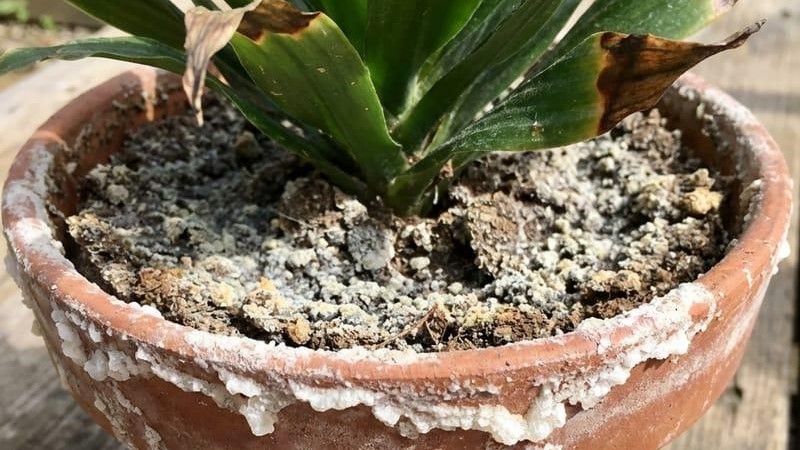
White salt deposits collect on the soil surface and around the rim of the pot
This is not just a cosmetic issue. Plant specialists at University of Maryland Extension warn that excess salts interfere with the roots’ ability to absorb water and can damage them. The plant may grow more poorly, and leaf tips can sometimes turn brown even when it is watered regularly.
Why fluffy mold appears: persistent dampness
Unlike salts, mycelium is alive. Some soil fungi feed on dead plant fragments, bark and other organic matter, and they need moisture to grow actively.
The principle is the same as with mold in a home: wherever dampness lingers, fungi thrive.
The coating is especially common with overwatering, poor drainage and weak air circulation. The problem tends to get worse in autumn and winter, when there is less light, plants often slow their growth and the soil can take longer to dry out.
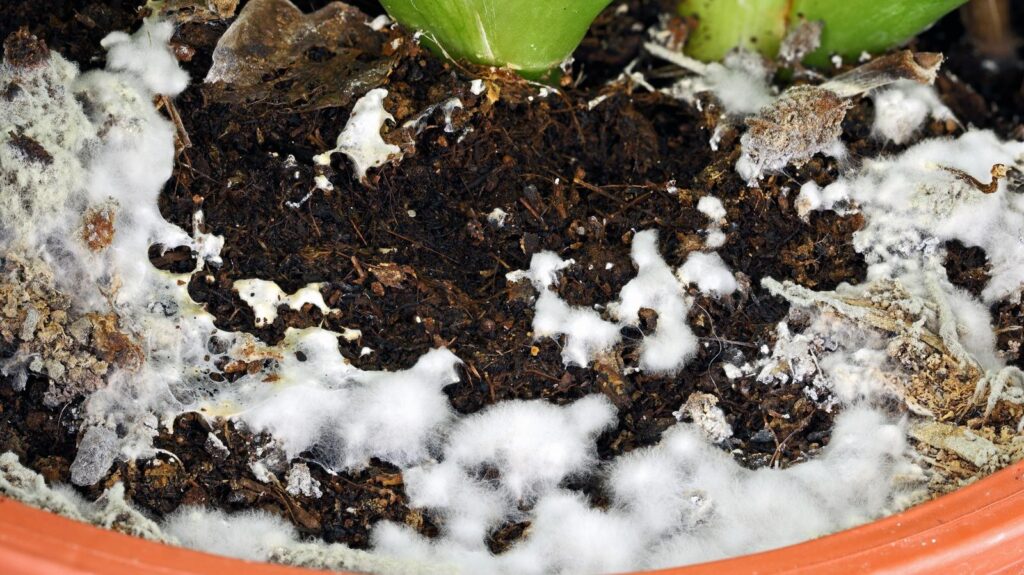
White mycelium spreading across the soil surface
The good news is that white mycelium on the soil surface is usually not dangerous to the plant itself. Many of these fungi simply break down organic debris, as University of Maryland Extension plant-care specialists confirm.
The conditions that allow it to spread are the bigger concern. Constantly wet soil raises the risk of root rot, and the fungal growth can attract small soil gnats.
Salts and mold need different fixes
If you see a salt crust
Carefully remove a thin top layer of soil and replace it with fresh mix. Then review the water you use and how much fertilizer you apply.
Where salt buildup is significant, University of Maryland Extension advises flushing the soil with low-mineral water. This requires a pot with drainage holes so that excess water can drain away freely. If the soil is already wet, deal with the overwatering first.
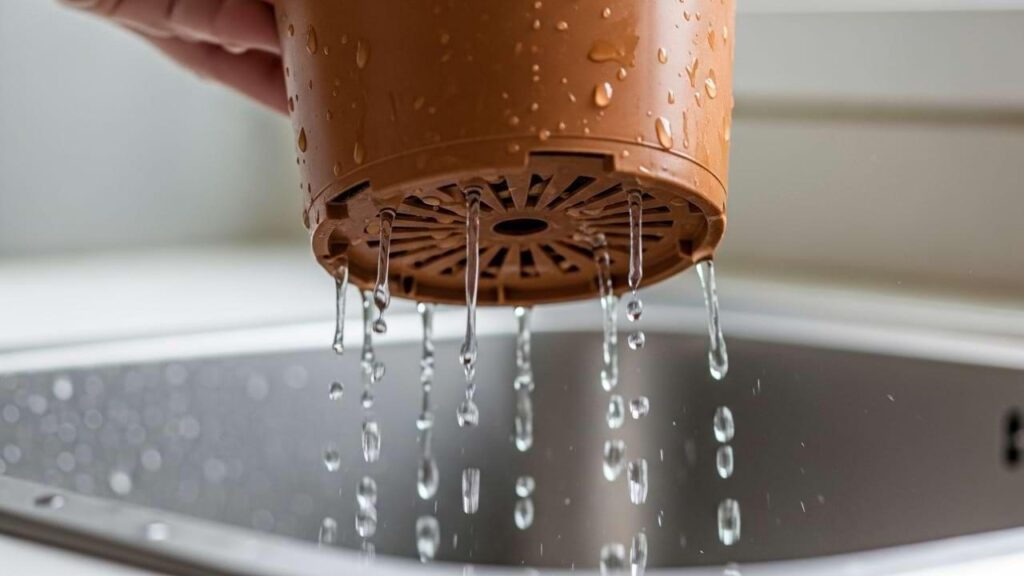
Excess water drains through the holes in the bottom of a flower pot
If you see fungal growth
The approach is somewhat different. Remove the affected top layer of soil, improve air circulation and rethink how you water. The key is to eliminate persistent dampness; otherwise the mold will come back.
The season matters here. A habit of watering on a fixed schedule can backfire in autumn, when the soil surface may still be damp by the time the next scheduled watering comes around.
Don’t rush to pour vinegar, hydrogen peroxide or fungicides on the soil just in case. Establish the cause of the coating first instead of subjecting the plant to chemical treatment.
The right water and watering habits help prevent new deposits
If the white crust keeps returning, try using softer water, such as reverse-osmosis or distilled water. Simply letting tap water stand removes almost none of the dissolved salts, and boiling reduces hardness only partially.
Apply fertilizer according to the product instructions, and empty the saucer after watering. Base watering on how moist the soil is and on the needs of the particular plant, not on how many days have passed since the last watering.
A small amount of white coating usually does not require replacing all of the soil. But if the soil stays wet for a long time, smells unpleasant and the leaves are yellowing and wilting, check the roots. Dark, soft, rotting roots are a serious reason to repot.
If the plant looks healthy, is growing and is producing new leaves, a few white spots on the soil are not in themselves a cause for alarm.