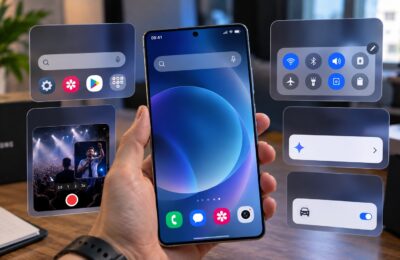
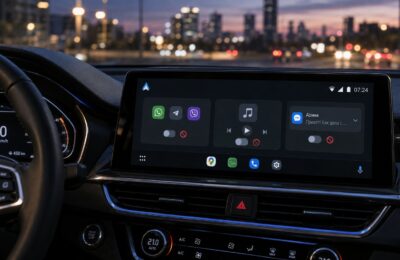
Last week Google released Android 17, and Xiaomi began testing its proprietary HyperOS 3rd generation firmware based on it. However, most of the new features are still disabled. It seems the company is saving them for the HyperOS 4 update. Let’s figure out which Android 17 capabilities will actually make it to Xiaomi devices and which will remain a Pixel exclusive.
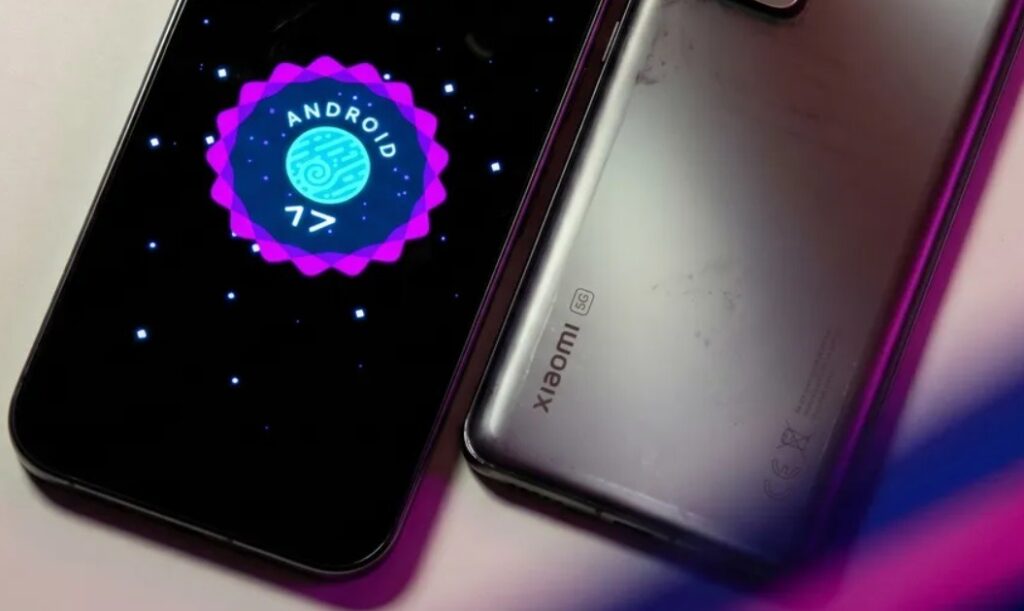
HyperOS 4 will be built on Android 17. Image: ximitime.com
Floating App Windows in Android 17
One of the most notable features of Android 17 is App Bubbles. It’s an evolution of the old chat “bubbles” concept, but now you can minimize virtually any app into a floating window. It works simply: long-press the icon, select the “bubble” mode, and the app opens in a small window on top of everything. You can minimize it to a circle on the edge of the screen, then return with a single tap. Up to five “bubbles” are supported simultaneously — essentially, it’s the equivalent of browser tabs, but for apps.
For Xiaomi users, this is a familiar concept: HyperOS already has floating windows. But the difference is that App Bubbles are built directly into Android, which means app compatibility and stability should be better than Xiaomi’s custom implementation. This will be especially noticeable for owners of Xiaomi Pad tablets and foldable smartphones: for them, this mode could become a truly productive tool — Chrome, notes, Telegram, and a work chat all at once, without constant switching.
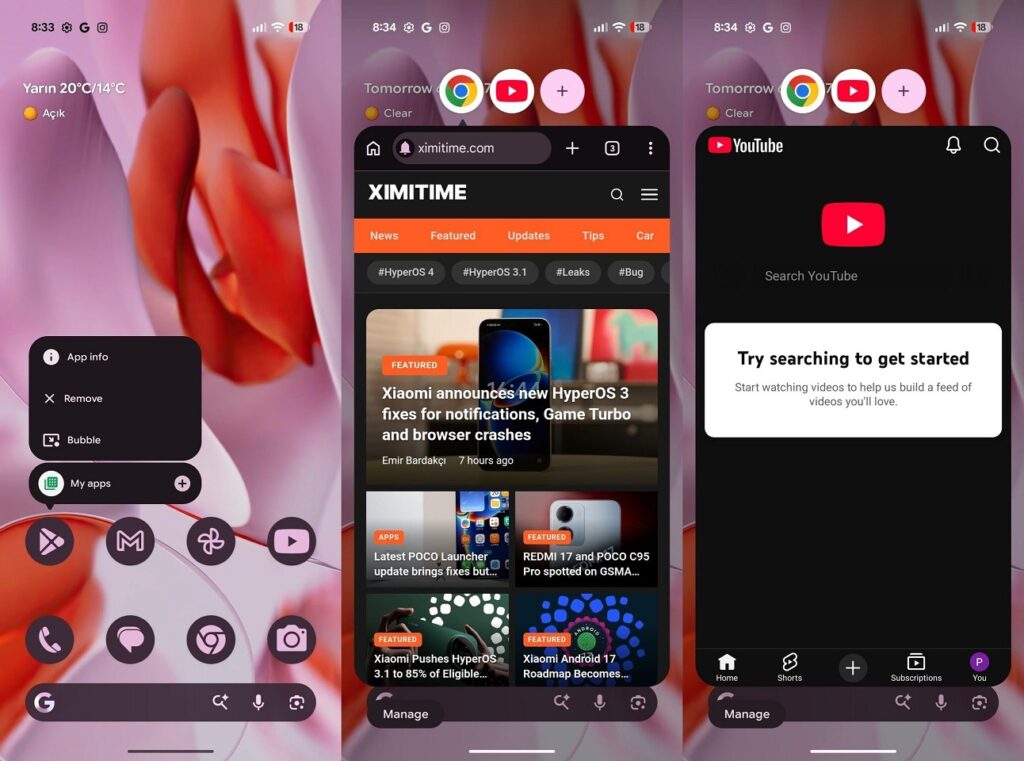
This is how the new floating windows will look in HyperOS 4
Given that Xiaomi already has its own foundation for multitasking, App Bubbles is one of those Android 17 features that is very likely to appear in HyperOS 4. Adapting “bubbles” shouldn’t require significant effort, unlike features tied to Gemini.
Form Autofill on Xiaomi Smartphones
Another notable Android 17 novelty is Intelligent Autofill (smart form autofill powered by the Gemini neural network). It works like this: the system automatically pulls the necessary data from Gmail, Google Wallet, Google Photos, and other Google services and fills it in during registration, payment, or booking. For example, if you have a passport photo in Google Photos, the system will recognize the data and neatly distribute it across the fields.
It sounds convenient, but there’s a significant catch. Intelligent Autofill is deeply tied to Google’s Gemini AI infrastructure, and access to experimental Gemini features is primarily given to Pixel devices first. This is a typical Google approach: the most interesting AI capabilities first appear on Pixel and then slowly expand to other brands.
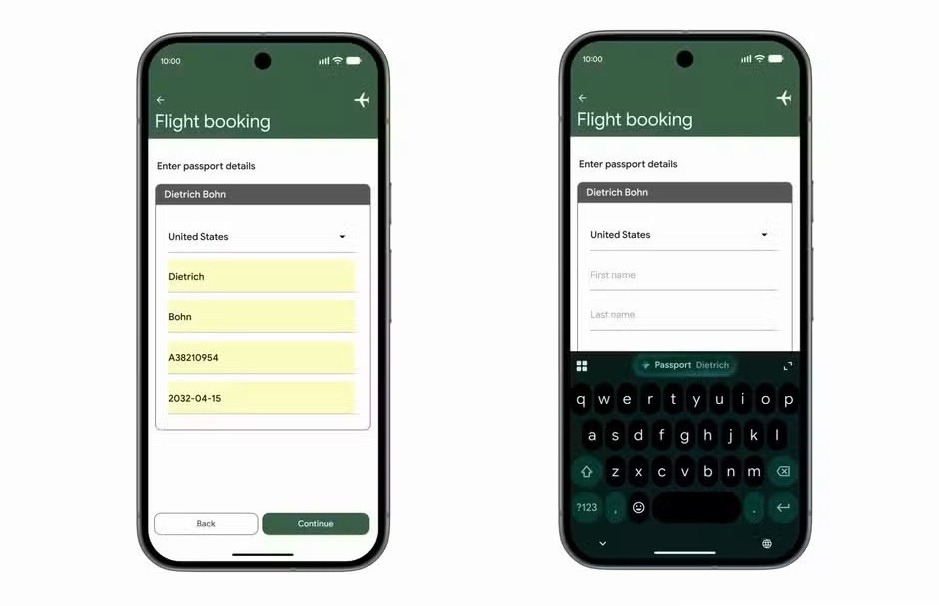
And this is the new form autofill from Android 17
On Xiaomi devices, the basic part will most likely appear: improved form suggestions, more convenient password management, and standard autofill. But the advanced contextual filling with photo and email analysis may remain a Pixel exclusive — at least at launch.
Improved Voice Input on Gboard Keyboard
In Android 17, Gboard voice input is getting a serious upgrade. The feature is called Rambler, and its goal is simple — to turn live, stumbling speech into clean text. Currently, you have to dictate almost syllable by syllable and then manually clean up errors and trim the excess. Rambler works differently: you speak as you normally would (with “ums,” “likes,” and thoughts that jump mid-sentence), and the system cleans up the filler, rephrases, and delivers a polished text.
What’s also interesting is that Rambler reportedly can switch between languages within the same message — say, from Russian to English and back. How well this will work in practice remains to be seen. Google cites Gemini’s multilingual capabilities, but which languages Rambler will support at launch hasn’t been specified yet.

Voice input will improve, but not necessarily with the new Rambler feature. Image: ximitime.com
For Xiaomi users, Rambler could be genuinely useful: many already actively use voice typing in Gboard. But, as with Intelligent Autofill, the feature is tied to Gemini’s server infrastructure. There’s a chance that Xiaomi will get a simplified version — with basic text cleanup but without full AI editing.
Which Android 17 Features Will Make It Into HyperOS 4
If we briefly summarize everything, the picture looks like this:
- App Bubbles and improved multitasking: almost certainly coming. Xiaomi already has the foundation, and Android 17’s system-level implementation will fit nicely on top.
- Improved voice typing: likely yes, but without the full Rambler package.
- Basic smart autofill: possibly, in a trimmed-down form.
- Full Intelligent Autofill with Gemini: a big question mark, it all depends on agreements with Google.
- Full version of Rambler with AI processing: also uncertain, at launch it may remain Pixel-only.
It’s worth remembering that the Chinese company has historically not included all stock Android features in its shell. Several years ago, Xiaomi boldly cut many Android 14 features from HyperOS, and it’s possible that history will repeat itself with Android 17 — the company may replace some capabilities with its own solutions.
When Will the HyperOS 4 Update Be Released
Xiaomi is already testing HyperOS 3.3 builds based on Android 17, but there are almost no user-facing new features yet. Based on what’s known, the focus is on internal component compatibility, memory management, and overall stability. In other words, Xiaomi is saving the main Android 17 innovations for HyperOS 4, not for an interim update.
Preliminary HyperOS 3.3 Developer Preview builds are available only for the Xiaomi 17, Xiaomi 17 Ultra, and Xiaomi 15T Pro. According to rumors, HyperOS 4 could be announced as early as summer 2026. Additionally, one leak suggests that Xiaomi is preparing not just an Android 17 adaptation for HyperOS 4, but a deep overhaul: rewriting system apps, a new interface design, and a complete removal of legacy MIUI code. However, already in the HyperOS 3.1 update, the company started moving in this direction.