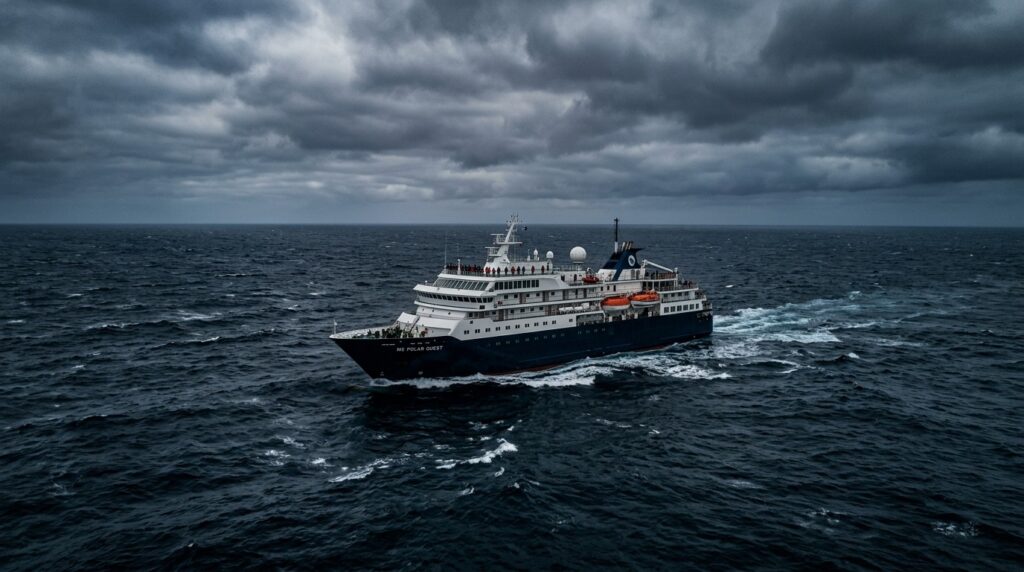
People found themselves trapped on a cruise liner due to a deadly virus
An outbreak of hantavirus, a rare disease carried by rodents, occurred on board the expedition cruise ship MV Hondius. Three passengers died, one is in intensive care in South Africa, and nearly 150 people are trapped on the ship off the coast of Cape Verde with no way to disembark. Doctors from South Africa confirmed that the pathogen is the Andes hantavirus, the only one in its family for which human-to-human transmission has been documented. Could we be facing a new pandemic similar to the one we experienced about six years ago?
Hantavirus Victims on the MV Hondius Liner
The vessel MV Hondius is a Dutch expedition cruise liner designed for 170 passengers. The ship departed from Tierra del Fuego in Argentine Patagonia on March 20. The cost of the trip was approximately 400,000 rubles. Passengers were supposed to visit Antarctica and then arrive at the Canary Islands. However, they never managed to get there.
The thing is, on April 6, a 70-year-old Dutch passenger developed fever and diarrhea. He died five days later, on April 11, when he developed respiratory failure. The cause of death was unclear, and his wife disembarked with his body on the island of Saint Helena to return to the Netherlands. On the way, the woman also fell ill and died in South Africa.
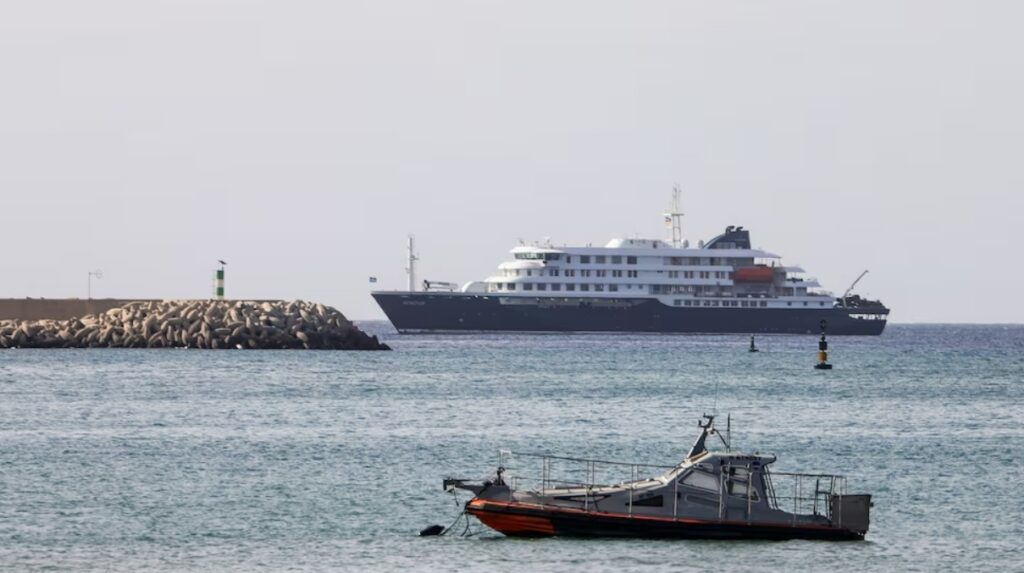
The Dutch cruise liner MV Hondius is anchored off the coast of Cape Verde. Image source: elpais.com
The wife had gastrointestinal symptoms when she disembarked, then her condition worsened during the flight, and she died upon arrival at the emergency department of a Johannesburg hospital on April 26. Her blood later tested positive for hantavirus, marking the first laboratory-confirmed case. In general, the cause can be called known, and this is unlikely to be yet another mysterious disease.
Later, at the end of April, a passenger from the United Kingdom fell ill on board. He was evacuated to South Africa, and it was his samples that allowed specialists to identify the hantavirus. Three more passengers fell ill, one of them, an 80-year-old German woman, died on May 2.
According to WHO data as of May 4, seven cases have been identified: two laboratory-confirmed and five suspected. Among them are three deaths, one critically ill patient, and three people with mild symptoms.
Andes Virus Outbreak on a Cruise Ship
On May 6, South African authorities confirmed that the pathogen behind the outbreak is the Andes virus, also known as the Andean strain of hantavirus. Tests conducted by the National Institute for Communicable Diseases of South Africa identified the Andean strain in the Dutch woman who died in Johannesburg and in the British passenger who remains in intensive care.
This is a critically important detail. The Andes virus is the only hantavirus for which human-to-human transmission has been documented. When such transmission occurs, it is associated with close and prolonged contact, typically among family members or intimate partners, and most often during the early stage of the illness.
Most likely, the first couple became infected while still on land, before boarding the ship. Experts then suggested that among close contacts — husband and wife, people sharing the same cabin — human-to-human transmission could have occurred.
Additionally, another passenger who had previously left the ship ended up in a hospital in Switzerland with a confirmed hantavirus infection. Swiss authorities stated there was no threat to the public.
What Is Hantavirus and How Does It Infect People
Hantaviruses are not a single virus but an entire family. There are about 40 strains of hantavirus worldwide, and different strains cause different diseases. All of them are zoonoses, meaning they live in rodents and only occasionally infect humans.
Humans usually become infected through contact with the urine, feces, or saliva of infected rodents. In practice, it happens like this: you enter an old shed, start cleaning, stir up dust, and inhale microparticles of dried mouse excretions. The risk is especially high when cleaning enclosed, poorly ventilated spaces or when exploring areas where rodents live.

Hantavirus is transmitted from rodents, and this can happen even during cleaning
The Andes hantavirus is primarily carried by long-tailed pygmy rice rats. This is a species found in rural areas of Argentina and Chile. It is the most common cause of hantavirus pulmonary syndrome in South America.
Most hantaviruses are not transmitted from person to person. The exception is precisely the Andes virus, which can spread between people through close and prolonged contact. But even in this case, transmission remains rare, because this is not the flu or COVID, which you can catch while standing in line for coffee.
Hantavirus and Andes Virus Symptoms
Symptoms usually appear one to eight weeks after exposure to the virus and begin with fever, headache, muscle pain, abdominal pain, nausea, and vomiting. Initially, it looks like an ordinary flu or intestinal infection, and this is precisely why hantavirus is so difficult to diagnose at an early stage.
As the infection progresses, the patient begins to feel tightness in the chest because the lungs fill with fluid. In the cases on the MV Hondius, the disease was characterized by rapid progression to pneumonia and acute respiratory distress syndrome, when the lungs can no longer provide the body with oxygen.
Mortality from hantavirus pulmonary syndrome is extremely high. It is approximately 35%, while for hemorrhagic fever with renal syndrome it ranges from 1% to 15%. For the Andes strain, the fatality rate is estimated at approximately 40%.
Doctors do not know exactly how to treat hantavirus. The antiviral drug Ribavirin has shown some effectiveness against hemorrhagic fever, but it does not work for pulmonary syndrome. There are no vaccines either. Treatment is purely supportive: oxygen, mechanical ventilation, intensive care. The sooner a patient reaches doctors, the higher their chances of survival.
How Hantavirus Got on the Cruise Ship
This is the main mystery of the entire story. A hantavirus outbreak on a cruise ship is an unprecedented case — nothing like this has been recorded before.
As mentioned above, the initial infection most likely did not occur on board the vessel. The liner’s operator reported that no rats were found on the ship — they checked. The Dutch couple, who became the first victims, had been traveling around South America, including Argentina, before boarding the cruise ship. And Argentina is one of the main endemic regions for the Andes hantavirus.

The ship’s passengers also frequently interacted with wildlife overall
It is also important to note that the vessel was an expedition ship — passengers were engaged in birdwatching and interacted with wildlife. Some islands are home to rodents, which could also have been a source of infection.
So two scenarios are currently being considered:
- Several passengers became infected on shore — in Argentina or during landings on islands — and fell ill while already at sea, as the incubation period progressed;
- One person became infected from rodents and then transmitted the virus to those closest to them through close contact. A cruise ship with its confined space creates practically ideal conditions for such transmission.