7 Unexpected Facts About the Northern Lights That Will Change How You See Them
The Northern Lights, which look completely different from Earth and from space, are one of the most recognizable natural phenomena — but also one of the most misunderstood. Some people are convinced they only occur near the North Pole, others associate them with weather, and some think they are always green. In reality, the aurora is born from a complex interaction between the Sun and Earth’s magnetic field, and scientists are still refining the details of exactly how it occurs. Below are seven of the most persistent myths about the Northern Lights and the facts behind them. Once you understand them, you’ll look at those green and purple “curtains” in the sky in a completely different way.
Can You Hear the Northern Lights: The Mysterious Crackling in the Sky
It is generally believed that the Northern Lights are completely silent — and in most cases, that’s true. Auroras occur too high in the atmosphere for sound to travel directly down to the ground. But the story is more complex than it seems.
Some observers report that during particularly bright flashes, they not only saw the aurora but also heard faint crackling or hissing. The phenomenon is still debated, but researchers are seriously studying possible explanations related to electrical activity near the Earth’s surface. Importantly, reports of aurora sounds are not dismissed as pure fiction — they may have a physical cause.
What Color Is the Northern Lights
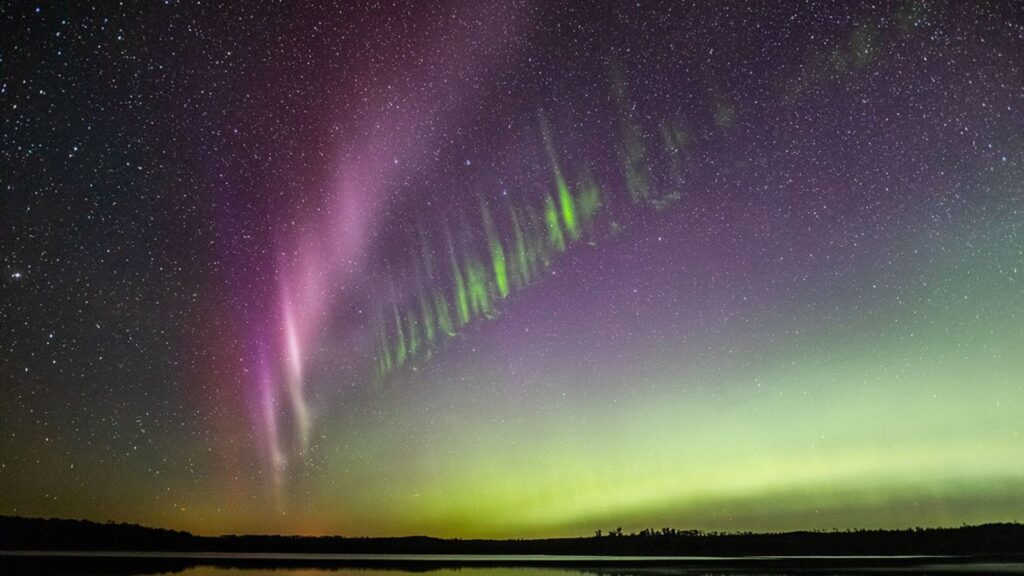
Green is the most common color of the aurora, but far from the only one. The color depends on the gas and the altitude at which the glow occurs.
Oxygen produces green or red hues, while nitrogen creates blue, violet, and pink tones. During powerful geomagnetic storms, observers can see multiple colors at once, and the sky transforms into those multicolored “curtains” that photographers love so much. So a multicolored aurora is not photo editing — it’s the result of which specific atoms in the atmosphere receive energy.
Where Can You See the Northern Lights in Russia
The Northern Lights are indeed most commonly seen near the Arctic, but that’s not their permanent address. Strong solar storms can shift the glow much farther south.
In Russia, the Northern Lights are regularly seen by residents of Yakutia, Chukotka, Kamchatka, and also in the Murmansk region, which can be reached from Moscow by a flight of just 2.5 hours.
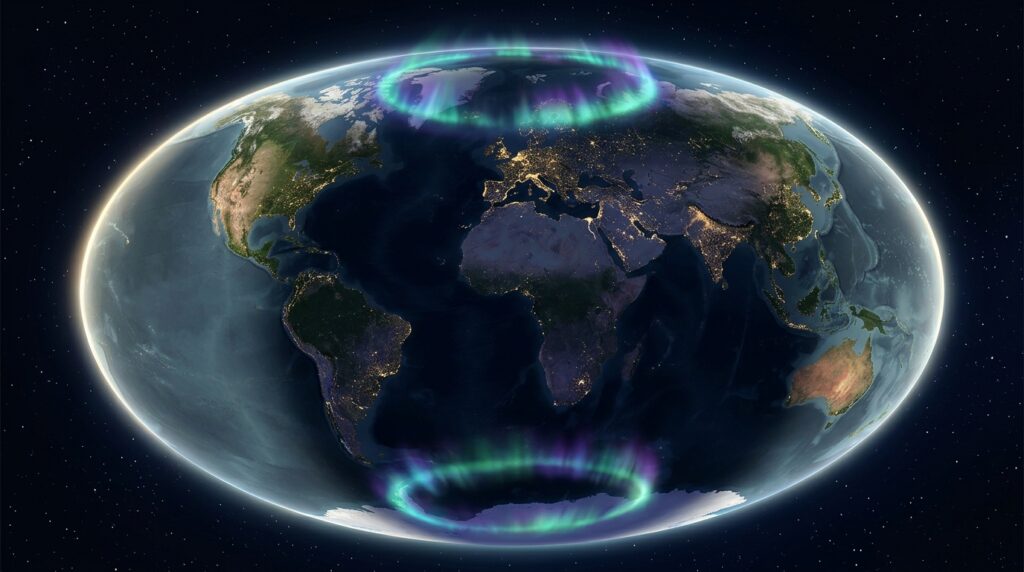
The Northern Lights have a southern twin — Aurora Australis around Antarctica
Auroras on Other Planets: Jupiter, Saturn, and Mars
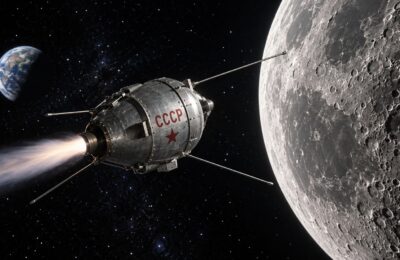
Earth is not the only world with a glowing sky. Scientists have observed auroras on Jupiter, Saturn, and Mars, as well as on several other bodies in the Solar System.
The underlying mechanism is similar: charged particles interact with the atmosphere and the planet’s magnetic environment. But the appearance and behavior of the aurora differ greatly from world to world. Studying these “alien” auroras helps researchers better understand planetary atmospheres and magnetic fields — and therefore the conditions under which distant worlds could be habitable.
The Northern Lights and Weather: Why Auroras Are Born in Space
A common myth is that the aurora is caused by Earth’s weather. In fact, the aurora belongs to space weather, not to the familiar realm of rain and clouds.
It occurs when charged particles from the Sun interact with Earth’s magnetic field and collide with gases in the upper atmosphere. These collisions release energy in the form of colored light. Clouds may block your view, but the phenomenon itself is born at altitudes of hundreds of kilometers — far above any weather systems.
A Good Aurora Forecast Doesn’t Guarantee You’ll See It
Even a strong aurora forecast is only half the battle. Visibility depends on cloud cover, light pollution, moonlight, and your geographic location.
Even during a powerful geomagnetic storm, dense clouds can completely hide the show. That’s why experienced aurora hunters monitor the weather forecast just as closely as the solar activity forecast. To actually see an aurora, it helps to keep several conditions in mind at once:
- Strength of the geomagnetic storm and solar activity
- Absence of dense cloud cover over the observation point
- Minimal light pollution from cities
- Dark sky without a bright Moon
- Sufficiently high latitude
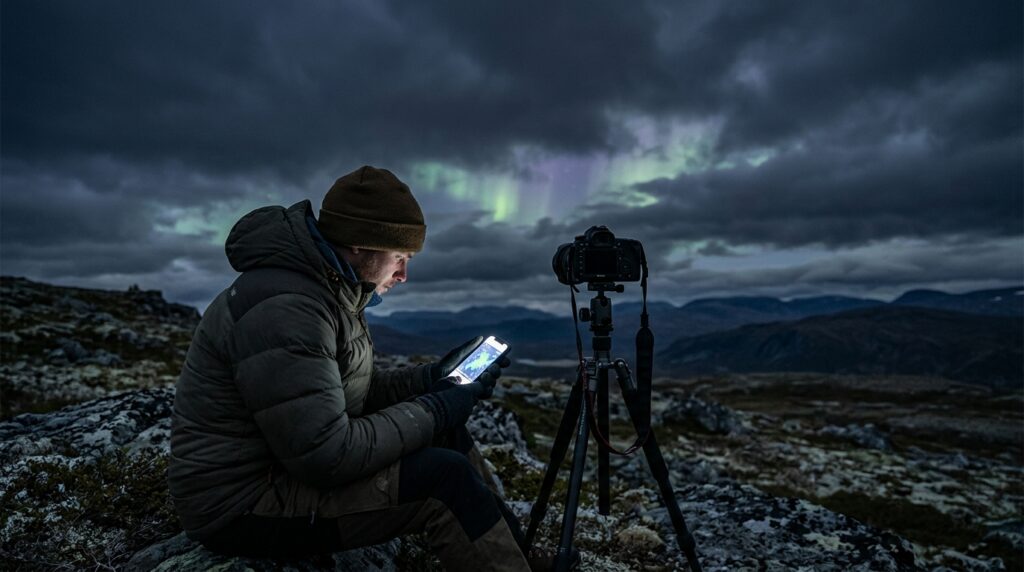
Aurora hunters monitor both solar activity and cloud cover forecasts
The Northern Lights Have Been Observed for Thousands of Years
It might seem that interest in the aurora is a modern trend tied to nighttime photo sessions. But people have been observing the aurora for thousands of years.
Ancient cultures of Scandinavia, North America, Asia, and Europe created myths and legends to explain the mysterious lights in the sky. Long before science learned about solar wind and magnetism, people associated the aurora with spirits, omens, warriors, or celestial beings.
Modern science has explained the mechanism behind the phenomenon, but the sense of wonder it inspires has not changed.
What’s Important to Understand About the Nature of the Northern Lights
The Northern Lights are not a whim of weather or a rarity of one pole — they are a manifestation of space weather that encircles the planet and is found even on other worlds. Understanding how they work doesn’t kill the magic — it makes it meaningful.
Behind every green or purple flash lies the concrete physics of the interaction between the Sun and Earth. And some mysteries — like that crackling sound during bright auroras — are still waiting to be solved by scientists, and watching that process unfold will be especially fascinating.