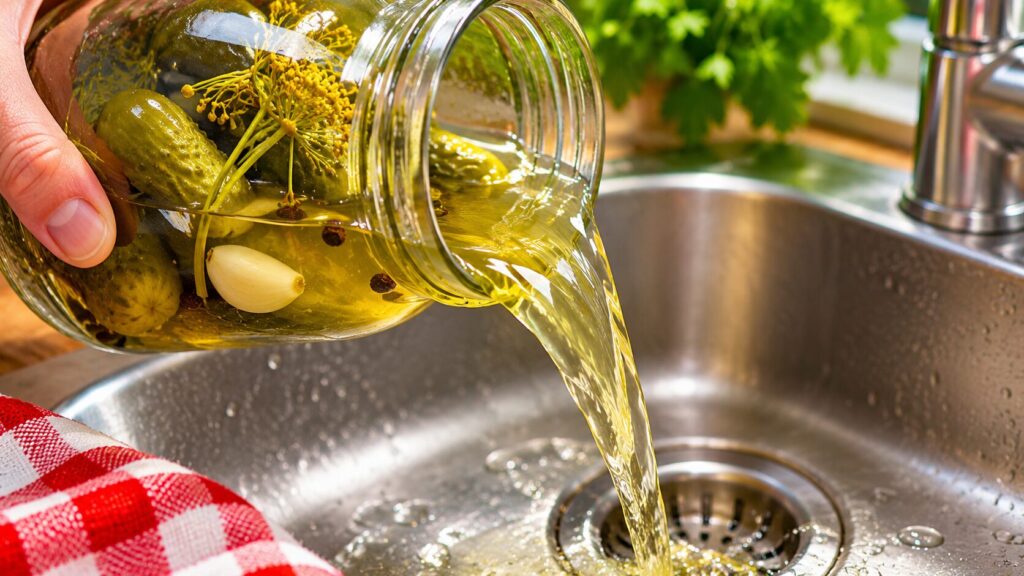
Cucumber pickle brine being poured from a glass jar straight into a kitchen sink
When the pickles are gone, the leftover brine usually goes down the sink. But that liquid is a ready-made mix of salt, acid and spices, and it can be put to work in the kitchen. Uses range from a marinade that makes chicken juicier to simple egg-free cookies, a tangy soup, quick pickled onions, salad dressing, skillet flatbreads and even a bar drink. There are limits, though: brine that has touched raw meat must not be reused, and old brine is not suitable for canning a new batch of vegetables.
What you need to know
- Brine can replace a vinegar marinade for chicken fillet: 1–3 hours in the fridge, then baking at 200 °C until the meat reaches 74 °C inside.
- Liquid that has been in contact with raw meat should not be reused.
- Onions quick-pickled in leftover brine are a short-term refrigerator snack: University of Illinois Extension advice is to eat such vegetables within 7–10 days, and used brine is not suitable for canning.
- Brine from naturally fermented pickles and vinegar-based pickle marinade are not the same and suit different recipes.
1. Brine cookies: a simple, egg-free bake
Many people remember the crumbly homemade cookies once baked by mothers and grandmothers. The recipe uses no eggs, milk or butter — only basic pantry ingredients. Surprisingly, the cucumber flavor is barely noticeable in the finished cookies, as long as the brine is not too heavily spiced.
Ingredients:
- Cucumber pickle brine — 200 ml
- Flour — 450 g
- Sugar — 70 g
- Vegetable oil — 100 ml
- Baking powder — 1 tsp
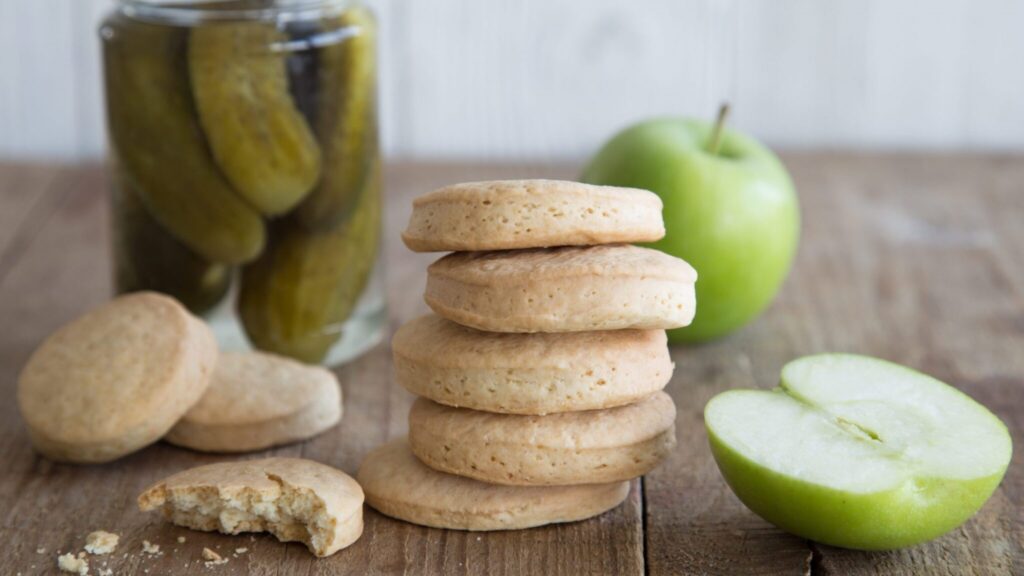
Homemade cookies made with cucumber pickle brine. Image source: lifehacker.ru
Method: mix the brine, sugar and oil. Gradually add the flour combined with baking powder and knead a soft dough. Roll it out 5–7 mm thick, cut out the cookies and bake at 160 °C for about 10–15 minutes.
The result is a plain homemade cookie to serve with tea. The food publication Gastronom has a similar recipe. A small amount of salt also enhances sweetness, so the combination is less odd than it sounds.
2. Juicier chicken without a complicated marinade
Brine can stand in for a typical vinegar marinade. The salt helps the meat retain moisture during cooking, while the acid and spices add flavor. The method works especially well for chicken fillet.
Ingredients:
- Chicken fillet — 500 g
- Cucumber pickle brine — 250 ml
- Vegetable oil — 1 tbsp
- Garlic — 1 clove
- Black pepper — to taste

Baked chicken fillet marinated in cucumber pickle brine
Method: cover the fillet with brine, add the minced garlic and pepper, and refrigerate for 1–3 hours. Then pat the meat dry, brush it with oil and bake at 200 °C for roughly 20–25 minutes, depending on the thickness of the pieces. The chicken should reach 74 °C in the center.
Extra salt is usually unnecessary. According to Good Housekeeping, this kind of marinade is also used for turkey and pork. However, the liquid must not be reused once it has been in contact with raw meat.
3. Rassolnik: pickle soup with the right sourness
Rassolnik, a traditional Russian soup, takes its name from pickle brine (rassol). The brine deepens the soup’s flavor, and sometimes as little as half a glass is enough. Brine from salt-cured pickles made without vinegar works best.
Ingredients:
- Meat broth — 1.5 l
- Cucumber pickle brine — 100 ml
- Salt-cured pickles — 2–3
- Potatoes — 3
- Pearl barley — 70–80 g
- Onion and carrot — 1 each
- Vegetable oil — 1 tbsp
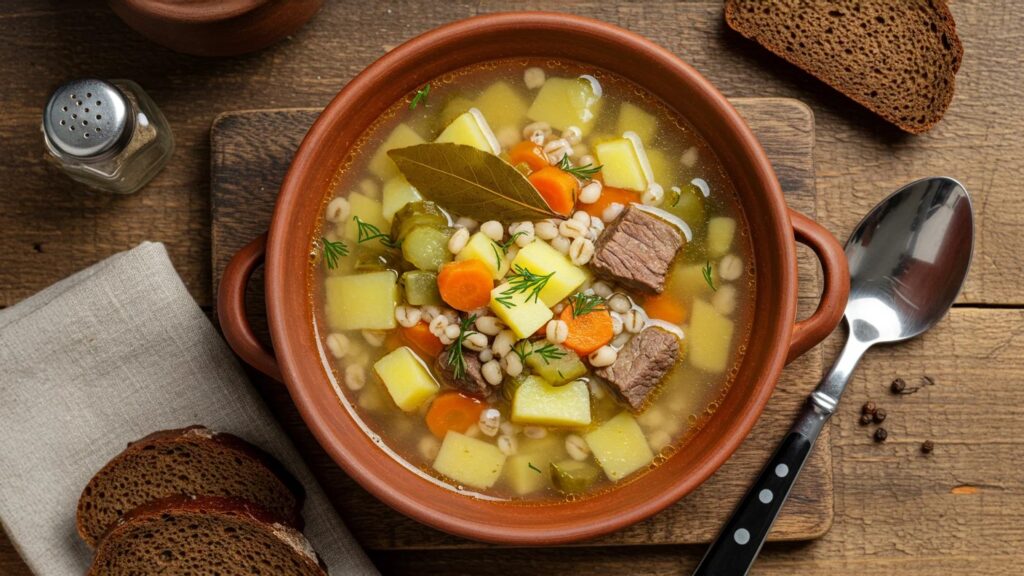
Homemade rassolnik with pearl barley, potatoes and pickles. Image source: openkitchen.eda.yandex
Method: cook the pearl barley until tender in advance. Simmer the diced potatoes in the broth, and separately sauté the onion and carrot with the pickles. Combine everything with the barley, pour in the strained brine and cook for another 5–10 minutes.
Timing matters: add the brine only once the potatoes are almost cooked. In an acidic environment, potatoes soften more slowly. The classic rassolnik recipe published by RBC follows the same order.
4. Crunchy quick-pickled onions with minimal effort
The empty pickle jar can be used for another snack. Brine from store-bought vinegar pickles is especially convenient for this.
Ingredients:
- Red onion — 1
- Cucumber pickle marinade — 150–200 ml
- Black peppercorns — 3–4, optional
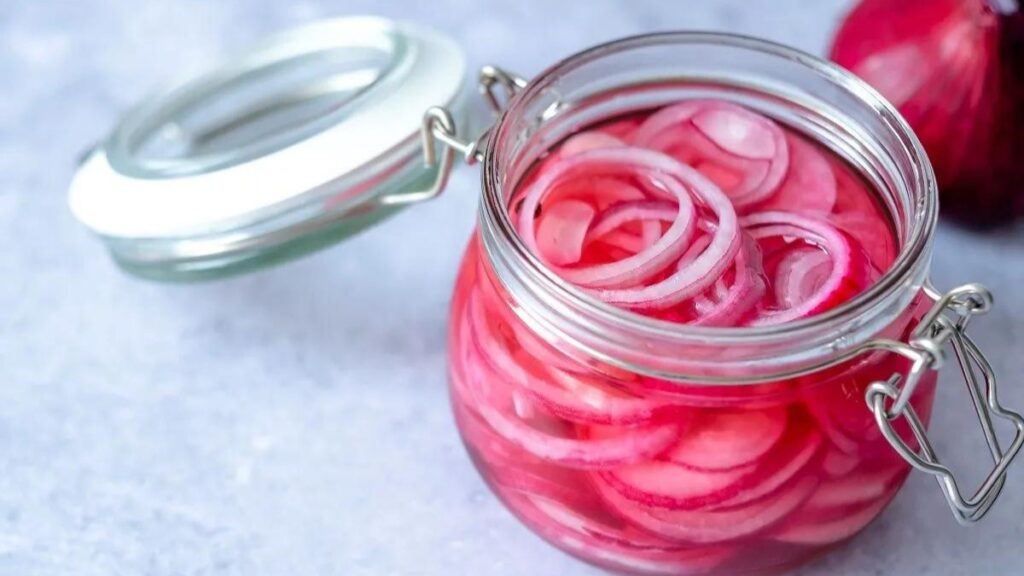
Thinly sliced red onion in marinade, prepared as a quick snack
Method: slice the onion into thin half-rings, place them in a clean jar, cover with the marinade and refrigerate. By the next day the onions can be added to meat, potatoes or sandwiches.
This is a quick snack, not a preserve for long-term storage. Home food preservation specialists at the University of Illinois Extension advise keeping such vegetables in the refrigerator for 2–3 days for a fuller flavor and eating them within 7–10 days. Old brine is not suitable for canning a new batch, because its acidity changes after the first round of pickling. The factors that normally help pickles keep for a long time cannot be relied on with reused brine.
5. Potato salad with a tangy dressing
Instead of vinegar or lemon juice, a couple of spoonfuls of pickle brine can go into a salad dressing. It already contains salt, acid and spice aromas, and it works particularly well with boiled potatoes.
Ingredients:
- Boiled potatoes — 3
- Red onion — 1/2
- Cucumber pickle brine — 2 tbsp
- Vegetable oil — 1 tbsp
- Mustard — 1 tsp
- Dill — to taste

Boiled potato salad with red onion, dill and mustard dressing
Method: slice the still-warm potatoes and the onion. Whisk together the brine, oil and mustard, dress the salad and add dill.
The key is to dress the potatoes while they are still warm, which helps the flavor spread more evenly. Professional cooks also recommend using pickle brine this way, as covered by The Guardian.
6. Soft, yeast-free skillet flatbreads
Another budget recipe that needs no eggs, milk or even an oven. The brine gives the dough a light tang, and baking soda helps make the flatbreads softer.
Ingredients:
- Cucumber pickle brine — 200 ml
- Flour — 350–400 g
- Vegetable oil — 3 tbsp
- Sugar — 1 tsp
- Baking soda — 1/2 tsp

Golden yeast-free flatbreads made with cucumber pickle brine and cooked in a skillet. Image source: iamcook.ru
Method: mix the brine, oil and sugar, then add the baking soda. Gradually add the flour and knead a soft dough. Let it rest for 10–15 minutes, divide it into small flatbreads and cook them in a dry skillet for 2–3 minutes per side.
There is no need to activate the baking soda separately — the acid in the brine does that. Cover the finished flatbreads with a towel to keep them soft. They can be served instead of bread with soup or with a favorite sauce. A similar version, also cooked without an oven, is published by Chefmarket.
7. The Pickleback: a two-shot bar drink
Finally, something unexpected. American bars serve a drink called the Pickleback. Its defining feature is that the whiskey and the pickle brine are not mixed but drunk one after the other.
Ingredients per serving:
- Whiskey — 30 ml
- Cold cucumber pickle brine — 30 ml
Method: pour the whiskey and the strained brine into two separate shot glasses. The whiskey is drunk first, followed by the brine, whose salty-sour taste softens the burn of the alcohol.
This is how the classic Pickleback is described by Liquor.com. Note, however, that the brine does not reduce the amount of alcohol consumed and does not protect against a hangover.

A Pickleback served as two separate shots — one of whiskey and one of cucumber pickle brine
Which brine to keep and which to throw away
There is an important distinction here. Brine from salt-cured pickles and the marinade from vinegar pickles are not quite the same thing. The first gets its acidity from natural fermentation; in the second, vinegar is added during preparation.
For rassolnik, brine from fermented or salt-cured pickles is best. For salad dressings and quick pickled onions, vinegar marinade is more convenient. For cookies, flatbreads and meat, either type can work, as long as the flavor is not too harsh.
Basic safety precautions
Use only fresh brine from a jar that has been stored properly. Once opened, keep it in the refrigerator and do not hold on to it for a long time for future recipes. If you see mold, notice an unusual smell or any other signs of spoilage, the liquid should be thrown away.
One more point: brine already contains a lot of salt, so taste the dish before adding more, especially when making soup or a marinade.