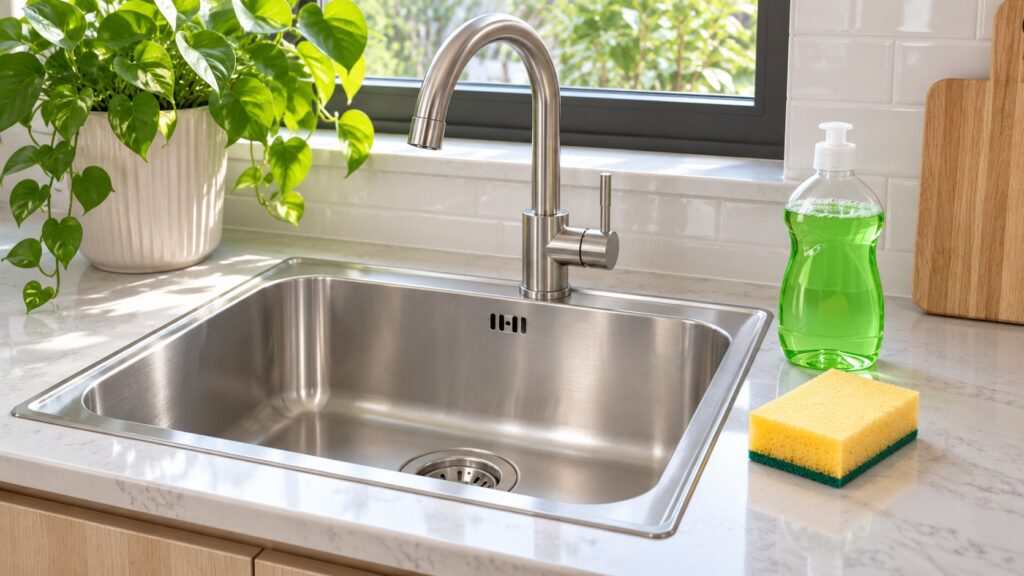
A clean kitchen sink
Running water and dish soap do not keep a kitchen sink clean on their own. When researchers sampled ordinary homes, the kitchen sink carried more microbes than most other kitchen surfaces. The author of the original article says he had assumed the sink was effectively self-cleaning until he read the research and official hygiene recommendations. A practical routine is simple: clear out food scraps and wash the sink after cooking, let it dry, and give it a more thorough clean, including the drain, once or twice a week. Disinfection is mainly needed in specific situations, such as after contact with raw meat or poultry juices.
What you need to know
- In a 2011 survey by NSF, which sampled 30 items and surfaces in 22 households, the kitchen sink ranked second for microbial counts, behind only dish sponges and rags.
- A regional office of Russia’s consumer health agency, Rospotrebnadzor, advises washing the sink after cooking, removing food leftovers and wiping it dry.
- Ordinary dish soap is usually enough for routine cleaning; disinfection is useful mainly after raw meat or poultry juices reach the sink, when someone in the household has a gastrointestinal infection, or during a scheduled deep clean.
- Chlorine-based products must never be mixed with vinegar, acidic cleaners or ammonia, because the combination can release gases that can be deadly.
The sink ranked second for germs in surveyed homes
In 2011, NSF, a US organization that works on sanitation and food safety, checked how clean ordinary homes really are. Its specialists took samples from 30 items and surfaces in 22 households. By the number of microorganisms found, the kitchen sink came second, behind only dish sponges and rags.
The source points to several straightforward reasons for this result:
- Food residue. Grease, crumbs and bits of vegetables and meat left after washing dishes feed bacteria.
- Constant moisture. Water lingers on the walls of the sink, around the drain and under seals, and microbes multiply faster in damp conditions.
- Raw foods. Juices from raw meat and poultry sometimes contain dangerous bacteria, which can easily end up on the sink surface.
- Dirty sponges. Using the same sponge to wipe the sink and wash dishes moves microbes from one to the other.
That does not mean there is cause for panic. Most microorganisms around us do not cause disease. Problems arise when disease-causing bacteria travel from a dirty surface to hands, plates or ready-to-eat food and cause food poisoning. The NSF study was also small and does not describe conditions in every kitchen in the world, but it illustrates why the sink should not be overlooked.
A cleaning schedule: daily basics and a deeper clean once or twice a week
Rospotrebnadzor’s regional office recommends washing the kitchen sink after cooking, removing food leftovers from it and wiping it dry. The source author suggests adding a thorough wash and disinfection of the bottom and walls once or twice a week. Combined, these suggestions make up the following household routine proposed in the source:
| When | What to do |
|---|---|
| After washing dishes | Remove food leftovers and rinse the sink |
| Every day | Wash the bottom and walls with detergent, then rinse |
| Once or twice a week | Thoroughly clean the sink, drain strainer and edges; disinfect if needed |
| After contact with raw meat or poultry juices | Wash the surface immediately and treat it with a suitable disinfectant |
| If residue or an odor appears | Clean it again and check the drain |
According to the source, there is no need to scrub the sink after every cup of tea: simply rinsing a glass does no harm. After a full dinner or greasy dishes, however, it is better to clean the sink. In households where little cooking happens, daily cleaning with detergent is not always necessary; the main point is not to let food and dirt build up in the sink.
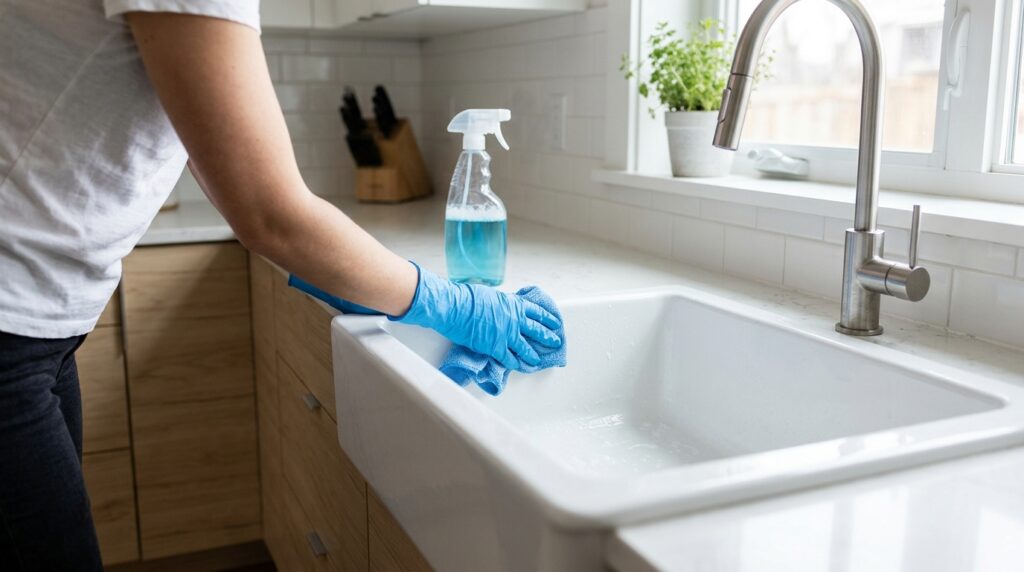
A person in blue gloves wiping a white sink with a blue cloth
Ordinary dish soap is enough for routine cleaning
Everyday sink cleaning does not require harsh household chemicals. In most cases, the same detergent used for plates will do. The source describes a simple sequence:
- Remove the dishes and take any food leftovers out of the sink.
- Apply a little detergent to a separate soft sponge or brush.
- Wipe the bottom, walls and edges, as well as the area around the drain and the faucet.
- Rinse off the detergent thoroughly with clean water.
- If possible, wipe the sink dry.
The whole process takes a couple of minutes. For stainless steel sinks, the source recommends soft sponges and non-abrasive products, because steel wool and coarse powders leave scratches. For sinks made of engineered stone, ceramic or other materials, follow the manufacturer’s guidance.
Washing and disinfecting are not the same thing
Washing removes grease, food residue, dirt and a significant share of microbes. Water, detergent and a sponge are enough for that. Disinfection is meant to kill or sharply reduce the number of certain microorganisms, and it requires dedicated products.
There is no need to douse the sink in a chlorine-based solution every day. According to the source, extra disinfection is useful in a few situations:
- juice from raw chicken or meat has got into the sink;
- the sink has been soiled by the contents of raw poultry packaging;
- someone in the household has a gastrointestinal infection;
- you are doing a scheduled deep clean.
Choose a product that suits your sink’s material and is approved for kitchen surfaces. Keep it on the surface for the contact time stated on the label and rinse it off as the instructions direct. The most important warning: never mix chlorine-based products with vinegar, acidic cleaners or ammonia, because doing so can release gases that can be deadly.
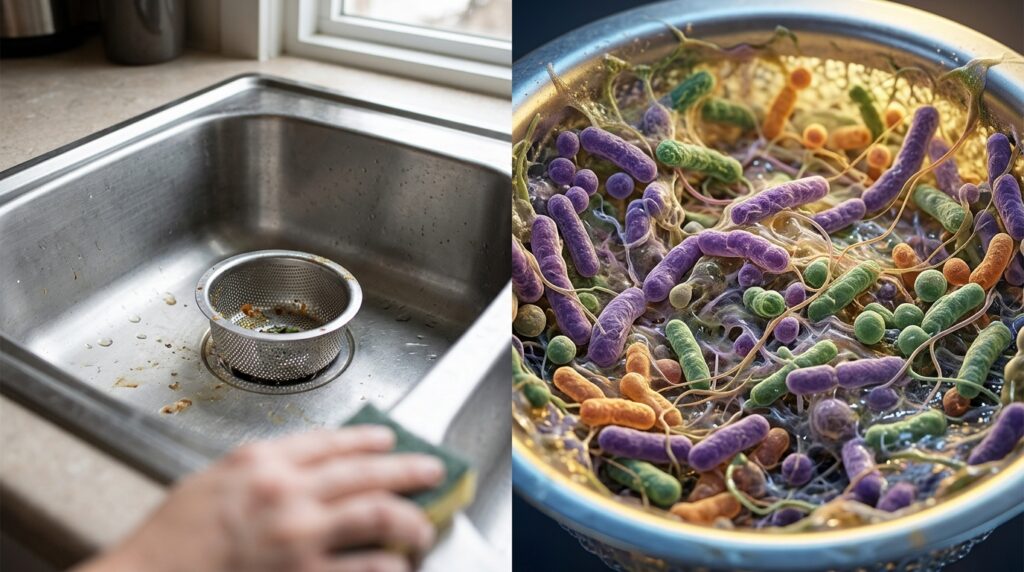
Left: a sink being cleaned; right: colorful bacteria in a drain
Use a separate sponge for the sink and keep the drain clean
One of the most common kitchen mistakes looks harmless. Someone scrubs the drain, where grease and food scraps have collected, and then uses the same sponge to wash a plate they will eat from. That moves microbes from the sink straight onto the dishes.
For this reason, the source recommends keeping a separate sponge or brush for the sink. Reusable cloths that can be washed regularly also work. A sponge should not be left wet at the bottom of the sink: after use, rinse it, wring it out and put it somewhere it can dry. Similar rules apply to kitchen towels and other fabrics.
Why the drain deserves special attention
Food scraps, grease and a slippery film gradually build up in the crevices of the drain. This film, known as biofilm, is a colony of microbes attached to a surface, and it is harder to remove than ordinary dirt. If the sink smells unpleasant, the source of the odor is often inside the drain rather than on the walls of the sink.
To prevent this, clean the removable strainer regularly, throw food waste in the bin and do not pour frying grease down the sink. If the drain clogs, choose a cleaning method that is safe for your pipes. Vinegar and baking soda help with some kinds of dirt and odors, but they should not be considered reliable disinfectants.
The myth that the sink is dirtier than the toilet
It is often claimed online that the kitchen sink is dirtier than the toilet. The source calls this an oversimplification. The NSF study mentioned above did show that kitchen surfaces can carry very large numbers of microbes, and the sink was among the most contaminated spots in the homes tested.
That does not mean every sink is necessarily dirtier than every toilet. The result depends on how often the sink is used and cleaned, the condition of its surfaces and which microorganisms are being counted. What matters more is that, unlike the toilet, the sink sits right next to food, so bacteria from it can much more easily end up on what you eat.
Habits that undermine a clean sink
The source lists several mistakes that can cancel out even regular cleaning:
- Leaving dirty dishes for days. Food residue and moisture help bacteria multiply, especially when plates have held meat, fish or dairy products.
- Relying on hot water. Tap water rinses away grease well but does not guarantee disinfection.
- Forgetting the faucet. The faucet handle is touched constantly with dirty hands during cooking, so it needs washing too.
- Cleaning only when it smells. An odor means the problem is already noticeable, and bacteria can be present on a sink that looks clean.
- Sending food scraps down the drain. They are better collected in the bin.
The bottom line
For an ordinary home kitchen, a simple habit is enough: after cooking, clear food out of the sink, wash it with dish soap and let it dry, and once or twice a week give it a more thorough clean along with the drain. Raw meat or poultry juices should be cleaned up immediately rather than left for cleaning day. A sterile sink is not the goal: the point is not to kill every microbe, but to keep harmful ones from reaching hands, dishes and food.