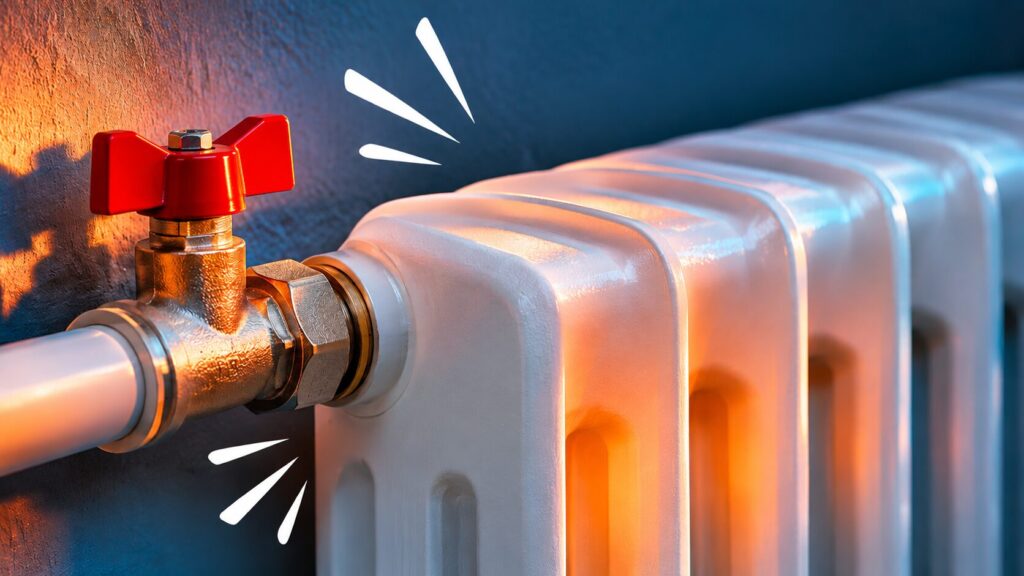
Metal heating radiator with a red valve and pipe
A sharp click from a radiator in the middle of the night can sound alarming, and sometimes a radiator crackles in whole series of clicks. In most cases, however, ordinary clicking does not mean the radiator is about to burst. Dry metallic cracking usually comes from metal expanding and contracting as it heats and cools. Gurgling combined with poor heating is a different matter, and some sounds, such as loud repeated banging or noise accompanied by leaks, are worth taking seriously.
What you need to know
- A two-metre steel pipe heated by 50 degrees Celsius lengthens by roughly one millimetre, which is enough to make it click against brackets and fittings.
- Radiators are not necessarily louder at night: background noise is lower, and automatic controls or thermostats can make temperatures change overnight.
- Gurgling often points to trapped air, while whistling or hissing can indicate water-flow or pressure problems.
- Leaks are the most dangerous sign, because the hot water in a heating system is under pressure.
The metal moves, even if you cannot see it
When hot water enters a radiator, the metal warms up and expands slightly. As it cools, it contracts again. This is known as thermal expansion.
The scale sounds trivial: a two-metre steel pipe heated by 50 degrees Celsius becomes about a millimetre longer. Even this tiny change is enough to produce a sound.
That is because a radiator does not hang in mid-air. It sits on brackets and connects to pipes, which in turn pass through walls and floors. As the metal heats up, it shifts slightly, rubs against its mountings or suddenly slips free at a point of contact. The result is a click.
As specialists at Viessmann explain, such sounds are especially typical when a system starts heating up or cooling down. The noise may not come from the radiator itself, but from a pipe running into a wall or floor.
Radiators are not necessarily noisier at night
The main reason is simple: during the day, clicks are drowned out by conversation, television and street noise. At night, even a quiet metallic tap can seem suspiciously loud.
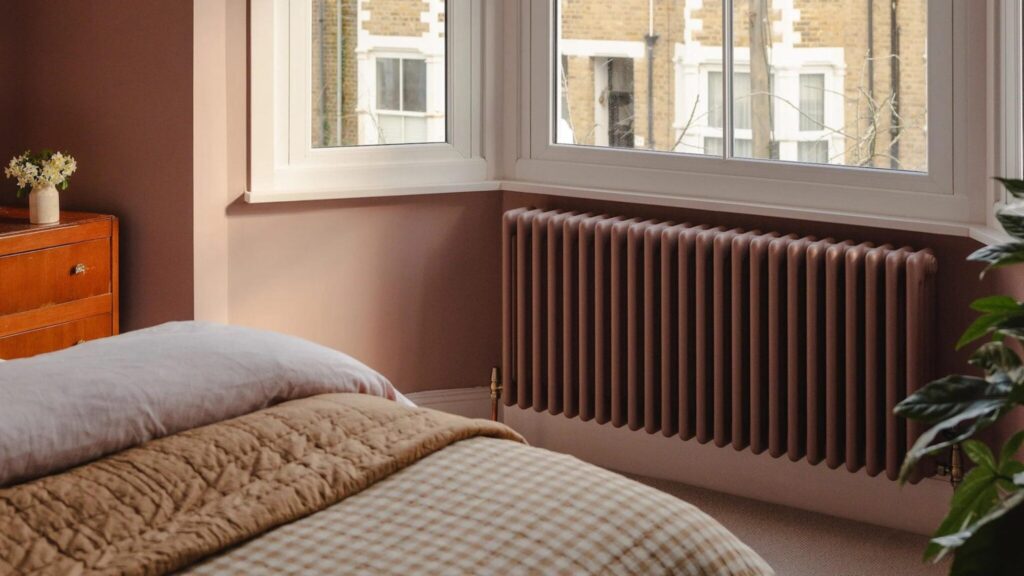
Heating radiator under a window next to a bed in a bedroom
There is a second reason too. Radiator temperature does not always stay constant. In apartment buildings, automatic controls at the building’s heating substation may adjust heating parameters depending on the weather, and in homes with thermostatic controls, the flow of hot water through radiators changes.
As a result, a radiator can warm up and cool down slightly even in the middle of the night. The metal changes size again and starts clicking.
There is no reason to believe the popular explanation that utility operators deliberately turn up the heating at night. No such general pattern exists: the operating mode depends on the specific system and its settings.
What different sounds can tell you
Not every noise is explained by expanding metal. Heating equipment manufacturer Grant distinguishes several characteristic sounds.
Occasional clicks and light crackling
Infrequent clicks and light crackling during heating are usually normal, especially if the radiator heats well and the sound fades after a while.
Gurgling and trickling
Gurgling and trickling often indicate trapped air. Hot water cannot properly fill part of the radiator, so the top of it may stay cold.
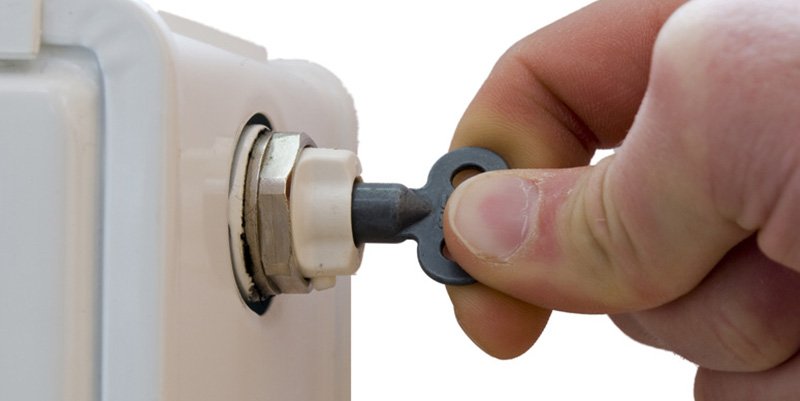
Bleed key inserted into a radiator air valve
Whistling and constant hissing
Whistling and persistent hissing may point to water-flow problems, such as an excessive pressure difference or water forced through a partially closed valve. Specialists at Danfoss note that correct pressure and flow regulation helps eliminate such noises.
Loud bangs and knocking in the pipes
Loud bangs and knocking in the pipes deserve attention. Sometimes the cause is simply a poorly fitted mounting, but repeated banging can be linked to valves, water circulation and sudden pressure changes. In some cases, water hammer occurs: a pressure surge caused by an abrupt change in flow speed.
The radiator’s temperature can also be revealing: uneven heating is one of the signs that the system may need checking.
When to call a professional
If a radiator crackles slightly as it heats up, warms the room well and does not leak anywhere, there is usually nothing to worry about. Thermal expansion on its own does not indicate a fault or a risk of the radiator bursting.
However, some signs should not be ignored:
- Clicks suddenly turn into strong, repeated bangs.
- Pipes visibly shake or vibrate strongly.
- Along with the noise, the radiator starts heating poorly or unevenly.
- Drops of water, rust streaks or damp patches appear at the joints.
- Loud knocking that was not there before appears after repairs or a radiator replacement.
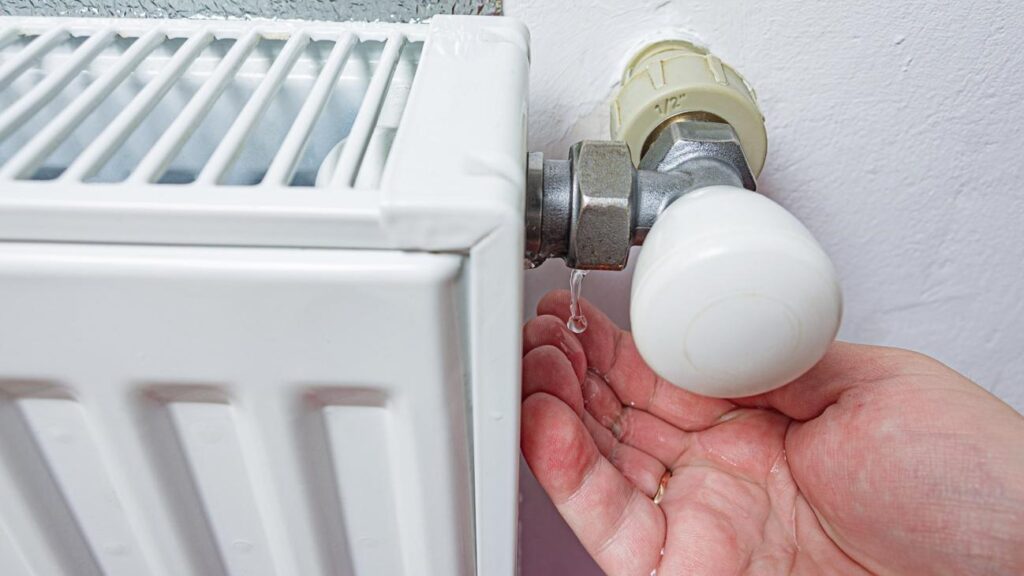
Water dripping from a leaking pipe connection on a radiator
Leaks are particularly dangerous: the hot water in a heating system is under pressure. If a radiator or a connection starts leaking, contact the building’s emergency maintenance service immediately.
How to reduce annoying cracking
If the noise comes from the mountings rather than the system itself, the problem can sometimes be solved without replacing the radiator. The first step is to locate where the sound is coming from.
Here is what can help:
- Check whether the radiator touches anything. Sometimes a decorative cover or a loosely fitted pipe trim is what rattles.
- Note when the clicks occur. If they appear only while the radiator heats up and cools down, expanding metal is the most likely cause.
- Ask a plumber to inspect the mountings. Heat-resistant pads in suitable places and proper clearances for pipe expansion can noticeably reduce noise.
- If you hear gurgling, look for signs of an airlock. If the radiator has a working manual bleed valve, air can be released by following the instructions. Without experience or a proper built-in air vent, it is better to contact the building management company instead.
Do not try to rigidly clamp the pipes, loosen connections yourself or unscrew the plugs of an old cast-iron radiator. Doing so can turn a minor nuisance into a serious failure.
One more point: the quietest radiator is not necessarily the newest one. What matters far more is whether it is installed correctly, whether there is room for thermal expansion and whether the heating system is working properly.
And if the radiator heats well but the room still feels chilly, check where heat is escaping from the home. Sometimes the problem has nothing to do with the radiator at all.