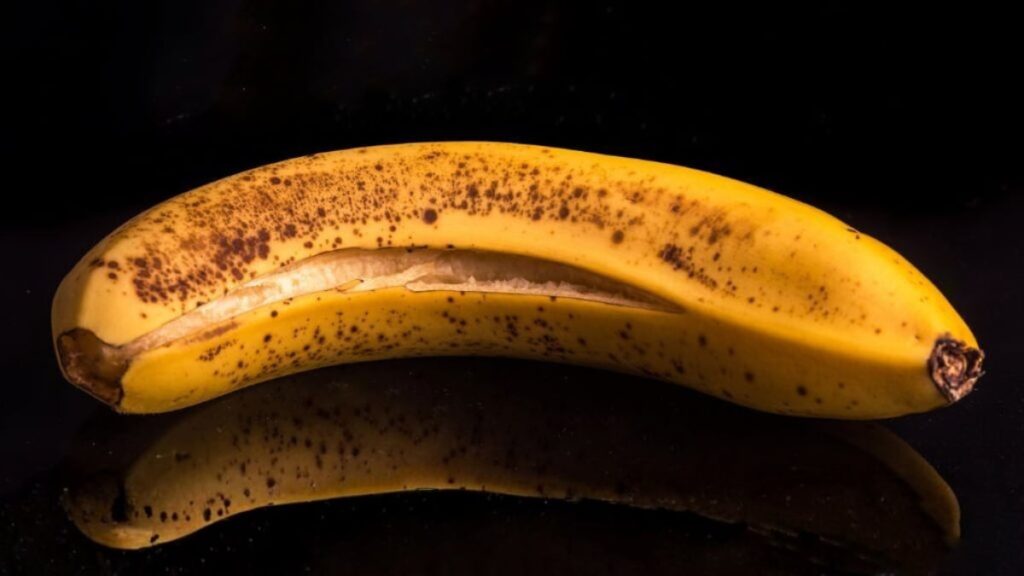
Brown bananas don’t need to be thrown away — you can make plenty of useful things from them
Brown bananas on the counter and wilted lettuce in the fridge are familiar to everyone. But before throwing everything away, it’s worth understanding the difference between food that has simply aged and food that has actually gone bad. Scientists identify four signs of spoiled food. And if none of these signs are present, the product can still be saved.
How much food is thrown away in Russia
The problem of food waste in Russia is far more significant than it seems at the level of a single kitchen. According to a study by SKOLKOVO and the X5 “Vyruchaem” fund, approximately 17 million tons of food waste is generated in the country annually, and when factoring in losses during storage and transportation, the total volume reaches 42 million tons.
71% of such waste comes from households, meaning a huge portion of food disappears not at factories and warehouses, but in ordinary refrigerators, trash cans, and “I’ll finish it later” bags.
Against the backdrop of rising prices, throwing away food has become especially painful because along with spoiled yogurt or blackened bananas, real money goes straight into the trash. But saving money shouldn’t turn into a game where there’s a risk of food poisoning. It’s important to understand the difference between products that have simply lost their appealing appearance and food that has become genuinely dangerous. One can still be saved, while the other is better sent to the trash without any heroics.
How to tell if food has gone bad
It’s important to understand that in most cases, bad-looking food has indeed gone bad and shouldn’t be eaten. You can tell by knowing the four signs of food spoilage that mean the product should be thrown away:
- visible mold;
- slime on the surface;
- leaking liquid;
- a sharp or sour smell.
If you notice even one of these signs, the food must be thrown away to avoid poisoning with stomach pain, nausea, vomiting, and diarrhea.
However, wrinkles, darkening, and dryness are usually just signs that the product has aged. They can still be eaten, though the flavor won’t be as rich.
Can you eat dark bananas and wrinkled apples?
Fruits are the best example of how appearance can be deceiving. Brown and nearly black bananas look repulsive but are absolutely safe for banana bread, pancakes, or smoothies. Old bananas are usually kept away from fresh fruit because they release ethylene gas, which accelerates the ripening of everything around them. This is exactly why pirates didn’t take bananas on their ships.
Old apples wrinkle because they lose water, but these are ideal for baking, stewing, or grating. Citrus peel becomes tough and dry over time, but the zest can still be added to baked goods and jams, while the flesh can go into drinks, dressings, and marinades.
There’s a separate rule regarding mold. On large fruits, mold can usually be cut away, but this must be done with a generous margin — at least a few centimeters. However, if mold appears on soft or small fruits like berries, it’s not worth trying to save them — just throw them away.
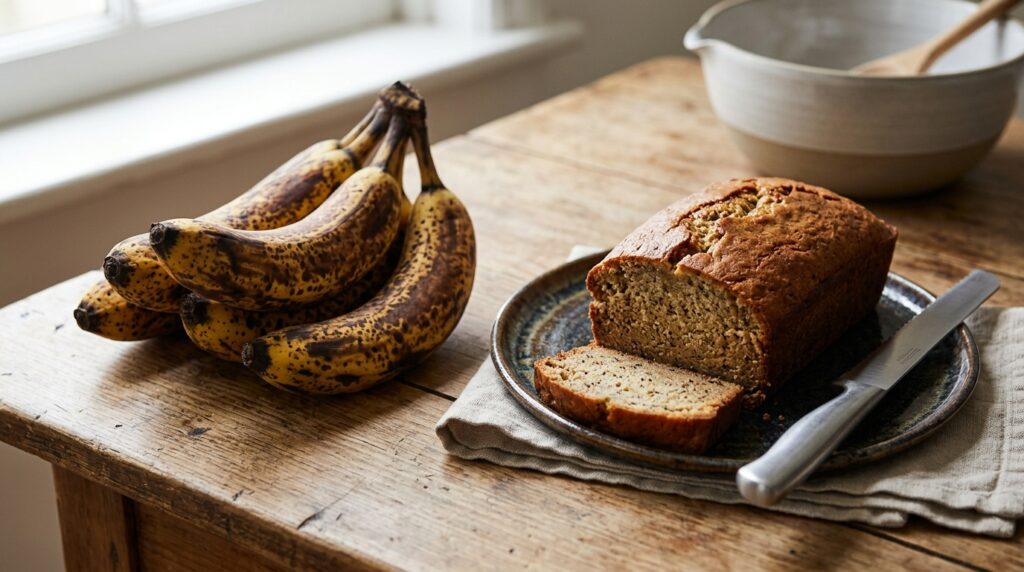
Overripe bananas are an excellent base for baking
How to revive wilted vegetables and greens
Limp and wrinkled vegetables have lost moisture but haven’t necessarily gone bad. They can be roasted, mashed into purée, or added to just about anything, especially soups. Wilted leafy greens like spinach or cabbage can often be restored. Simply soak the leaves in cold water for at least 30 minutes so they become firm again.
For hard vegetables like potatoes, carrots, and squash, damaged and bruised areas are usually just cut away. But if a potato has turned green, it needs to be thrown away because toxic substances have accumulated in it.
Mushrooms are a separate story. A fuzzy white coating on them is often mistaken for mold, but it’s usually mycelium — part of the mushroom’s root system. Real mold on mushrooms appears as bright spots of blue, green, gray, or yellow — those are the ones to watch out for.
Can you eat old bread, rice, and pasta?
With grains and baked goods, the rules are stricter. Moldy bread should be thrown away entirely because in porous products, mold spreads inside much more easily than it appears from the outside. However, stale bread without mold can easily be saved — just toast it or turn it into croutons and breadcrumbs. Storing it in a dry environment like a bread box or paper bag significantly slows mold growth.
Leftover cooked rice or pasta can be used within a couple of days, but under one condition. It’s important to refrigerate them quickly and then reheat them thoroughly until very hot. Otherwise, there’s a risk of serious rice-related food poisoning.
And there’s a strict rule that’s best not to break. Food left at room temperature for two hours or longer should be thrown away because bacteria may have multiplied in it that can’t be eliminated by simple reheating.
Can you eat old cheese?
We usually eat milk and yogurt straight from the fridge — we don’t heat them to kill bacteria. That’s precisely why dairy products past their expiration date are safer to throw away, and to prevent them from spoiling prematurely, they should be taken out only with clean utensils and immediately returned to the cold.
With cheeses, it all depends on their density. If mold appears on soft cheese, the entire piece should be thrown away because mold roots penetrate deep into the soft structure. Hard cheeses like Parmesan, however, are more resistant to mold, so the moldy part can simply be cut away with a generous margin.
What you need to know about food expiration dates
In the end, it turns out that many products can be saved and don’t need to be thrown away. You simply need to distinguish real spoilage (mold, slime, liquid, sharp smell) from normal aging that only affects appearance. By following simple rules and applying the tips from this article, you can simultaneously reduce waste and save money.
If you want to learn to better listen to your own body, pay attention to health signals as well. For example, the color of your tongue can tell you more about your condition than you might think.