Every era leaves behind objects that once seemed indispensable but eventually vanish — not because they were banned or broke, but because the way of life that sustained them simply moved on. Soviet-era apartments were full of such items: purpose-built tools and rituals shaped by a planned economy, limited retail, and pre-digital entertainment. Here are six everyday things that were once found in virtually every Soviet home and have now all but disappeared.
What you need to know
- Wired radio points delivered broadcasts like a utility — no tuning required — but became obsolete as TV, FM radio, and the internet replaced them.
- The avoska (string bag) and enamel milk canister vanished because pre-packaged goods eliminated the need to carry your own containers to mobile vendors.
- Home soda siphons died out in the 1990s when production of the small CO₂ cartridges they required ceased.
- Carpet beaters fell out of use as wall-hung carpets went out of fashion and powerful vacuum cleaners took over routine cleaning.
The wired radio point: broadcasting as a household utility
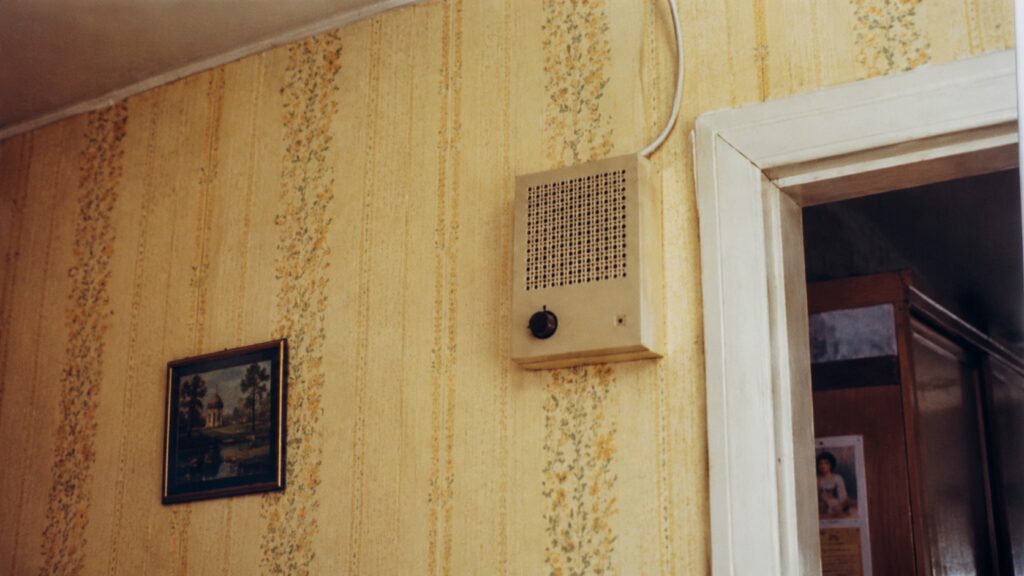
A wired radio point on the wall of a Soviet apartment
One of the most distinctive vanished objects was a small speaker box connected not to the electrical grid but to a dedicated wired broadcasting network. It was, in effect, a radio that required no tuning: the user simply turned a volume knob and the broadcast was already playing. These devices — from the famous “black dish” speakers of the 1930s to compact plastic rectangles — hung in virtually every Soviet kitchen, serving as the primary news source and emergency alert system.
With the arrival of television, FM receivers, and eventually the internet, maintaining a vast physical wire network across the country became prohibitively expensive. The very concept of radio delivered to the home like water or electricity disappeared, and the wall-mounted speaker fell silent for good.
The avoska string bag and the enamel canister
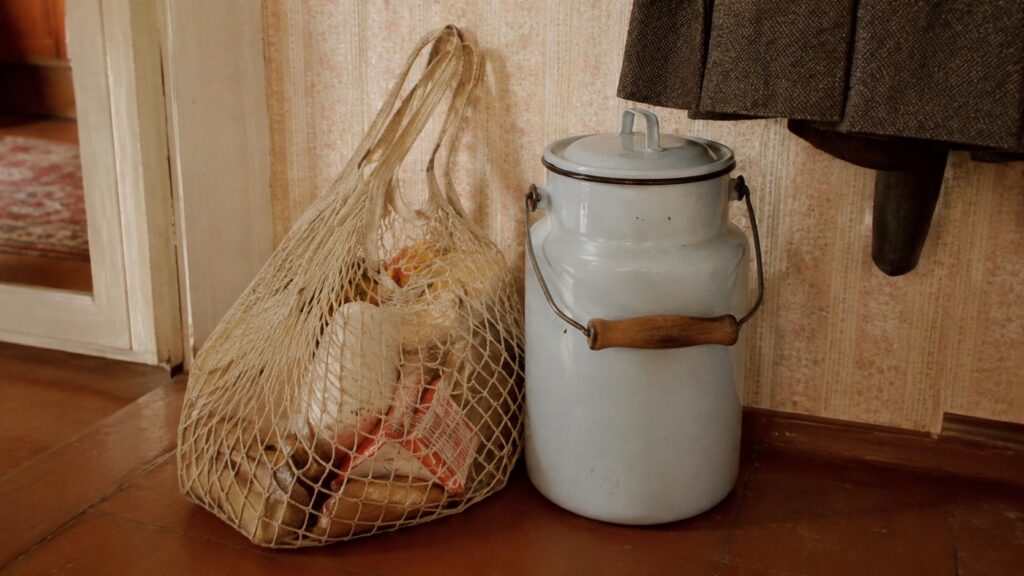
An enamel canister and an avoska string bag
Soviet citizens routinely carried a woven string bag — the avoska — in their pocket. Rolled up, it was no bigger than a fist, yet it could bear enormous weight. The name itself comes from the Russian word avos’ (“just in case”), because shoppers never knew which store might suddenly have a scarce product in stock. Paired with it was an enamel or aluminium canister that stood in the hallway, ready for the moment a tanker truck selling milk or kvas (a fermented grain drink) arrived in the courtyard.
These items disappeared not because of any design flaw but because the retail system changed radically. Liquids are now sold pre-packaged, eliminating the need to bring your own container to a mobile vendor. The string bags gave way to plastic bags — though the idea of a reusable shopping bag has returned, rebranded as an eco-friendly fashion accessory rather than a daily necessity.
Home soda siphons and returnable glass bottles
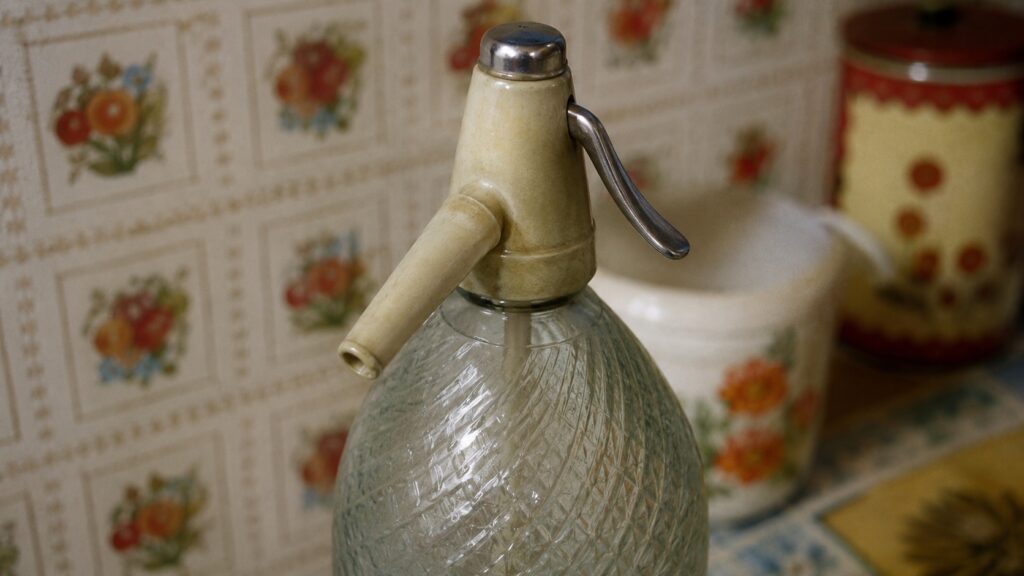
In the USSR, people even made carbonated water at home
The Soviet household siphon was a heavy metal or glass flask that used small CO₂ cartridges to carbonate ordinary tap water right on the kitchen table. Equally familiar was the glass milk or kefir bottle sealed with thin coloured foil — green for kefir, silver for milk. Both items demanded a certain effort: cartridges had to be purchased at a hardware store, and empty glass bottles had to be washed and returned for a 15-kopek deposit.
In the 1990s, production of the replacement gas cartridges stopped, and the entire domestic ritual of making homemade lemonade simply dissolved. Meanwhile, the dairy industry shifted en masse to lightweight disposable plastic packaging.
Filmstrip projectors and tear-off wall calendars
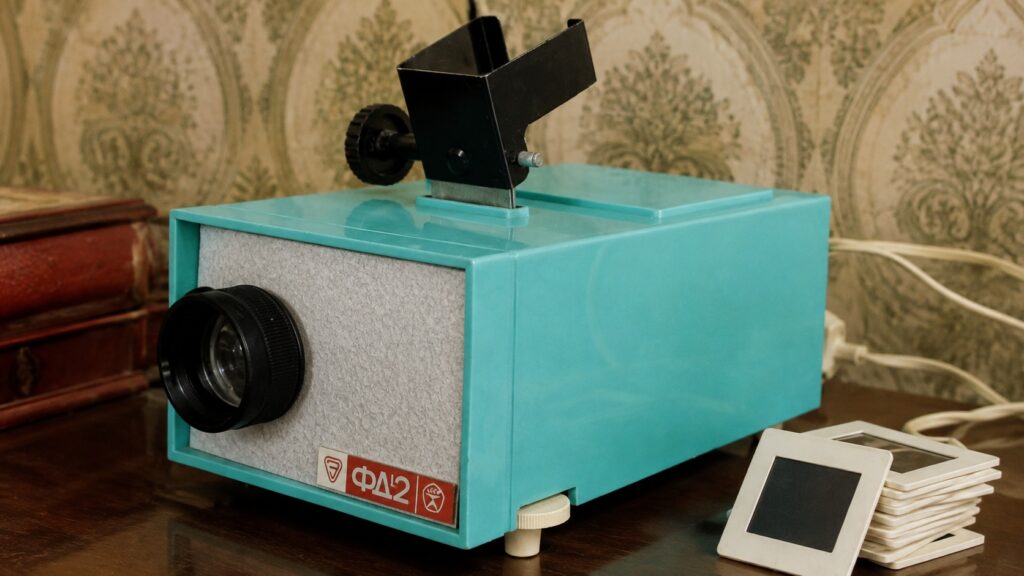
A Soviet filmstrip projector
Before smartphones and unlimited internet, entertainment took different forms. Each morning, a page was torn from a thick wall calendar, revealing tips, recipes, or historical facts on the reverse — a kind of analogue daily news feed. In the evening, the family would turn off the lights, aim a filmstrip projector (diaprojector) at the wall, and manually advance frames of illustrated film, slowly reading the captions beneath each image.
This style of leisure set a very slow, contemplative pace that is fundamentally incompatible with the modern era. Televisions, game consoles, and computers offered bright, dynamic visuals that made hand-cranked filmstrips feel tedious. Tear-off calendars are still sold, but they have ceased to be a fixture in every kitchen, becoming a charming but optional novelty item.
The carpet beater
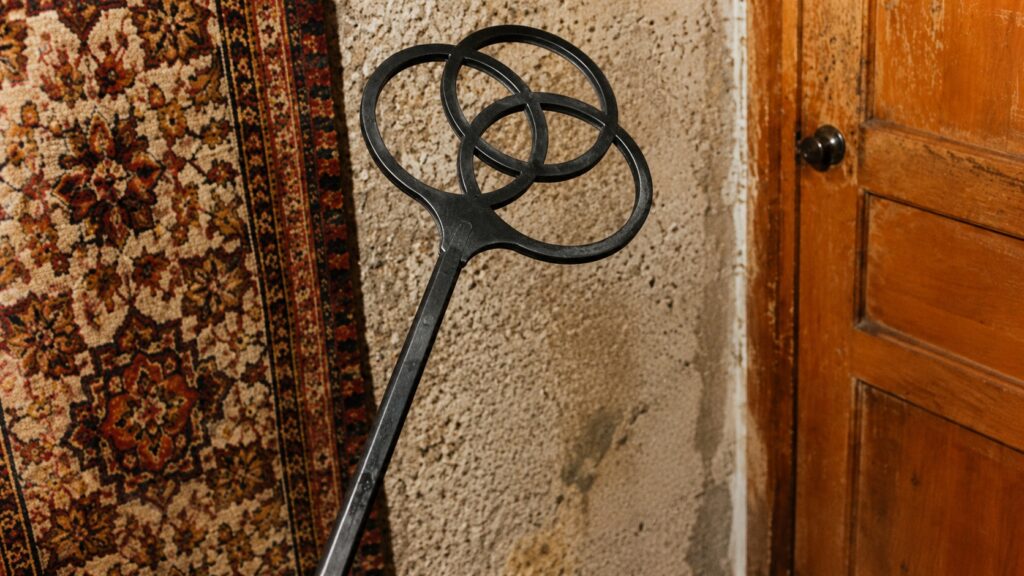
A Soviet carpet beater
During the 1960s–1980s, carpets were a status symbol: people queued to buy them and hung them on walls for warmth and sound insulation. Every few months, these heavy textiles were carried outside, draped over a metal bar in the courtyard, and vigorously beaten with a plastic or woven beater. Every Soviet hallway had one of these implements waiting for the next deep-cleaning day.
The carpet beater itself still works perfectly well, but modern urban life has virtually eliminated the situation in which it is needed. The fashion for wall-hung carpets has passed, and powerful vacuum cleaners have taken over routine cleaning, sparing people the chore of hauling heavy rugs down stairwells and into the yard.
Why these objects matter
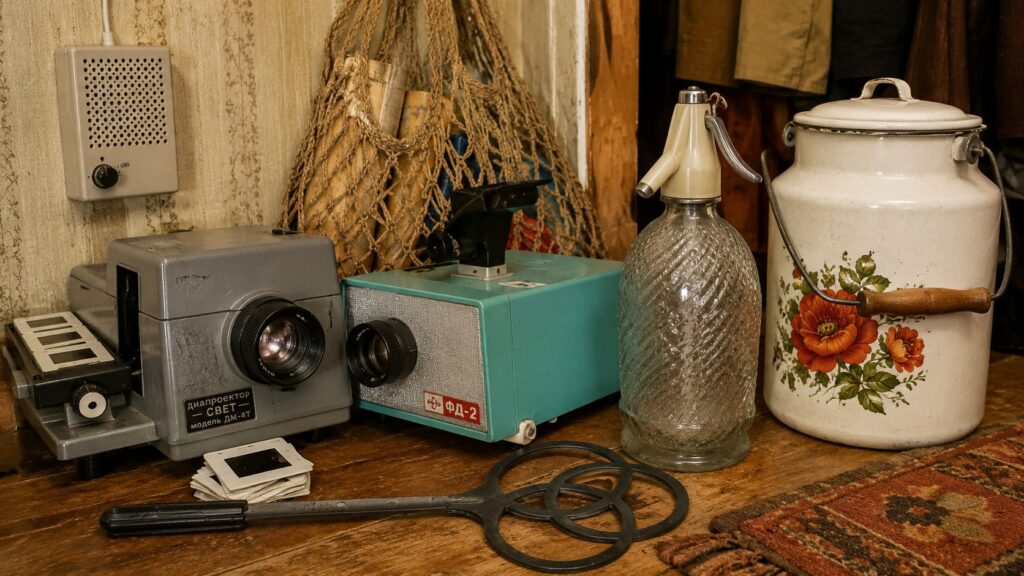
Many Soviet-era household items have been forgotten and are unlikely to return to everyday use
None of these items were outlawed or recalled. They simply lost their purpose as the economic and technological context around them shifted. A modern person would need a lengthy explanation of why anyone would wash an empty kefir bottle, carry their own container to a street vendor, or beat a carpet in the courtyard. The surrounding world changed, and objects that had seemed irreplaceable for decades quietly remained in the past along with the habits of a bygone era.