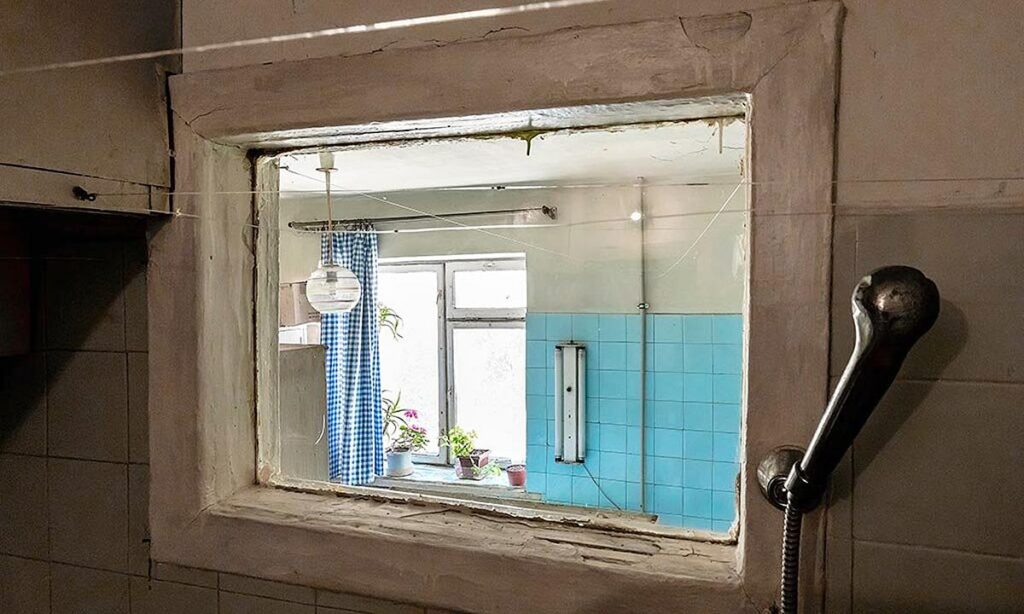
Light from the kitchen window passes into the bathroom through an opening in the wall. Image source: maximonline.ru
The small window set high in the wall between the kitchen and bathroom in many old Soviet-era apartments had a simple, practical purpose: it let daylight from the kitchen into a bathroom that had no window of its own. The opening was often frosted and sometimes did not open at all, which has fuelled plenty of theories. Old building drawings show that, in some flats, borrowed light from the kitchen travelled not into one room but into two.
What you need to know
- The window passed daylight from the kitchen into an interior bathroom, a technique architects called “second light.”
- 1966 drawings for the brick five-storey building series 1-447S-43 specify a transom unit of roughly 67 × 42 cm, and some flats had a second window between the bathroom and the toilet.
- There is no convincing documentary evidence that the windows were meant to kill tuberculosis bacteria or to protect walls in a gas explosion.
- Filling in the opening may count as a layout change that requires official approval.
Daylight reached the bathroom through the kitchen
In most of these apartments, the bathroom sat in the interior of the building and had no window to the outside. The kitchen next to it, however, received plenty of daylight. Part of that light was passed through a small glazed opening in the partition wall.
Architects called this approach “second light.” The window made it possible to use the bathroom during the day without switching on a lamp. The light was not enough for every task, but it was often sufficient for washing your face or finding something.
The drawings for a brick five-storey building of series 1-447S-43, dated 1966, show an interesting detail. They include a transom unit measuring roughly 67 by 42 cm. Some apartments even had two interior windows: one between the kitchen and the bathroom, and another between the bathroom and the toilet. The result was a chain through which daylight reached rooms that had no exterior windows.
These windows predate Khrushchev-era blocks
Similar openings appeared in pre-revolutionary buildings, then in Stalin-era buildings and in some Khrushchev-era apartment blocks (known as khrushchyovkas). It is therefore wrong to treat them as a purely Soviet invention.
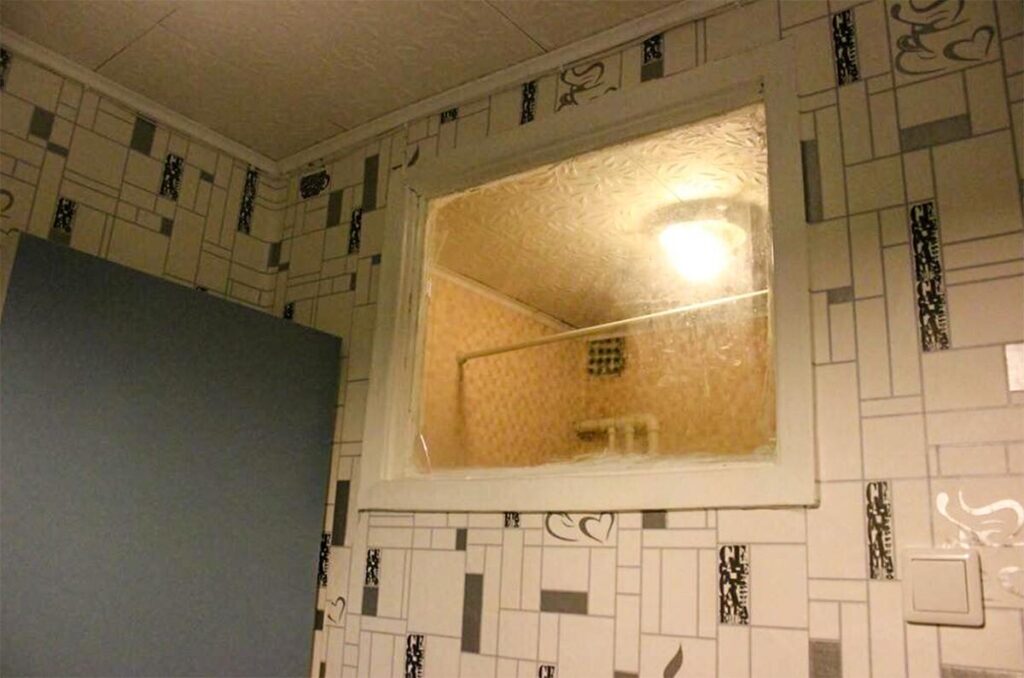
A surviving interior window in an old apartment. Image source: es.gw2ru.com
The design depended on when the building was constructed and on the specific project. Some windows were fixed, while others could be opened. In some apartments they led from the kitchen into the bathroom; in others they were supplemented by an opening between the bathroom and the toilet.
The windows were not a standard feature of every Khrushchev-era flat. If the layout did not include a shared wall between the kitchen and the bathroom, there was usually no such opening.
Protection from tuberculosis and gas explosions: fact or myth?
The best-known explanation claims that sunlight coming through the window was meant to kill the tuberculosis bacterium. However, there is no convincing documentary evidence for this purpose. In addition, ordinary window glass lets through very little of the ultraviolet light needed for effective disinfection.
The Soviet building code (SNiP) of 1958 required natural lighting for living rooms, kitchens and toilets without sewer connections, but not for ordinary bathrooms. The same code provided for separate exhaust ventilation in bathrooms and toilets.
Another popular legend holds that the window protected the walls in the event of a household gas explosion. None of the projects examined contain any confirmation of such a protective function. A small pane of glass between rooms cannot make an explosion safe.
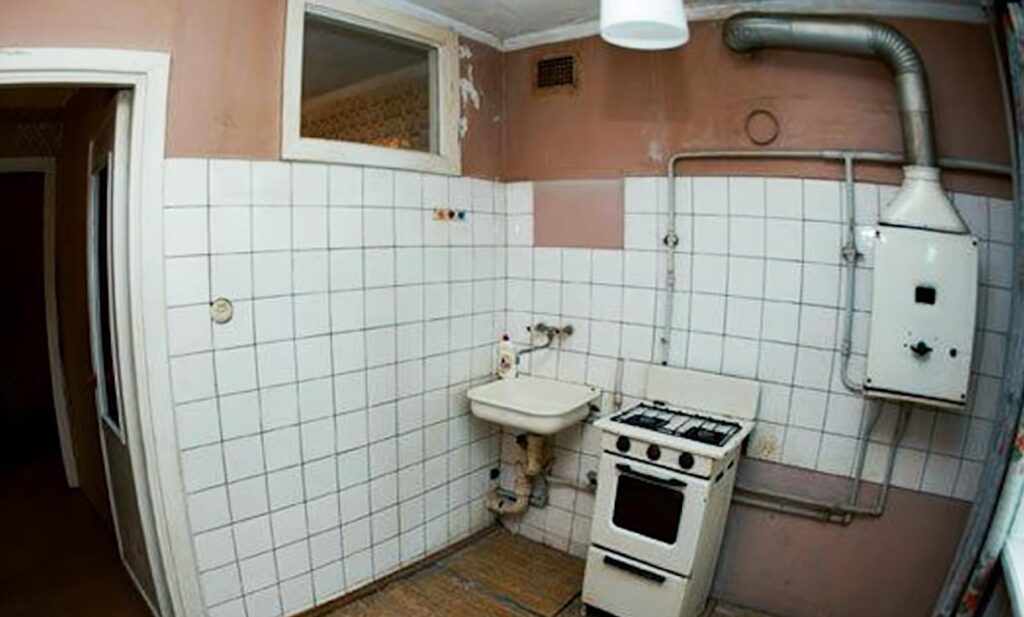
An old Soviet kitchen with a gas water heater, exposed pipes and a small window into the adjoining room.
There was, however, a genuine connection with gas equipment. Under rules issued in 1954, some bathrooms with a gas water heater were permitted to have a grilled transom opening into an adjacent utility room. It allowed air to pass between the rooms and made it possible to reduce the required volume of the bathroom. But that is not the same thing as an ordinary fixed glass window.
The ventilation explanation does not fit every apartment either. A transom that could be opened may have helped with air exchange, but a sealed window did not remove humid air. That is why the exhaust ventilation was primarily responsible for removing dampness.
Why newer buildings stopped including these windows
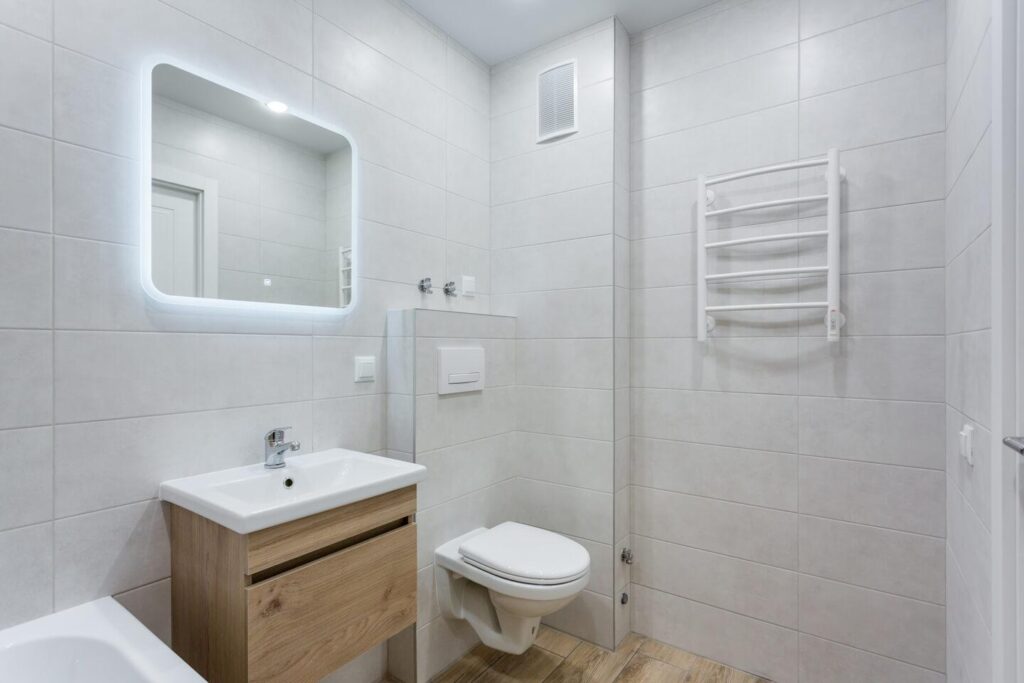
A modern bathroom without an interior window, with electric lighting and a ventilation grille. Image source: kvartiry.kssk.ru
Over time, the extra light lost its former value. Electric lighting became commonplace, and layouts changed: bathrooms and kitchens were increasingly separated by corridors, ventilation shafts or other rooms.
The interior window gradually went from a useful feature to an optional one. In newer projects it became easier to drop it than to complicate partition walls and install extra glazing.
Closing up an old window: what to check first
If an old window gets in the way of a renovation, it can usually be removed. According to the source, the opening does not necessarily have to be kept even when gas equipment is present: in a published explanation, MOSGAZ, Moscow’s gas utility, confirmed that it can be removed provided the requirements for gas equipment are met.
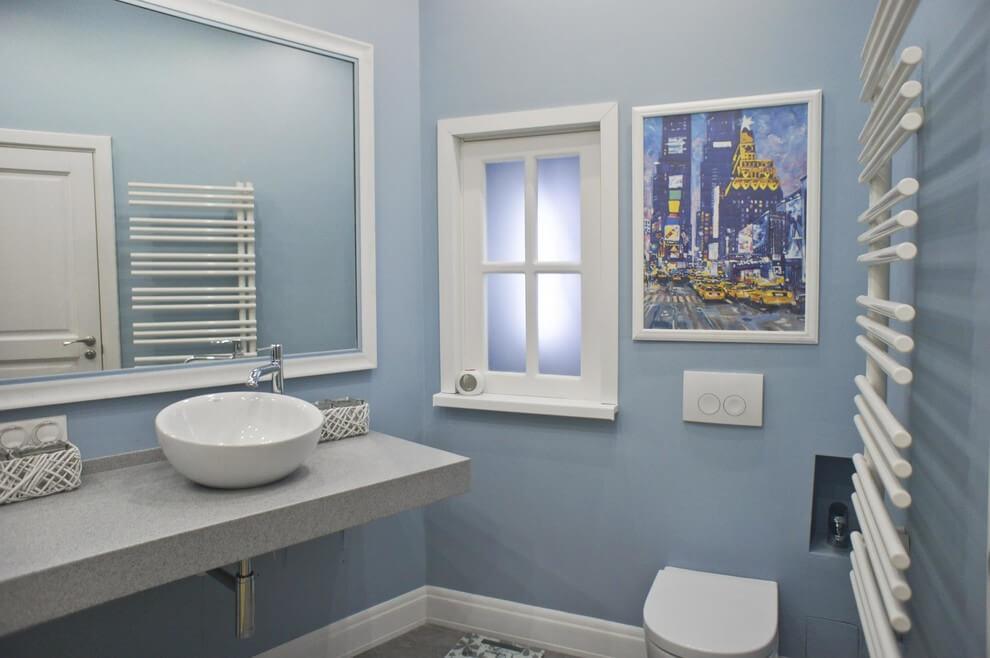
A renovated bathroom with a small frosted-glass window, showing how the opening can be kept and made part of the interior. Image source: yrossi.ru
There is an important caveat. The source notes that filling in the opening may be treated as a change to the apartment’s layout and may require official approval. It advises first checking the apartment’s technical plan and confirming the rules with the local housing inspectorate. This guidance refers to Russian housing rules. The source also stresses that ventilation ducts and other building services must not be damaged during the work.
For those who want to keep the daylight, the source suggests a simpler option: replace the old glass with frosted glass or install glass blocks. The bathroom stays bright, while what happens inside cannot be seen from the kitchen.