
A small, sulking girl in a pink dress
If a child doesn’t accept the word “no,” rarely says “thank you,” and constantly demands more, they may have been spoiled. According to the source article, the cause is usually not the number of toys or gifts but the rules a household follows and what adults do day to day. Some parenting habits help children become more independent, while others quietly teach them to get what they want without effort. The article argues that this can be corrected while a child is still young, but the adults will have to change too.
What you need to know
- The source lists five warning signs: ignoring “no,” taking more than giving, demanding things immediately, self-centeredness, and never being satisfied.
- It says children should be expected to resist new rules by sulking, arguing, and testing whether parents mean it, and describes this as normal.
- Its suggested fixes include refusing calmly with a brief explanation, praising kindness rather than everything, and building gratitude into family routines.
- It also recommends teaching children to wait, to consider how their actions affect others, and to give as well as receive.
Five signs of a spoiled child
The article notes that parents usually spoil children not out of indifference but because they badly want to be good parents. They are afraid to refuse, to say a firm “no,” or to insist on simple rules. Later, they may notice with dismay that the child is never satisfied, doesn’t appreciate care, and doesn’t want to make an effort. The first step toward change, the source says, is honestly acknowledging the problem.
- The child doesn’t understand “no.” They expect to get their way every time, and they do. In effect, the child is the one who keeps saying “no,” not the parents.
- The child takes more than they give. They don’t appreciate what is done for them and don’t say “please” or “thank you.” The word heard most often is “give me.”
- The child needs it “right now.” They don’t consider that their demands might inconvenience anyone and expect adults to drop everything for them.
- The child thinks only of themselves. They believe they are entitled to special privileges. If another child is praised, they get upset, because in their view they deserve the most praise.
- It’s never enough. They are used to getting the best of everything, yet are never content and keep wanting more.
The source argues that this is about more than tantrums, stating that spoiled children often grow up into self-centered adults who are dissatisfied with their lives. The article does not cite research for this specific claim, but its advice is to start making changes now rather than later.
Expect the child to resist change
Parents shouldn’t expect a child to welcome new rules, the article warns. More likely, the child will push back hard: sulking, arguing, and testing whether the parents are serious. According to the source, this is normal and is a sign that the familiar order has genuinely changed.
There is no need to change everything in a single day, the article says, but parents also shouldn’t back down. The process may reveal that adults need to change some of their own habits as well, since children primarily copy the grown-ups around them.

A girl demands attention while her mother talks on the phone
Refuse calmly, praise kindness, practice gratitude
Say “no” without guilt. Many parents worry that refusals will damage a child’s self-esteem. The source argues that the opposite is usually true and cites a cross-sectional study of child self-esteem and mothers’ parenting styles. Based on it, the article says children raised with reasonable strictness tend to be more self-confident and more attentive to others. Because the study is cross-sectional, it shows an association rather than proof of cause and effect. When refusing, the article advises giving a short, clear reason, for example: “You can’t go and play with Sasha today. You’re still coughing and could make him sick, and we don’t want him to get ill.”
Praise the right things. If a child is receiving too much praise, the source suggests focusing it on what the child does for others or together with others. For example: “Well done for giving your old building set to the boy next door. You have a kind heart.” This, the article says, shows the child that caring for others matters.
Teach gratitude. According to the article, people who know how to express gratitude feel happier, cope with hardship more easily, and are more satisfied with life. The article does not cite a study for this claim. Its practical suggestion is for parents to lead by example: thank other people out loud more often and encourage the child to do the same, sincerely. This can become a family tradition. For example, everyone can share at dinner what they were grateful for that day, or the family can keep a shared gratitude journal.
Teach waiting, empathy, and generosity
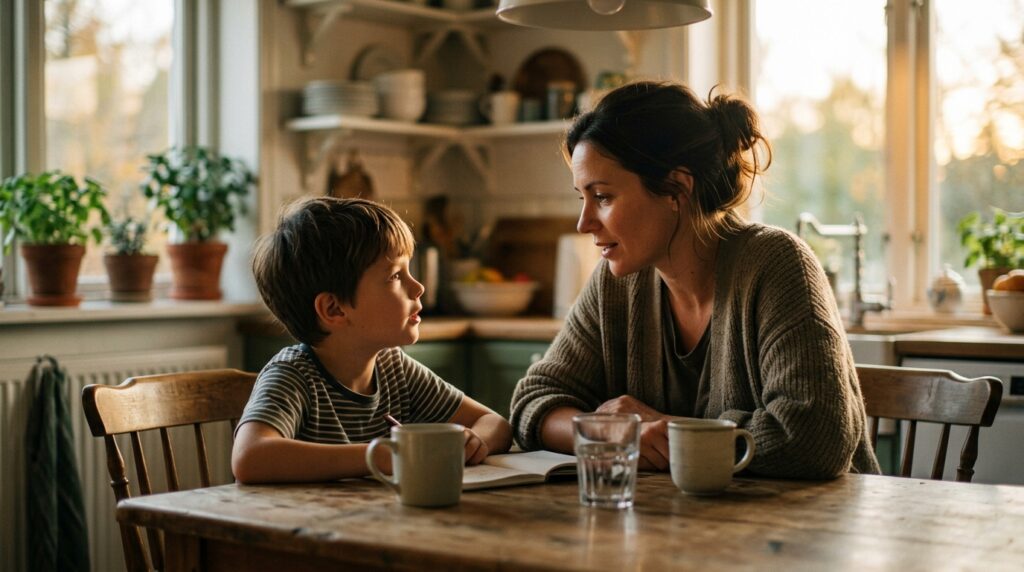
A woman and a boy talking at a kitchen table
Teach the child to wait. The source describes the ability to wait and delay gratification as a lifelong skill. It goes further, citing a study to support the claim that this ability is linked to how well a person later manages money. Readers should treat this as an association reported by the source rather than a guarantee. The article suggests practicing every day: if you are on the phone and your child demands attention, don’t end the call; instead, signal that you’ll be free soon.
Point out thoughtless behavior. When a child acts rudely, the article recommends helping them reflect by asking, for example: “How do you think Dima felt when you took his candy without asking?” According to the source, the more often such questions come up, the better a child learns empathy and understands how their actions affect others.
Teach giving, not just receiving. The article advises parents to help others themselves, even when nobody asks, and to invite the child to come up with good deeds of their own. It also recommends teaching children to accept gifts graciously, for example with: “Thank you so much, I really appreciate it!”