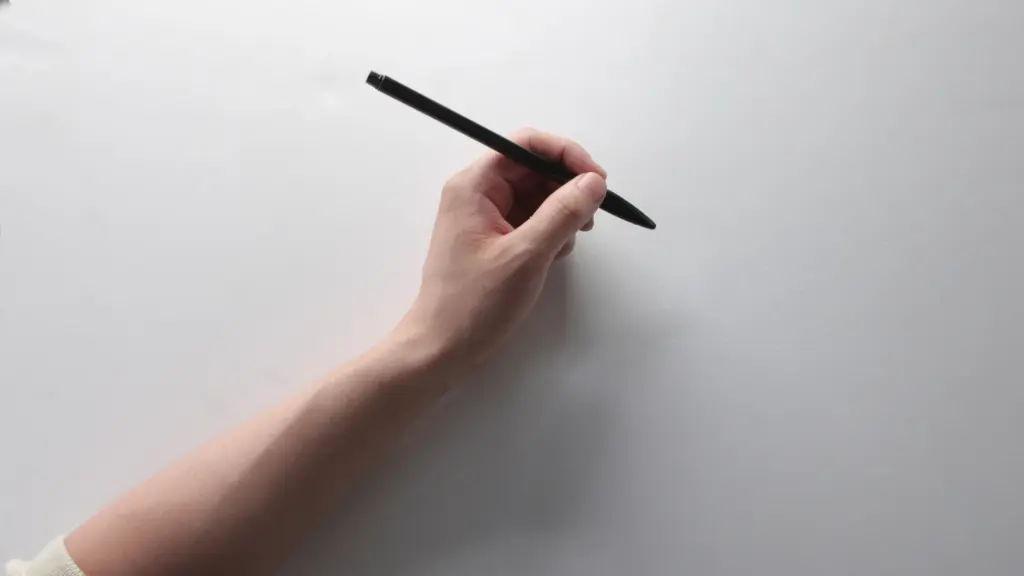
The dominant hand may have developed solely as a result of training
From early childhood, we get used to dividing people into right-handers and left-handers. For many years, it was believed that the choice of the dominant hand is hardwired in the brain even before birth, determining which hemisphere handles precise movements better. However, a recent study by neurologists from the United States has shown that our dependence on one hand is explained not by biology at all, but by decades of continuous practice.
The Myth About Brain Hemispheres and the Dominant Hand
In the scientific community, the belief took root that the dominance of one hand is linked to the internal structure of the brain. It was thought that one hemisphere is naturally better at controlling the hand. This theory was even supported by the fact that the preference for one hand often manifests as early as in the womb.
A team of American researchers questioned this classical dogma. In their paper for the journal PNAS, they proposed an alternative hypothesis that the dominant hand became dexterous thanks to training. We spend years learning to hold a pen, scissors, or a tennis racket, performing highly complex trajectories. But how can you prove that it’s all about constant training when an adult has already devoted their entire life to their preferred hand?
What Experiment Did the Scientists Conduct
To eliminate the factor of years of experience, the scientists had to devise an entirely new task that the participants had never performed in everyday life. They chose elbow writing.
The logic of the experiment was elegant and simple. If the brain has an innate preference for controlling the right side of the body, then a committed right-hander should write with their right elbow significantly better than with their left.
To test this theory, the researchers selected a group of healthy right-handers and gave them the following tasks:
- First, participants had to write the letter “A” and the number “8” with their dominant and non-dominant hand eight times each;
- Then a writing instrument was securely fastened to their elbows with the tip pointing down to eliminate any wobbling;
- After that, the volunteers had to repeat writing the same symbols, but using only their elbows.
Identical Writing Results for the Right and Left Hand
The results of elbow writing turned out to be completely unexpected for proponents of the theory of innate right-handedness. Despite the fact that all participants were one hundred percent right-handed, they performed equally poorly with both arms. Their right elbow demonstrated absolutely no advantage over the left one.
To eliminate human bias in evaluating the scribbles, the scientists used a specially trained neural network. The artificial intelligence classified the drawn figures as “good” and “bad.” The analysis confirmed that even accounting for the time spent drawing each symbol, there was no difference between the sides. As soon as the familiar tool was removed from the hand, the dominance of the right side simply vanished.
Training the Non-Dominant Hand
The experiment didn’t end there. The researchers decided to test whether elbows could be trained the same way we train our hands in elementary school.
Half the participants were made to regularly practice writing with their dominant elbow, while the other half were trained to use their non-dominant elbow. Before training began, the quality of symbols in both groups was equally poor. However, after the course of exercises, the quality of elbow writing improved significantly in all participants, regardless of which side they had trained.
This stage of the experiment proved two important things. First, the problem of clumsiness lies not in the physiology of the elbow itself — we are perfectly capable of learning to use it for precise tasks. Second, this result became a strong argument in favor of the idea that the dexterity of our dominant hand is formed over years. It is not a built-in brain function that automatically selects the “better” side for fine motor skills, but rather the result of thousands of hours of manipulating objects.
The discovery by American scientists changes our understanding of how our body handles tools. It turns out that the right hemisphere of the brain is no worse than the left at handling precise movements — we simply don’t give it enough opportunities to prove itself. If you strip away our accumulated experience and force us to use an unfamiliar part of the body, any innate difference disappears. This proves that the human brain is incredibly flexible, and our physical limitations are often dictated only by what we have grown accustomed to over many years.