Swollen cans should never be opened, even if you don’t plan to taste them
Almost everyone has at some point found a swollen can of stewed meat or homemade pickles in the far corner of a kitchen cabinet or cellar. Tasting the contents of such a can is deadly dangerous, even if it seems like there’s nothing in it that could go bad. Let’s figure out what exactly causes metal lids to bulge and why such food is categorically forbidden not only to taste on the tip of your tongue, but even to open for inspection.
Why Canned Foods and Preserves Swell
The hermetic packaging of canned food creates an ideal oxygen-free environment inside. If the sterilization process was violated at the factory or during home canning, or if the required temperature wasn’t maintained, live microorganisms remain inside. They begin to multiply and release carbon dioxide, hydrogen, or hydrogen sulfide. It is this excessive internal pressure that forcefully pushes the metal outward.
But sometimes the cause of swelling in canned goods is not microbes but ordinary chemistry. If the internal protective coating of the tin was scratched or damaged, acidic environments like marinade and tomato paste begin to react aggressively with the metal. As a result, hydrogen is released, and toxic heavy metal salts enter the food itself.
What Is Botulism in Simple Terms
The most terrifying reason to send a swollen can straight to the trash is the botulism bacterium Clostridium botulinum. During its comfortable life without air, it produces botulinum toxin, which is many times more toxic than cyanide. For a severe poisoning, an adult needs only a microscopic dose — about one nanogram per kilogram of body weight.
The main treachery of this poison is that a contaminated product can look completely normal. It won’t have a repulsive rotten smell, mold, or a strange aftertaste. If you try a tiny drop of sauce just to check, it could cost you your life. Botulinum toxin quickly blocks the transmission of nerve impulses to muscles. The disease begins with blurred and double vision and progresses to complete respiratory paralysis.
Why You Should Never Open Swollen Cans
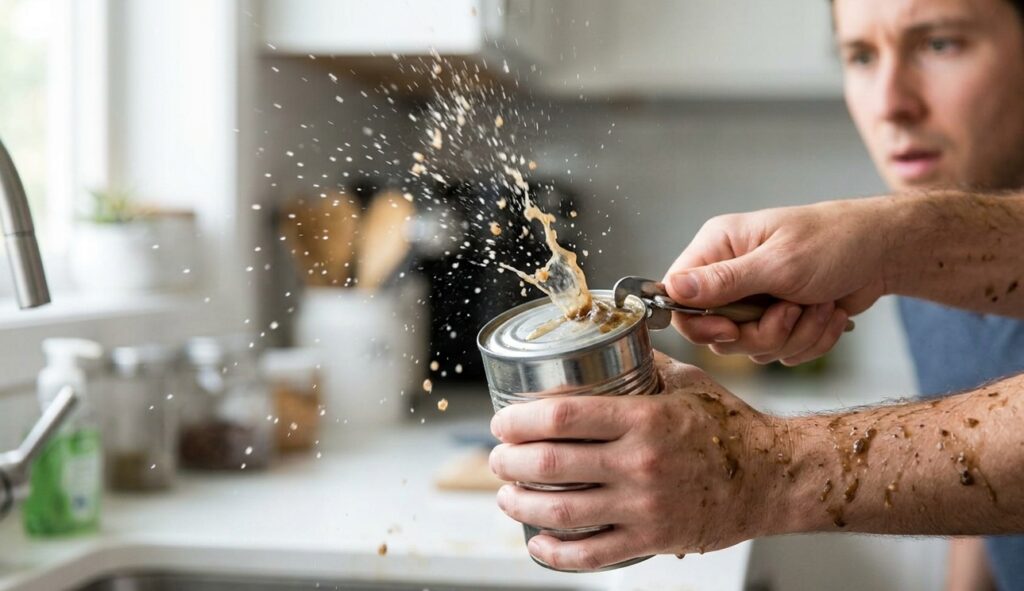
Opening swollen cans is categorically prohibited. Due to the high pressure inside, at the first puncture of the lid, a stream of liquid will burst outward under pressure.
The main danger here lies in the splashes. Tiny droplets of contaminated broth or syrup can land on the mucous membranes of the eyes, lips, or in unnoticeable micro-cracks on the skin of your hands. In such cases, botulinum toxin can enter the bloodstream even without swallowing the food. Additionally, in rare cases, a can heavily over-pressurized with gas can simply burst right in your hands, leaving deep cuts.
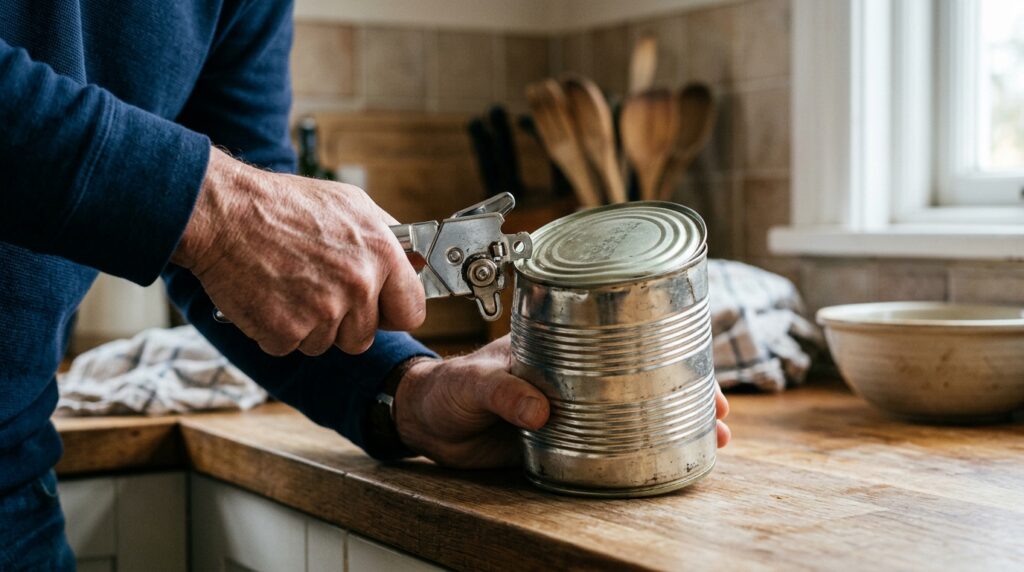
When opening a spoiled can, its toxic contents burst outward under high pressure
How to Dispose of Spoiled Canned Foods and Preserves
If you find a suspicious can with a bulging bottom or lid on your shelf, you need to act decisively. It doesn’t matter whether it’s pâté from a store or grandma’s pickled tomatoes. Here’s what to do with them:
- Never attempt to open the container or puncture the lid with a knife;
- Do not give spoiled food to stray dogs or cats, because animals also die from botulism;
- Carefully place the unopened can into several heavy-duty garbage bags, tie them securely, and throw them into an outdoor waste container;
- After that, be sure to wash your hands thoroughly.
A swollen can is a very serious biological threat right in your kitchen. Now you know that dangerous bacteria are multiplying inside, bacteria that give no sign of their presence through taste or smell. No amount of savings is worth the risk of severe poisoning, so you need to part with suspicious canned goods quickly and without regret.