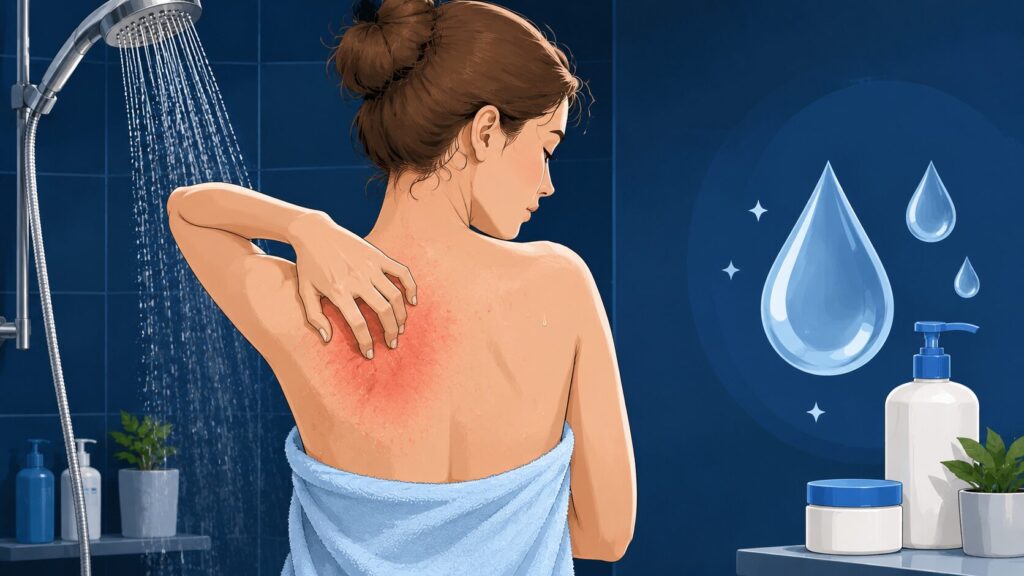
A shower can indeed dry out your skin and cause itching
A warm shower should relax and refresh you, but sometimes afterward your body starts itching, feeling tight, and flaking. Post-shower itching most often occurs due to increased skin dryness — when water and cleansing products destroy its natural protective barrier. The good news: in most cases, this is easy to fix once you understand the mechanism.
Why Dry Skin Starts Itching After Water
The key to the problem is the skin’s protective barrier. On the surface of the epidermis, there is a thin lipid layer that retains moisture inside. When this layer is disrupted, the skin rapidly loses water, becomes sensitive, and reacts to any irritation with itching.
Dryness occurs due to impaired barrier function and manifests as rapid dehydration, increased sensitivity, and flaking. The paradox is that contact with water itself exacerbates these symptoms: after a shower, the body may itch particularly intensely because moisture evaporates from the surface, and there is nothing left to retain it.
Main Causes of Post-Shower Itching
Itching rarely appears out of nowhere — usually several habits or external factors are behind it. Here are the main culprits:
- Excessive cleansing. Rough washcloths, frequent peeling, and unsuitable soap disrupt the protective barrier and accelerate moisture loss. Vigorously rubbing wet skin with a towel adds micro-damage.
- Water quality and temperature. High chlorine content and heavy metal impurities increase skin sensitivity. And an overly hot shower literally washes away natural lipids from the body’s surface.
- Lack of moisturizing. Discomfort often begins with the heating season, when air humidity drops, skin becomes dehydrated, and daily washing only makes the situation worse.
- Fabrics. Natural wool and synthetics with rough fibers provoke irritation, redness, and itching.
- Medical conditions. Dryness and itching can be symptoms of allergies, hormonal imbalances, or serious vitamin deficiencies.
The last point is important: if itching is severe, persistent, and accompanied by other symptoms, it may not be about cosmetics. Skin often functions as an indicator of internal health.
What Water Temperature Is Safe for Skin
Many people think hot water cleanses better and relaxes faster. In reality, it’s the opposite: the hotter the shower, the more actively it destroys the lipid layer and the higher the risk of dryness.
The optimal water temperature is 38–40 °C, and shower time is best limited to 10–15 minutes. This is a simple rule that costs nothing but significantly reduces the likelihood of tightness and itching after a shower.

Excessively hot water washes away natural lipids from the skin
How to Properly Wash and Exfoliate Your Skin
Regular soap is not the best choice for daily showers. It acts aggressively and, along with dirt, removes the lipid layer the skin needs, leaving dryness and tightness. For everyday use, gentle cleansing gels with nourishing ingredients are more suitable, as they maintain the natural moisture balance.
Exfoliation is a separate topic. Removing dead skin cells is beneficial, but that’s no reason to reach for the harshest products. For home use, it’s better to choose mild scrubs and gommages that don’t cause micro-damage. And an important note on technique:
- During exfoliation, set aside brushes and rough washcloths — they increase irritation.
- After rinsing off the product, don’t rub the skin but gently pat it dry with a towel.
- Don’t use aggressive exfoliants too often — skin needs time to renew.
What to Do After a Shower to Prevent Skin Itching
The main step toward comfort is moisturizing immediately after washing. Body milk, lotions, and creams help restore the water balance, soften the skin, and eliminate dehydration. There is one trick that enhances the effect: apply the product to slightly damp skin to seal in the remaining moisture.
Internal care also works. A diet rich in vitamins, fatty acids, and micronutrients directly affects skin hydration and smoothness, and drinking water daily helps prevent dehydration — tightness and itching are among its external signs. If the skin continues to react painfully without an obvious cause, it’s worth remembering how closely it is connected to the nervous system: sometimes bodily sensations are formed by the brain itself.

It’s better to apply moisturizer to slightly damp skin
To check for nutrient deficiencies, it makes sense to consult a general practitioner or specialist — especially if skincare isn’t helping.