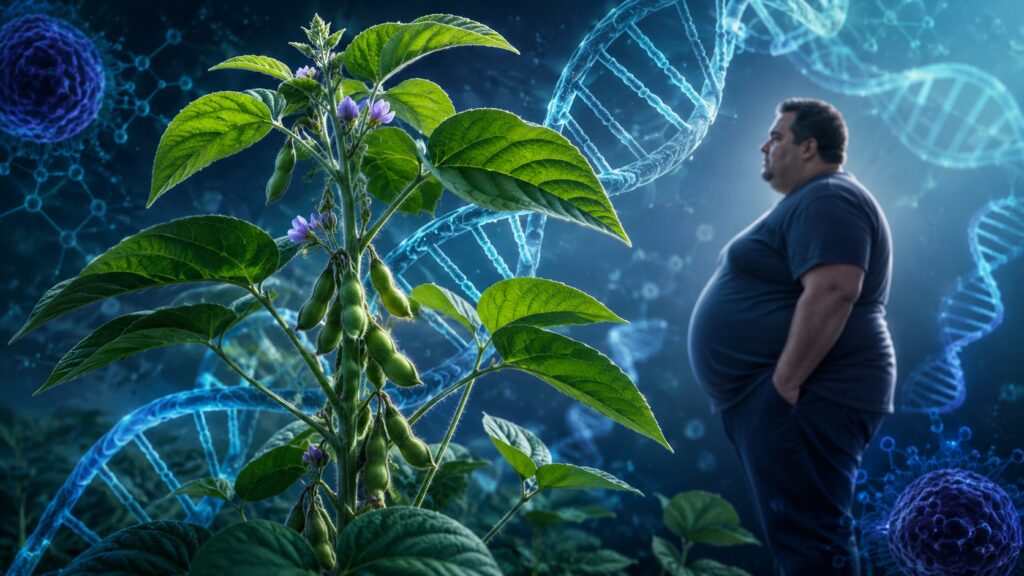
The human obesity gene could save us from hunger
Every year, hundreds of thousands of people around the world suffer from food shortages, and due to climate change, this problem will only get worse. To feed Earth’s growing population and reduce pollution levels, humanity needs hardier and more productive crops. In 2021, an international team of researchers from the USA and China undertook a desperate and rather unusual experiment. The scientists hypothesized that human genetics could help solve the food shortage problem and transplanted a gene that causes obesity in humans into plants. The result turned out to be completely unpredictable.
The Obesity Gene That Makes People Fat
If you’ve ever been skeptical of people blaming their excess weight on genetics, science has something to surprise you with. In our DNA, there truly exists an FTO gene that directly affects metabolism. Its name is often interpreted as “Fatso,” although it originally referred to the large size of the gene itself, not its effect.
The influence of this DNA segment on the body is enormous. If a person inherits even one copy of the FTO gene, the risk of developing obesity increases by approximately 30% compared to people without it. Having two copies raises this probability by 70%.
Scientists know of about 800 genes that are in one way or another linked to metabolism, but FTO stands out among them. It turned out that it works in a unique way. This gene produces a protein that destroys a specific mRNA molecule that regulates cell growth. It was precisely this feature that gave scientists the idea to test the mechanism in a completely alien environment.
Transplanting the Obesity Gene Into Plants
Plant growth is an incredibly complex process involving thousands of genes. Crops constantly adapt to their environment, and sometimes they have to sacrifice growth speed in favor of protection from pests or resource accumulation in case of drought. Scientists had no reason to believe that just one foreign mammalian gene could improve crop yields.
As study co-author Chuan He, a chemistry professor at the University of Chicago, admitted, the team expected to see catastrophic consequences for the plants. The first test subject was ordinary rice. The research results were reported on the UChicago News website.
The laboratory test results stunned the biologists, because the yield of the modified rice tripled. When trials were moved to real field conditions, the numbers were more modest but still impressive, as biomass and grain count increased by 50%.
Potatoes showed the same phenomenal growth surge. Since rice and potatoes are evolutionarily completely unrelated to each other, it became clear that the discovered mechanism works universally across different species.
Abnormally Fast Growth of Modified Plants
Further experiments confirmed the scientists’ suspicions. The human gene was implanted into grass, trees, garden cress, and regular lettuce, and each time the plants became larger and stronger. Additionally, they developed other hidden advantages:
- photosynthesis improved significantly;
- a longer and more powerful root system formed;
- natural drought resistance increased.
Biologists agree that the reason lies in evolutionary isolation. Since the FTO gene has never been found in the plant kingdom, organisms simply lack the restrictive mechanisms capable of constraining its function. According to Professor He, the protein acts inside a plant cell like a bomb, removing all natural limits on growth and development.
How This New Discovery Will Save Us From Hunger
The discovery by Chinese and American scientists goes far beyond solving food problems. The consequences of global warming require a comprehensive approach, and modified crops could become an excellent tool for adapting to new climatic realities.
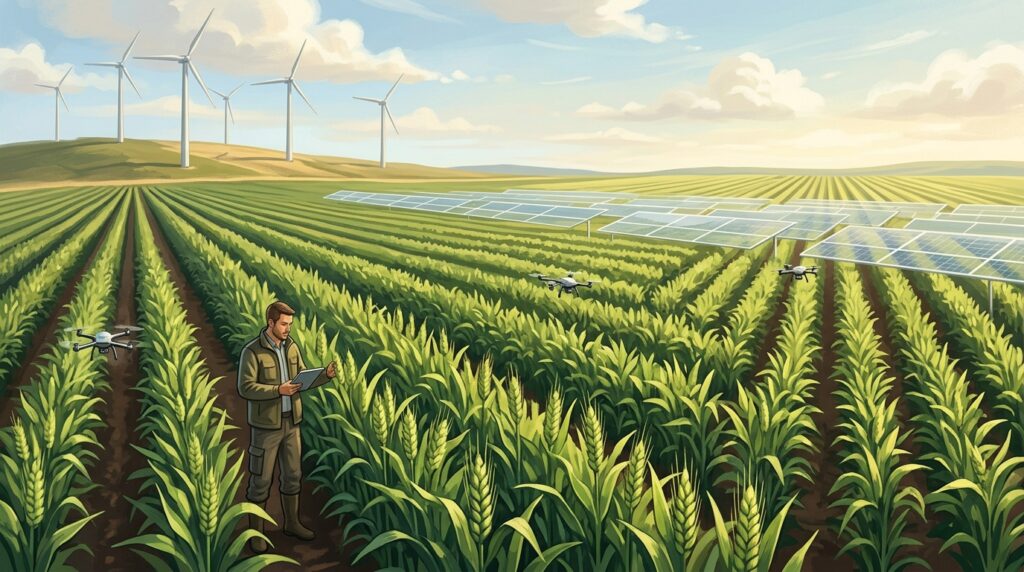
In the future, such plants could survive even in the harshest climatic conditions
For example, researchers plan to create drought-resistant meadow grasses to save dying ecosystems. Another promising direction is breeding trees with extended root systems capable of withstanding hurricane-force winds during severe storms.
Currently, scientists are trying to determine whether the same effect can be achieved without implanting human DNA. Plants may have their own, as yet undiscovered capabilities that can be activated directly. However, plant genes are extremely complex, and the success with the FTO gene turned out to be an incredible stroke of luck.
It will be years before vegetables and grains modified in this way pass all the necessary field trials. But it is already clear that science has accidentally stumbled upon a tool that could transform the face of global agriculture.