They want to sink the ISS in the ocean, but enthusiasts suggest burning it in the Sun
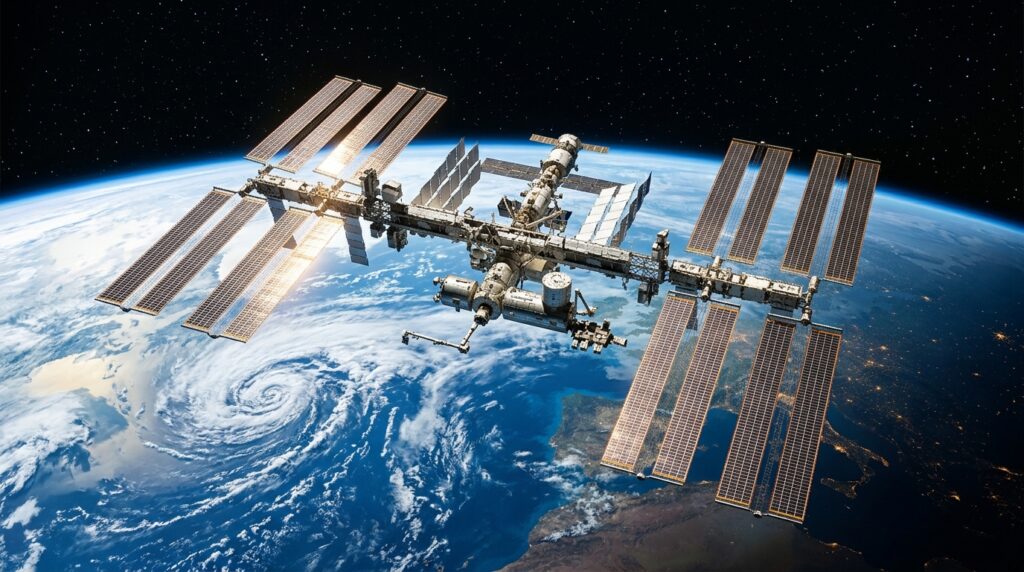
The International Space Station has been operating for almost 30 years — people have been living on it continuously since 2000. But the station is aging, and NASA has already announced that it needs to be sunk in the ocean by 2030. And this is where many people ask a logical question: why not send the ISS to the Sun? It would burn up and leave no debris behind. But engineers don’t even consider this option, and the reason will surprise you. It’s not about money, not about technology, and not even about fuel — it all comes down to basic laws of physics.
Why the ISS Needs to Be Deorbited
The ISS was originally designed for 15 years of operation. In 1998, the first ISS module was sent into space, and in 2000 the first astronauts arrived. If you’ve been following space news, you’ve surely read about regular air leaks on the station in recent years — clear signs of aging.
The main problem with the ISS is described by an old American saying: what goes up must come down. If the ISS is left alone without being regularly boosted by special spacecraft, its orbit will gradually lower until the station eventually crashes to Earth in a random location. That’s exactly why NASA ordered a special tug spacecraft from SpaceX that will deorbit the station in a controlled manner and direct it to one of the most remote corners of the planet.
Where Did the Idea of Crashing the ISS into the Sun Come From
Controlled sinking of the ISS in the ocean is a better option than an uncontrolled fall, but it’s not ideal either. According to Space.com, environmentalists from The Ocean Foundation are concerned that station debris could harm marine ecosystems. Against this backdrop, Reddit users proposed an alternative: launch the ISS directly into the Sun.
The idea seems almost genius. At the center of the Solar System, we have a giant star with a mass of nearly two nonillion kilograms, constantly burning hydrogen into helium. It would seem to be the perfect furnace for space junk — toss it in and forget about it. But this is exactly where physics says a firm “no.”
Why Hitting the Sun Is Nearly Impossible
The main obstacle is that our planet and everything in its orbit is moving not toward the Sun but sideways relative to it, and very fast at that. Earth races along at about 107,000 kilometers per hour, and almost entirely sideways, not toward the Sun. As NASA explains, the only way to hit the star is to cancel out this sideways motion.
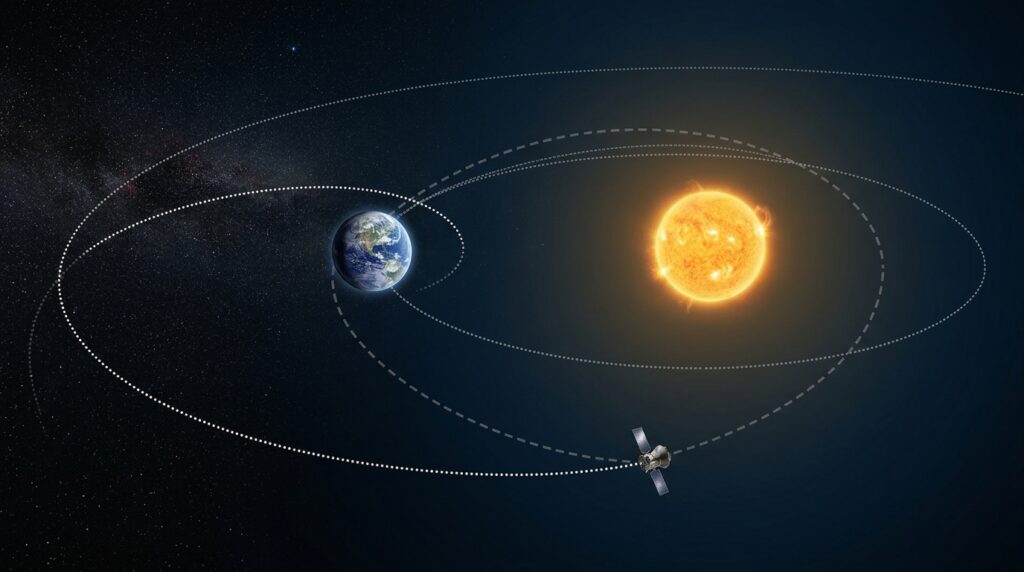
A spacecraft launched toward the Sun enters an elongated orbit and flies past the star
Canceling this force would be extremely difficult. If you simply attached a bunch of engines to the station and pushed it toward the Sun with full force, the result would be a frustrating miss. As astronomy associate professor Michael Brown explains, a rocket that leaves Earth moves around the Sun faster than toward it. At first the spacecraft does approach, but due to the combination of speed and gravitational pull, it enters an elongated elliptical orbit and flies right past. The miss amounts to nearly 100 million kilometers, which is a lot.
To actually hit the target, the spacecraft would need to be accelerated to approximately 7,000 kilometers per second. This is an extreme speed, and without a serious breakthrough in physics in the coming years, sending the ISS to the Sun this way is not feasible.
How the Parker Probe Reached the Sun
Does this mean it’s impossible to approach the Sun at all? No. NASA has already sent the Parker Solar Probe to the star, but it did so cleverly — using the planet Venus as a kind of brake.
Spacecraft can use the gravity of other planets as a slingshot to speed up, or as a brake to slow down. The Parker Probe flies in front of Venus and slows down, like a swimmer going against the current: it essentially transfers part of its momentum to the planet. Each such maneuver changes the spacecraft’s orbit, sometimes by millions of kilometers, bringing it ever closer to the Sun.
But here lies the catch for the ISS — the difference in mass is colossal. The Parker Probe weighs about 685 kilograms, while the ISS has a mass of approximately 419,725 kilograms. Sending such a massive structure on a long journey with gravitational maneuvers around Venus would be unimaginably expensive in terms of fuel and energy. Even with the greatest desire, this endeavor remains far beyond the realm of possibility.
Why Deorbiting the ISS into the Pacific Ocean Is the Most Sensible Option
There’s another practical argument. The ISS is already constantly on the verge of falling back to Earth, which is why it has to be regularly boosted to a higher orbit to keep it operational. It’s much simpler to let it fall in a controlled way, at a time we choose and in an uninhabited area, than to attempt an incredibly expensive and physically near-impossible mission to send it to the Sun.
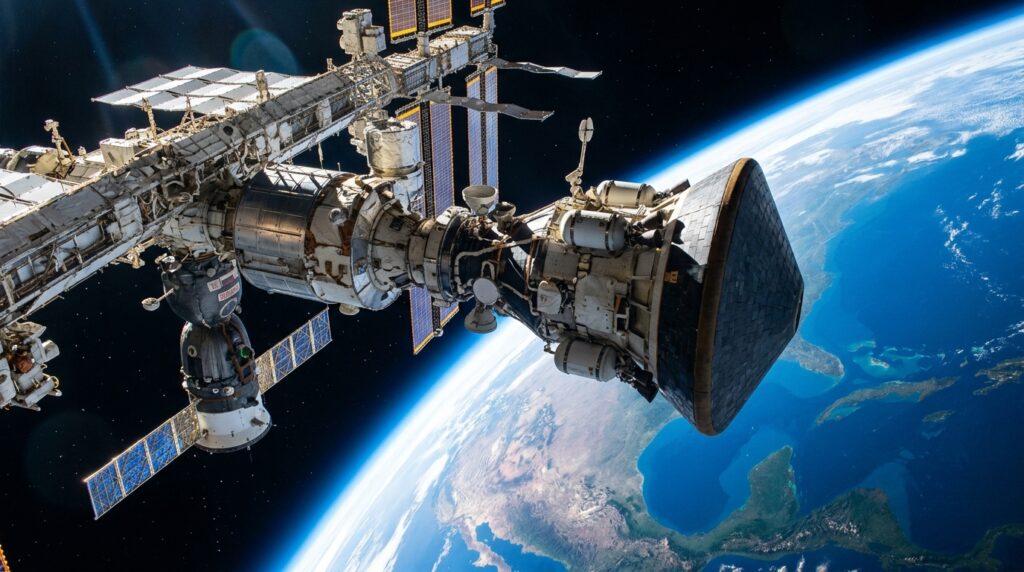
The SpaceX tug spacecraft will deorbit the station in a controlled manner and direct it to a remote area of the ocean
Interestingly, there was a proposal to turn the ISS into an orbital museum, and that’s technically easier than throwing it into a star. The Sun idea remains a beautiful fantasy that shatters against a simple reality: to fall into the Sun, you first need to stop the tremendous sideways motion, and that requires an unimaginable amount of energy.
In the end, it turns out that the Sun is not a giant magnet that attracts everything. It’s more like a target that’s incredibly easy to miss because, along with Earth, we’re all flying sideways at enormous speed. Understanding this changes our perception of space and also explains why it’s calmer and cheaper to deorbit the old ISS into the ocean than to send it into a star.