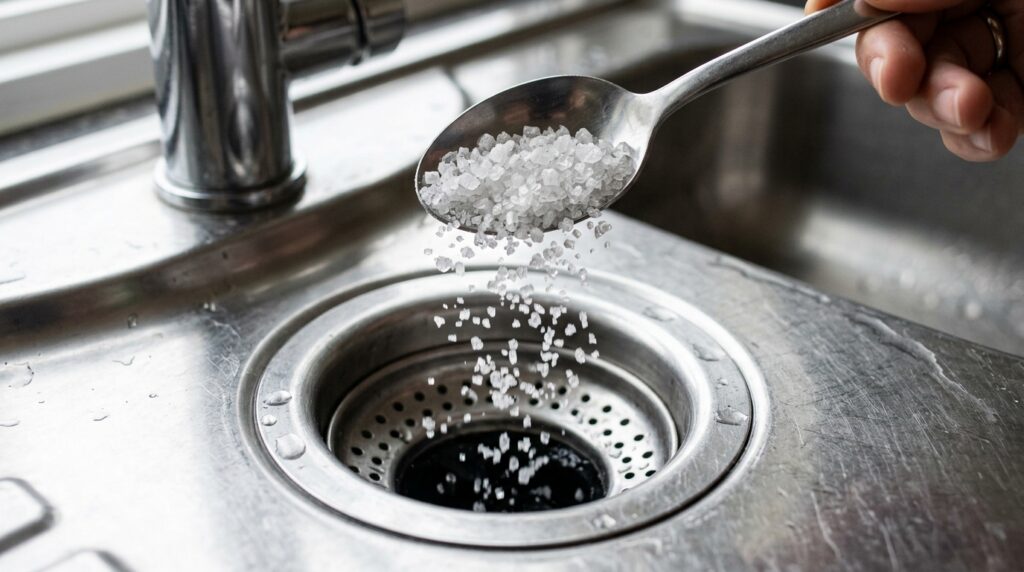
It is believed that salt eliminates unpleasant odors in the sink, but this is a debatable claim
Online and on social media, a popular tip keeps popping up: pour salt into your sink drain at night, and your pipes will be sparkling clean by morning. Supposedly, salt kills bacteria, eliminates sewer odors, and even handles minor clogs. The method has enthusiastic supporters who leave glowing reviews, and skeptics who claim it’s useless or even harmful. We decided to check whether this kitchen life hack actually works in reality, and found out when it truly helps and when it’s better to skip it.
Salt as a Sink Cleaning Agent
We often carefully monitor our health, looking up articles about various topics. But when it comes to our homes, we sometimes carelessly trust unscientific myths from the internet.
One such tip is to use salt as a universal plumbing solution. It is believed that salt crystals work as a mild abrasive and absorb unpleasant odors. Life hack authors recommend pouring a couple of tablespoons into the drain right before bedtime.
Why specifically before bed? Because no one uses the sink at night, so the substance has longer contact with the moist buildup on the pipe walls. In the morning, you just need to run water to wash away the softened grime.
Can Salt Kill Bacteria in the Sink
Let’s break down what physically happens in the trap. Salt doesn’t possess magical dissolving properties, but it can provide some minor benefits.
The main advantage of this method is salt’s ability to slightly reduce sewer odor. The stench usually appears due to decomposing food residue, grease, and soap. Salt draws moisture out of microorganism cells. This very property is what allows it to be used as a food preservative. However, in the drain, salt concentration drops quickly, so the effect is short-lived and weak.
Additionally, if you flush the drain generously with hot water in the morning, some of the fresh grease buildup will indeed wash away. But for that, you should thank the water temperature and mechanical pressure, not the white salt crystals. Unlike proper household chemicals with alkalis, salt cannot saponify fats or chemically break down complex contaminants. It also works as a very weak scrub, and only at the very entrance to the drain opening before it dissolves.
When Pouring Salt Down the Sink Is Pointless
If water is already not draining due to a clog, it’s too late to pour seasonings into the drain. Inside the pipe, a dense plug of hair, coffee grounds, and solidified grease has formed, against which food products are powerless. In such situations, you need a plunger or a specialized plumbing snake.
Many also forget that salt is not a proper disinfectant. It is not included in the lists of recommended sanitary products by health authorities, where active chlorine, hydrogen peroxide, and alcohols dominate.
Pouring salt down the sink is pointless if the sewer smell is caused by the following reasons:
- the water trap has dried out because the sink hasn’t been used for a long time;
- the siphon was incorrectly installed;
- the corrugated pipe has sagged, preventing water from sealing the pipe cross-section;
- the overall riser ventilation is compromised.
In all of these situations, unpleasant odors will freely enter the apartment, and no folk remedies will help. You need to fix the water trap system itself.
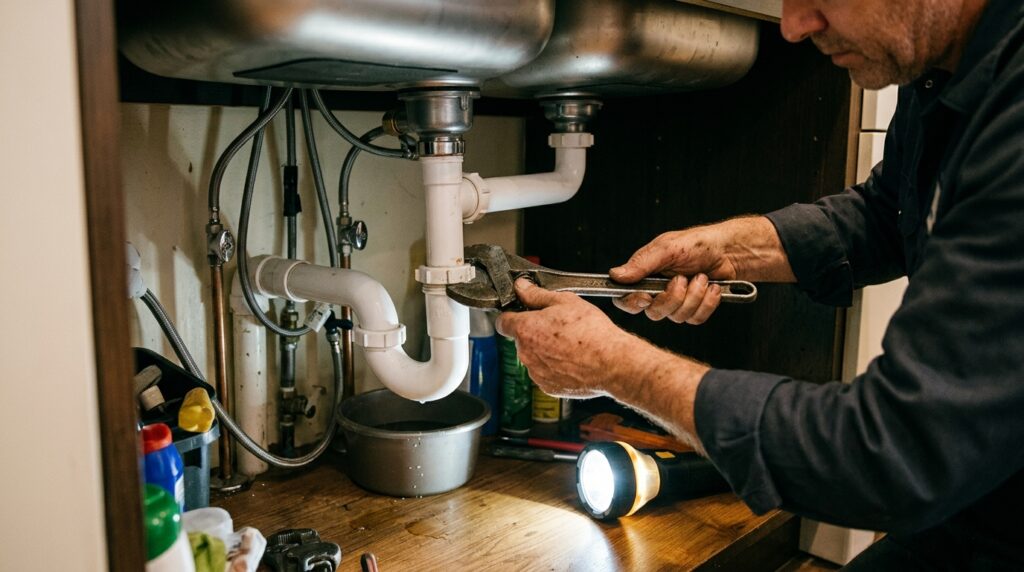
For serious plumbing problems, only disassembling and cleaning the siphon will help
The Danger of Salt for Old Plumbing
The biggest mistake is using this method too frequently. If your apartment or house has old metal pipes, salt will significantly accelerate corrosion. Scientific literature has long proven that the presence of salts in water causes steel and iron to rust much faster.
The second threat comes from boiling water, which internet experts often recommend pouring over the salt. Modern siphons and sewer pipes are made of PVC, which is not designed for prolonged exposure to extremely high temperatures. Regularly pouring boiling water down the sink deforms plastic and destroys the rubber seals at joints, which inevitably leads to leaks under the sink. Water at around 60 degrees Celsius is considered safe for such pipes.
How to Properly Maintain Your Sink
Instead of wasting salt on dubious experiments, it’s better to implement basic sink hygiene rules. They sound less exciting, but they will reliably keep your pipes clean for years to come.
Here is a simple step-by-step guide for reliable clog prevention:
- Never pour leftover grease from a frying pan down the sink — wipe it with a paper towel and throw it in the trash;
- Install a fine mesh strainer in the drain opening to catch food waste;
- Once a week, flush the drain generously with hot water mixed with regular dish soap to wash away light buildup;
- If water starts draining more slowly, immediately use a plunger to break up the still-soft plug;
- If a persistent odor appears, unscrew the bottom bowl of the siphon, manually rinse it, and put it back in place.
Attempting to use table salt to clean pipes is a classic example of how folk wisdom exaggerates a weak physical effect. If the drain in your home is relatively clean, this life hack won’t cause harm, but it won’t work magic either. The best way to avoid plumbing problems is simply to keep grease and food waste out of the drain.