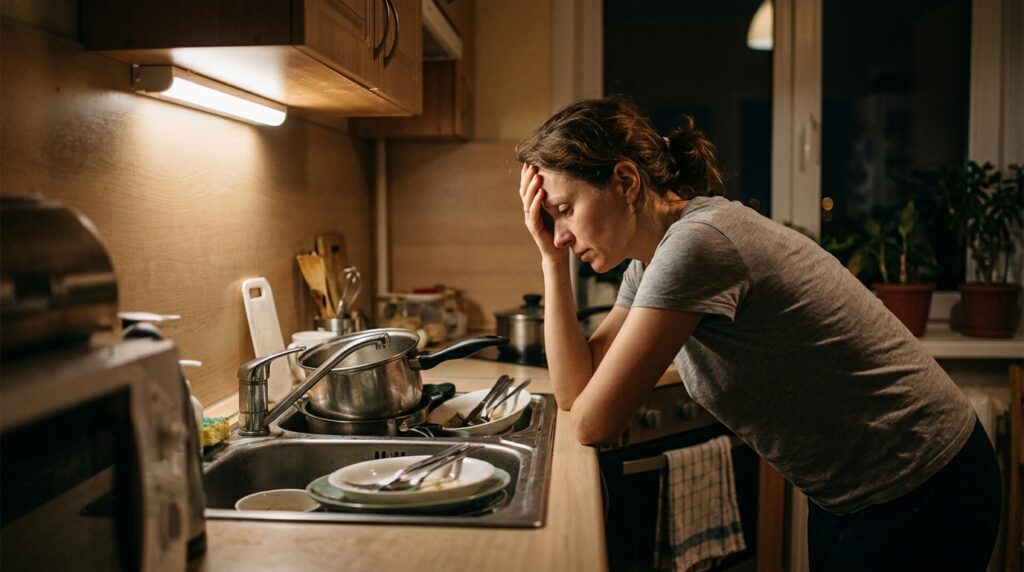
Sometimes you can wash the dishes in the morning, but you still need to do a few things first
Many people are used to washing dishes right after eating and won’t go to bed until the sink is spotlessly clean. And some of us wash dishes very thoroughly so that not even a trace of dish soap remains on the plates. But sometimes leaving dirty plates in the sink until morning isn’t a catastrophe — it can even be a sensible decision. However, it’s only a good choice in certain cases that few people think about.
Is It Okay to Skip Washing Dishes in the Evening
If you come home late and feel completely exhausted, trying to wash a pile of plates will only add extra stress. In such cases, sacrificing a clean kitchen for sleep is a perfectly reasonable decision.
Experts from the Russian Consumer Protection Agency note that for quality nighttime rest, it’s much more important to maintain a stable routine and calmly prepare for sleep than to spend your last energy on cleaning.
Why You Shouldn’t Leave Dirty Dishes Overnight
But if you have the energy, it’s better not to leave dirty dishes. The main problem isn’t the plates themselves, but what remains on them. Food residue, moisture, and room temperature create an ideal environment for bacteria to multiply.
According to sanitary authorities, dangerous bacteria actively multiply in warmth, which is why cooked food is recommended to be refrigerated within a couple of hours. Greasy sauces, meat gravies, or sweet milk porridge left on the counter overnight turn into a bacteria incubator.
Can You Get Food Poisoning from Dirty Dishes
The chance of getting a serious stomach upset from just one plate in the sink is small. The risk arises from the effect of cross-contamination.
If dirty dishes sat out all night and in the morning you wash them with an old wet sponge, which you then use to wipe the kitchen counter, dangerous germs can easily transfer to fresh food. The kitchen sponge itself is one of the dirtiest items in your home, and epidemiologists recommend replacing it at least once a week.
Do Dirty Dishes Attract Cockroaches
This is perhaps the most unpleasant and practical argument against overnight pileups in the sink. Insects don’t care about visual clutter, but they are highly attracted to access to food and water.
Leftover dinner and water drops can be considered the perfect bait for cockroaches. If you’ve noticed that cockroaches have appeared in your kitchen, the first preventive measure should be eliminating their food supply. This is especially relevant for older buildings, apartments with high humidity, or if your neighbors have sanitation problems.
Why Dishes Are Harder to Wash in the Morning
Beyond the risk of being labeled messy, postponing cleanup to the morning has a purely practical downside. Overnight, remnants of buckwheat, egg yolk, dough, or cheese dry and stick firmly to the plates.
As a result, washing dishes in the morning becomes harder because you have to soak the dried-on food longer, scrub the surface more aggressively, and use more hot water. So postponing doesn’t always save your energy. The only exception is heavily burnt pots and pans, which genuinely need time to soak.
Are There Benefits to Washing Dishes in the Morning
For some people, cleaning up in the morning serves as an excellent way to wake up and kick-start their day. By completing a simple household task, the brain gets a quick sense of satisfaction and control over the situation.
Moreover, calm dishwashing in warm water can work as a stress-relief practice, reducing anxiety levels. The key is that the pile of plates shouldn’t irritate you the moment you first walk into the kitchen.
When You Should Never Leave Dishes Until Morning
There are situations when postponing cleanup is absolutely not advisable. Always wash dishes immediately if they have remnants of raw meat, fish, eggs, mayonnaise, or dairy products.
It’s also not recommended to leave dishes overnight during extreme heat, when there are small children in the house, or people with weakened immune systems. In these cases, the risk of intestinal infections increases significantly. Similarly, you should pay close attention to beverages — for example, it’s useful to know why yesterday’s water from a bottle is better poured out rather than finished the next day.
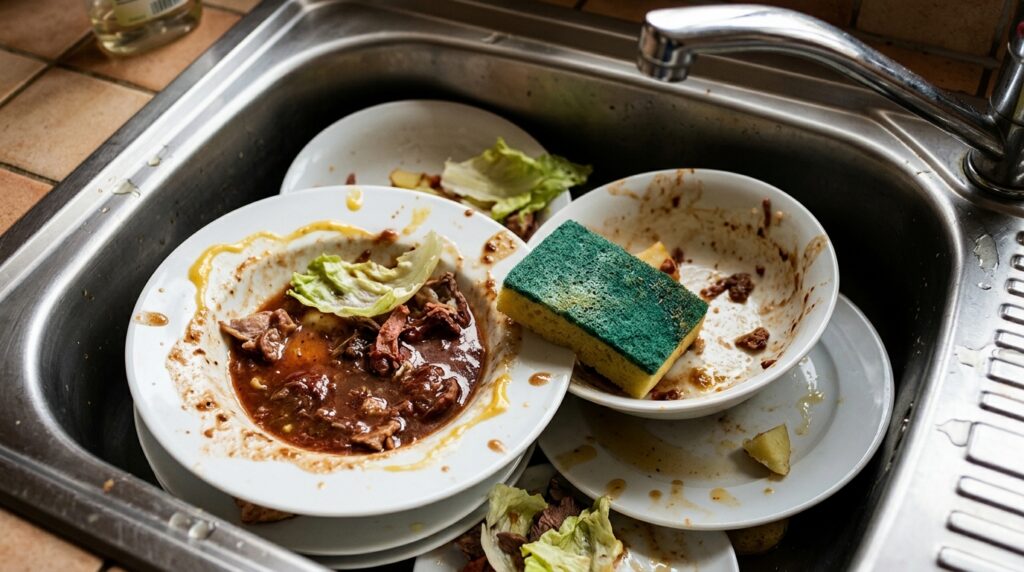
Remnants of protein-rich food and sauces spoil the fastest, attracting bacteria
How to Leave Dishes Overnight Safely
If you have absolutely no energy for a full cleanup, there’s a reasonable compromise — a quick preparation that takes just a couple of minutes.
To keep dishes safe until morning, do the following:
- Thoroughly scrape all large food remnants into the trash;
- Rinse the plates under running water to wash off greasy film and sweet sauces;
- Never leave utensils soaking in a sink full of dirty, murky water;
- Wipe the countertop clean of crumbs and securely close food waste containers.
If you have a dishwasher, the task becomes simpler — just load the plates and set a delayed start for overnight. This will not only save your nerves but also significantly reduce water consumption.