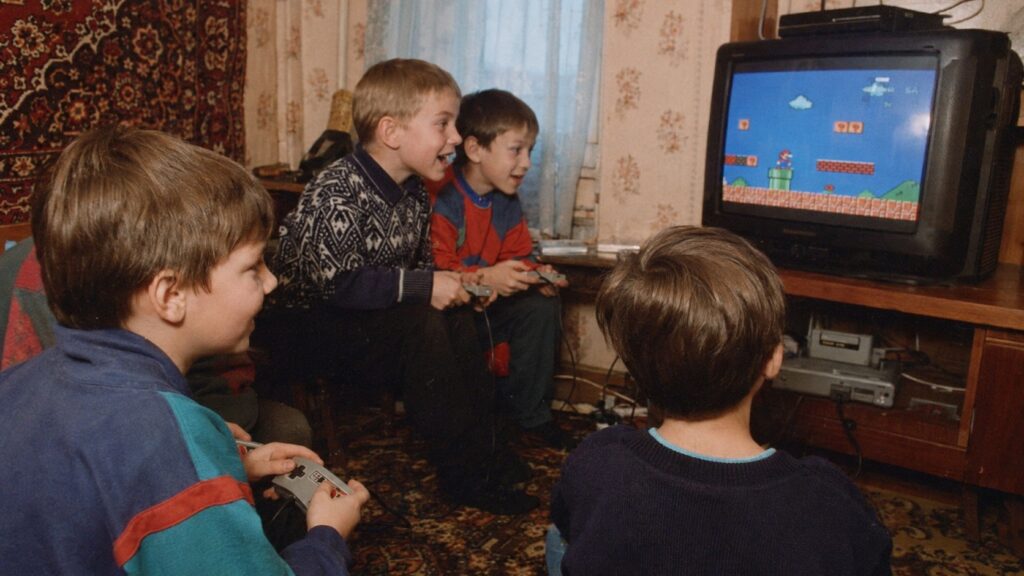
Dendy could indeed damage a TV, and our parents were partly right
Were you also told as a child “Turn off the console, you’ll wear out the CRT”? It turns out the Dendy console didn’t emit any destructive signals, but there was indeed a grain of truth in grandma’s scary stories. And their arguments were more scientific than you might think. Let’s figure out exactly how 8-bit games affected old TVs and whether you should worry about modern TV screens today.
What Does “The CRT Is Worn Out” Mean
In everyday language, this phrase meant the picture had become dim, blurry, and the colors had lost their vibrancy. Inside an old TV with a cathode-ray tube (CRT), an invisible beam draws the image. The cathode emits electrons, they fly through the tube and strike the screen, which is coated with phosphor — a special substance that glows upon impact.
Over time, two things happen. First, the cathode ages and emits fewer electrons — this is natural CRT wear, which occurs from watching anything at all. Second, the phosphor itself can burn unevenly if a bright beam hits the same spot for too long.
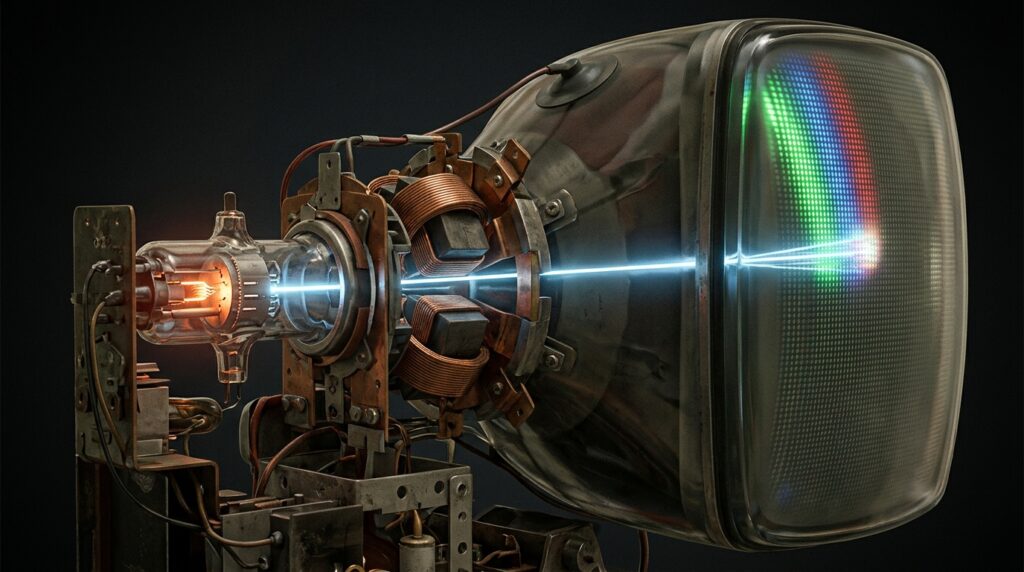
Diagram of how an old CRT television works
Did Dendy Really Damage TVs
The problem wasn’t the box with the joysticks itself, but the kind of image it produced. A regular TV show or cartoon is dynamic. Frames constantly change: faces, landscapes, commercials. The phosphor glows evenly across the entire screen surface.
But video games were different. For example, in the game about the plumber Mario, the score and timer are constantly displayed at the top; in Tank games there’s a frame; and in fighting games there are static health bars. It was precisely these static elements that accelerated screen burn-in, leaving dim ghost traces on the phosphor. The longer a static image stayed on screen, the more a specific area of the display suffered.
Could the Dendy Console’s Signal Harm a TV
Many people believed that the game console sent some kind of special destructive energy through the cable. In reality, the TV saw the console exactly the same way it saw a VCR or a regular home antenna. The energy for the electron beam was generated inside the TV set itself.
The console merely transmitted information about where to make things brighter and where to add color. Therefore, Dendy wore out the CRT no more than regular news or movies. Official instructions of the time freely allowed connecting consoles via AV cable or antenna input.
Could a TV Screen Burn In From Playing Dendy
Yes, the risk did exist, but in everyday conditions it was greatly exaggerated. For a noticeable burned-in trace to appear on the glass, you would have had to play the same game for hours day after day at maximum brightness.
Interestingly, even Nintendo’s official support issued warnings to users. They stated that constant static patterns in games could lead to image retention. Manufacturers simply advised not to keep a static image on screen for too long and to consult your TV’s manual.
Why Parents Thought Dendy Broke the TV
The coincidence was too convincing. Kids could sit playing games for 3–6 hours straight, cranking brightness to maximum to better see enemies. TVs in the 1990s were often already 10–15 years old. A month of such intensive use — and the old TV started showing a worse picture simply from overwork and component fatigue.
Moreover, there were other causes that were easily confused with a broken tube:
- Constantly plugging and unplugging the antenna cable loosened the connector, causing regular channels to show static;
- Kids changed the contrast settings for gaming, and parents couldn’t change them back;
- The antenna RF signal itself was noisy and blurry.
Why You Couldn’t Leave a Dendy Game on Pause
The worst crime a 90s gamer could commit was pressing pause and going outside to play, leaving the TV on. That was the exact moment when absolutely everything on screen froze. The electron beam methodically hit the same points thousands of times per second.
Some modern guidelines warn that a static image for as little as 10 minutes can leave permanent marks. Of course, manufacturers often err on the side of caution to avoid warranty claims, but the physics of the process remains unchanged: static images are the main enemy of any display.
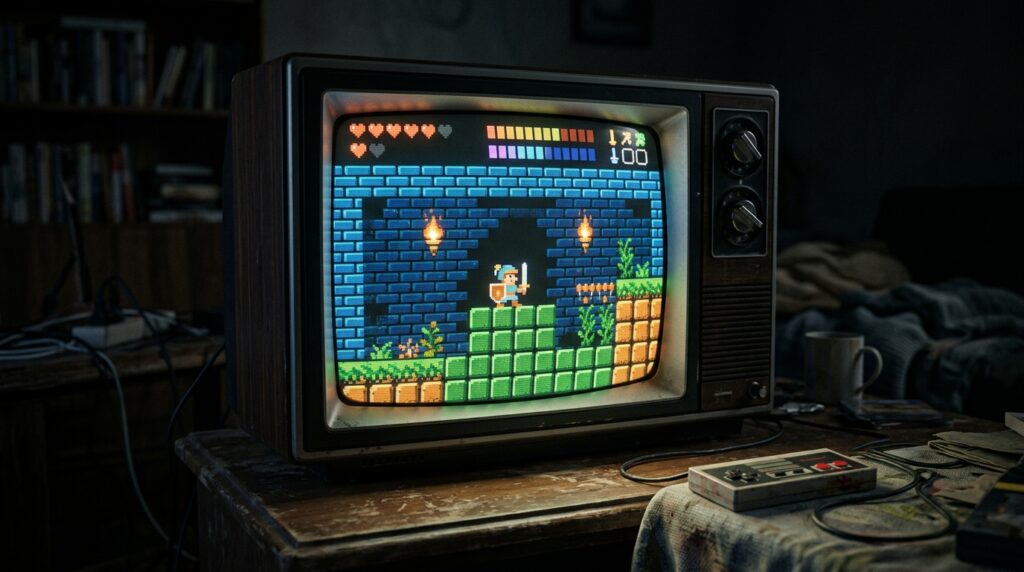
A paused game forced the electron beam to hit the same points repeatedly
What Damaged a TV’s CRT the Most
If you combine all the technical facts, you can describe a scenario that was indeed guaranteed to kill the equipment in the shortest time possible.
The worst thing you could do was take a heavily used second-hand TV, crank brightness and contrast to maximum, and play the same arcade game for many hours every day. If on top of that the Dendy console was left on pause during lunch, the cathode and phosphor resources would deplete before your eyes. However, if you played for an hour or two a day, switching cartridges and letting the equipment cool down, the risk was minimal.
Can Dendy Damage a Modern TV
Today, old consoles are often connected to modern flat-panel TVs. Standard LCD screens are nearly immune to static image issues, but you should be more careful with the now-popular OLED panels.
Classic 8-bit games were designed for the square 4:3 format. On a widescreen display, black bars will inevitably appear on the sides. If you play exclusively this way for years, the central portion of the OLED screen will wear out faster than the edges. This won’t cause an immediate breakdown, but uneven burn-in is entirely possible.
Did Dendy Wear Out CRTs or Is It a Myth?
So who was right? Grandmas weren’t lying, but there wasn’t absolute technical truth in their words either. The console didn’t emit any special killer signal.
However, long gaming sessions at high brightness did indeed accelerate the overall aging of the tube and could leave “ghost” interface images on the glass. Adults simply explained a complex physical process with one easy-to-understand scare story to protect an expensive appliance.