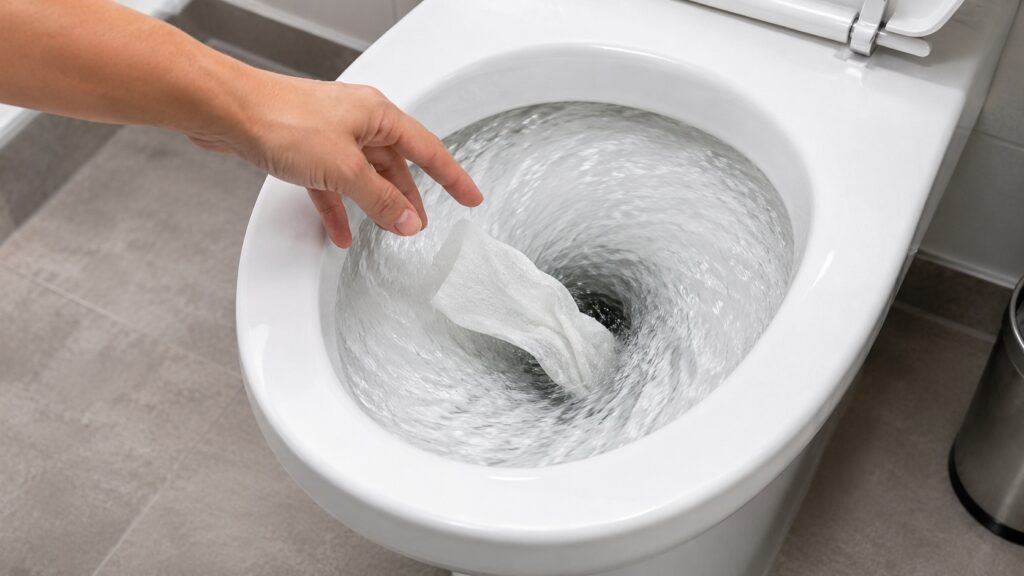
Even ‘flushable’ wipes should not be flushed down the toilet, and there are serious reasons for that
Wet wipes have become such a common item that many people thoughtlessly send them down the drain along with regular waste. It seems like a small piece of soft material would simply dissolve in water, but in reality, flushing wet wipes down the toilet is strictly prohibited. That’s because it triggers a hidden process that slowly but surely destroys the pipes in your home and municipal treatment facilities.
Why You Shouldn’t Flush Wet Wipes Down the Toilet
The main problem is that this material behaves in water completely differently from what we expect. Unlike toilet paper, wipes do not break down into small fibers. They travel further through the sewer system and begin collecting everything they encounter along the way.
In sewer networks, they mix with hair, solidified grease, and other debris. Russian water utilities regularly warn that discarded hygiene products clump together into dense masses that sometimes reach the size of a soccer ball. Treatment plant equipment simply cannot handle them.
Utility workers have to manually clean the grates of pumping stations to prevent the city’s drainage system from coming to a halt. If you flush a single wipe, a disaster probably won’t happen immediately, but the problem is cumulative and will inevitably make itself known later.
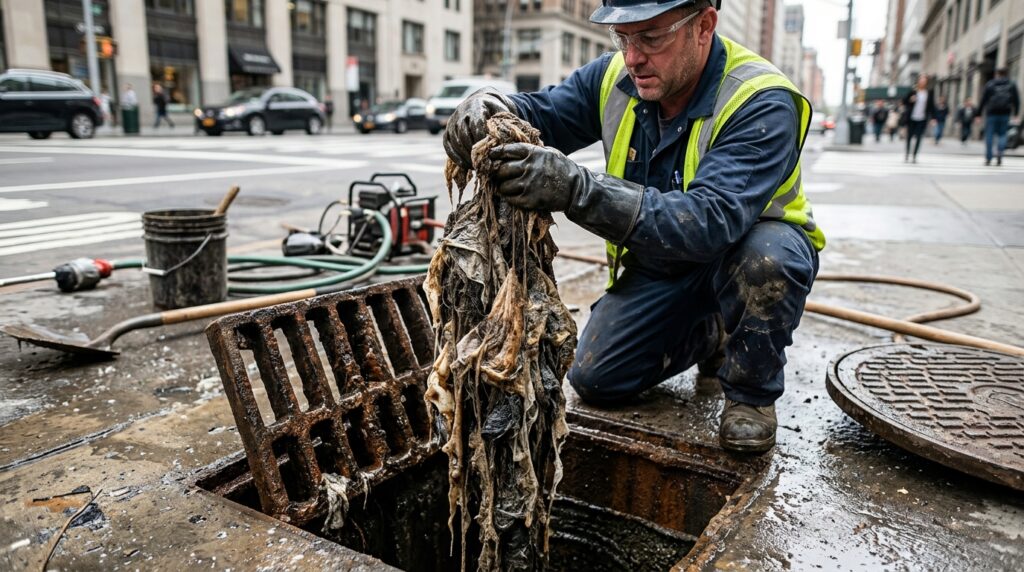
Utility workers regularly have to extract accumulated debris from the sewer system
How Wet Wipes Differ from Toilet Paper
To understand why pipes get clogged, it’s enough to look at the structure of wet wipes and toilet paper. Classic toilet paper is designed with one main purpose — to quickly soak and turn into a loose pulp upon contact with a large amount of moisture.
A wipe, on the other hand, is made with an emphasis on durability. It’s used to wipe hands, children’s faces, kitchen fixtures, or shoes. If it fell apart at the slightest friction, it would be impossible to use. That’s precisely why the composition of wet wipes includes dense fibers that make the material resistant to tearing and water.
What Happens to Wipes in the Sewer System
A sewer is not a smooth, even pipe through which water slides down freely. It’s a complex and branching network with sharp turns, joints, elevation changes, and pumps.
When fabric enters the system, it can easily snag on the slightest roughness at a pipe bend. From that moment, a blockage begins to actively grow. Hair, food residue, and grease stick to the trapped obstacle. As a result, a small piece of trash from the toilet becomes a solid foundation for a major utility emergency.
Why ‘Flushable’ Wet Wipes Are Dangerous
Many manufacturers write “flushable” on their packaging, which completely lulls buyers into a false sense of security. Often, this marketing trick only means that the product is physically capable of passing through the toilet’s water trap and disappearing from the white bowl.
But for the rest of the engineering system, the label “flushable” means nothing. By successfully flushing the water, you merely transfer the problem to the narrow pipes in your home or city networks. The toilet will indeed accept a piece of fabric, but the sewer network is not obligated to handle it. Water utilities explicitly prohibit disposing of even flushable cotton pads in this manner.
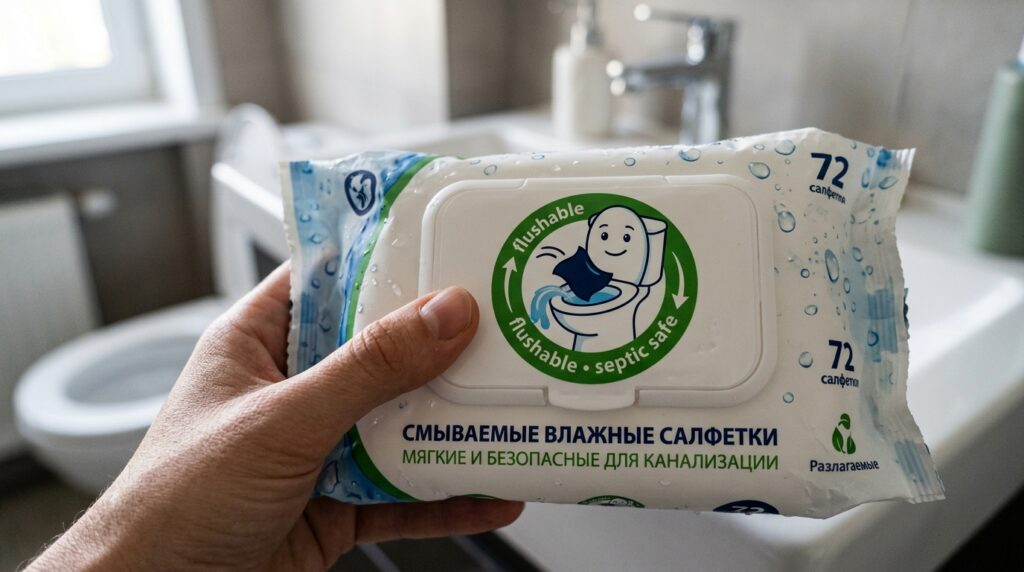
The ‘flushable’ label only means the wipe will pass through the toilet, but it won’t dissolve in the pipes
How Wet Wipes Damage Pipes and Pumps
The wastewater treatment system doesn’t work solely by gravity — powerful industrial pumps move water through many sections. For their mechanisms, durable non-woven material poses the most serious threat.
Elastic wipes wrap around the working blades of the units like strong ropes. This can cause expensive motors to overheat and completely break down. Treatment plant employees have to regularly shut down pumping equipment to cut away the accumulated synthetic debris.
Can You Flush Moist Toilet Paper?
Moist toilet paper is an even trickier product. Brands actively promote it as an eco-friendly and safe alternative to regular rolls. However, utility workers urge caution toward such bold claims.
If the manufacturer used insufficiently high-quality and loose material, it will behave in water almost like a regular synthetic wipe. Therefore, if you’re not 100% sure about its dissolvable composition, it’s safer to throw moist toilet paper in a regular trash bin.
What Can Be Flushed Down the Toilet
There is one golden rule for using plumbing. Russian utility services and water companies tirelessly repeat it in every public advisory.
Only the following can be safely sent into the sewer:
- human waste;
- regular water-soluble toilet paper.
Everything else is considered foreign objects and household waste, for which special containers exist. Any sewer system is initially designed exclusively for receiving domestic wastewater.
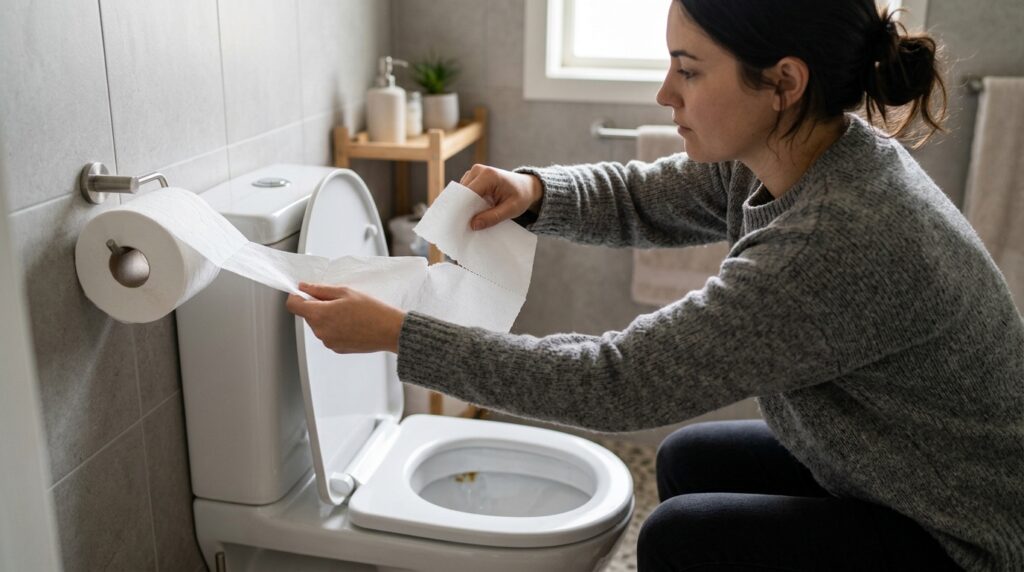
Only classic toilet paper is safe for the sewer system, as it breaks down into small fragments
What Should Never Be Flushed Down the Sewer
The list of prohibited items is enormous. People often discuss online what shouldn’t be flushed down the toilet, even though millions of people do it out of habit every day. In addition to wipes, the blacklist includes cotton swabs, baby diapers, feminine pads, cat litter, and construction debris.
Cooking grease from a frying pan poses a particular danger. While it’s hot, it seems like the drain easily swallows it. But as soon as the grease cools in a cold pipe, it turns into a sticky mass on the walls. It’s precisely to this sticky layer that hair and fibers subsequently stick, forming impenetrable blockages.
Where to Dispose of Wet Wipes
The most reliable disposal method is to throw the used wipe in a trash bin. To eliminate the temptation to “just this once” toss it in the toilet, it’s worth slightly rethinking the space in your bathroom.
The most convenient and hygienic solution is to place a small trash bin with a tight lid right next to the toilet. If you need wipes solely for personal hygiene, it’s better to install a bidet or a hygienic shower. For cleaning the sink, it’s far more effective to use reusable cloth rags that can be easily washed in a machine.
What to Do If You Already Flushed a Wipe
If you’ve unknowingly already flushed a couple, there’s no need to panic — they will most likely pass through your home plumbing system. However, you should break this habit going forward and carefully monitor how your drain behaves.
Warning signs that a toilet blockage has formed include excessively slow water drainage, suspicious gurgling in the pipes, a sharp unpleasant odor, or a sudden rise of the water level in the bowl.
If a blockage has appeared in the toilet, here’s what you should do:
- In mild cases, try to pump the system with a regular rubber plunger to dislodge the blockage.