Why Dog Owners Live Longer
Dog owners do indeed have a noticeably lower risk of early death, especially among people with cardiovascular diseases. Scientists have been studying for decades how dogs affect human health. But a puppy doesn’t automatically add several years to its owner’s life: the association exists, but its exact cause has not yet been proven. Here’s what has been discovered so far.
Dogs Are Associated with a Lower Risk of Death
A large analysis of studies involving more than 3.8 million people showed that dog owners had a risk of death from any cause that was approximately 24% lower. This doesn’t mean they lived exactly a quarter longer. It refers to the difference in the risk of death during the observation period.
Even more interesting are the results for people who had suffered a heart attack or stroke. In some groups, the risk of death was lower by 33%. The association was especially noticeable among people living alone: a dog gave them a reason to move and simultaneously became a constant companion.
However, all these observations do not prove that a dog specifically extends life. It’s possible that pets are more often adopted by people who already move more every day, take better care of their health, or have suitable conditions for caring for an animal. Separating these factors is very difficult.
How a Dog Helps Its Owner’s Health Every Day
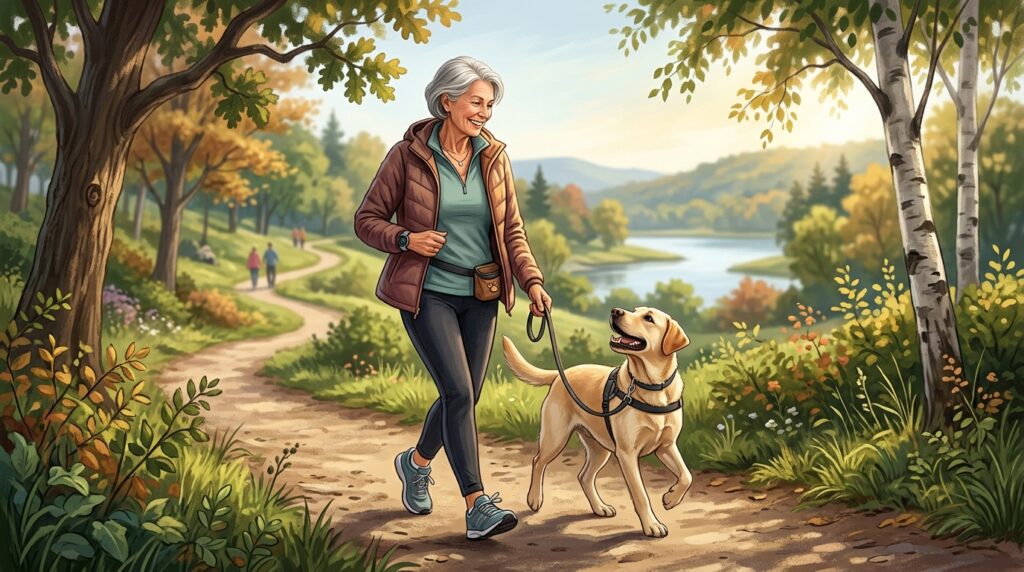
The main advantage of a dog is quite mundane: you can’t sit at home for weeks with one. Even if the owner is feeling lazy, it’s raining outside, and the TV series has just reached the most exciting part, the dog will still ask to go for a walk.
The benefits come from several things at once:
- Regular walks with a dog increase daily physical activity;
- Caring for a pet maintains a regular daily routine;
- Conversations with other dog owners add social interaction;
- Emotional attachment helps one feel less lonely.
It turns out a dog is like a personal trainer without a complicated program: it simply brings the leash every day. At the same time, the person gets not only exercise but also living contact and attention, as well as the feeling that someone needs them.
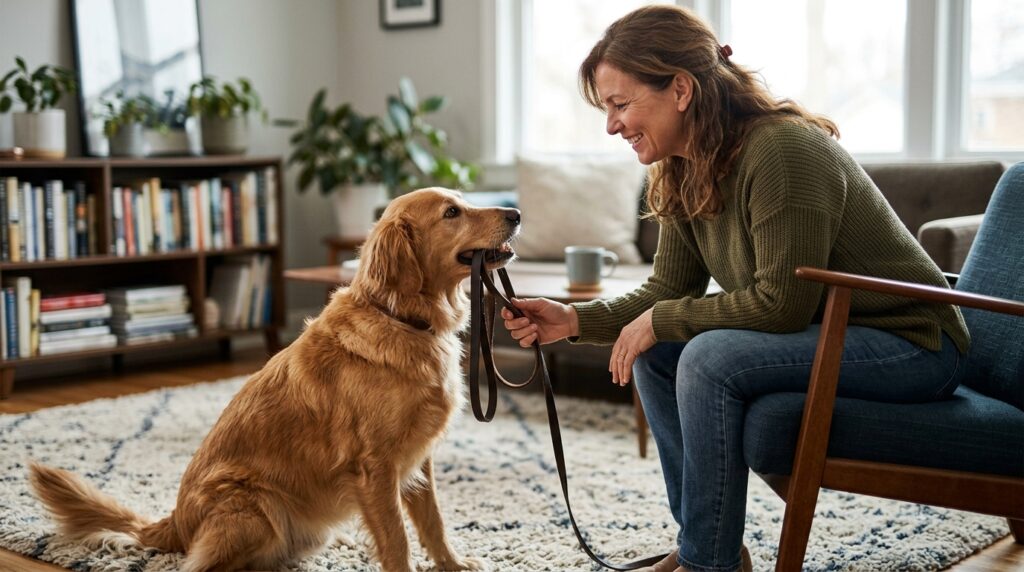
A dog turns a walk from a useful tip into a daily necessity
This lifestyle is especially beneficial at an older age. A review of data on people over 50 showed that pet owners better maintained their physical and some cognitive abilities. But here too, scientists speak of an association, not a guaranteed effect.
Dogs Reduce Loneliness and Support Mental Health
You don’t even need to own a pet for it to be beneficial. In a small study with psychiatric ward patients, short sessions with therapy dogs reduced feelings of loneliness more effectively than regular interaction with a person without an animal. However, this was a pilot experiment with only 60 participants, so the results still need to be verified in larger groups.
During friendly interaction with a dog, the body may increase levels of substances associated with pleasure and attachment, including dopamine, serotonin, and oxytocin. But it’s not about one hormone — it’s the entire set of changes: less loneliness, more movement, and more social interaction.
That’s why a dog can be an especially valuable companion for a person who lives alone. It doesn’t replace friends, family, a doctor, or a psychologist, but it creates a constant emotional connection and prevents one from completely dropping out of everyday life.
What Science Still Cannot Prove About the Impact of Dogs on Lifespan
Scientists still cannot confidently say whether a dog extends the life of a specific person and, if so, by how many years. The outcome is influenced by age, health status, income, marital status, habits, and dozens of other factors. Even the authors of the large study of people after heart attacks and strokes warned that they could not account for factors such as smoking.
One should also be reasonable about the data suggesting that pets protect the brain from aging: for now, this is also an observed association, not a proven effect.
Getting a dog solely for longevity isn’t worth it: a pet requires time, money, attention, and daily care. If a dog already lives with you, it’s more beneficial not to look for a magic cure in it but to take advantage of what it actually provides: walk more often, socialize more, and don’t pass up opportunities for playing together.
A dog doesn’t guarantee a long life but helps form a lifestyle associated with longevity. That’s more honest than promising extra years of life for a single trip to the shelter.