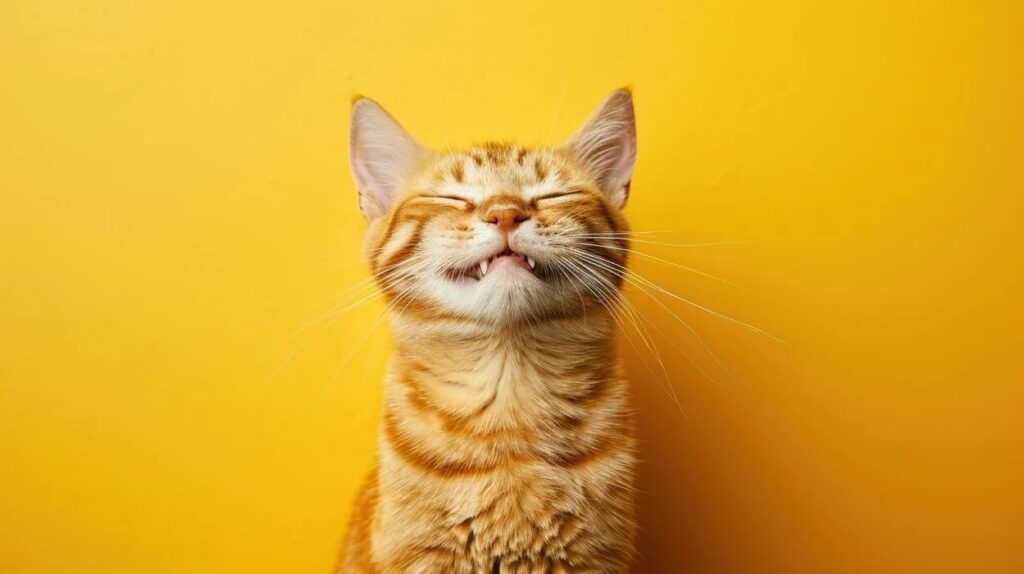
How to tell if your cat is happy?
Dogs are easy to read: wagging tail means happy, flattened ears mean upset. Cats are harder. They’re secretive, reserved, and rarely show their feelings directly. But cats experience the full spectrum of emotions, just like any other animal — they simply express them more subtly. If you observe your pet’s behavior a little, you’ll learn to unmistakably recognize when they’re feeling good.
Purring — the Main but Not Perfect Sign of a Cat’s Happiness
Everyone knows about purring, and in most cases it really does mean pleasure. If your cat has curled up next to you, relaxed, and “started the engine” — you can rest assured, they’re feeling good.
But sometimes cats purr from fear or pain — it’s how they soothe themselves. That’s why it’s important to look at the context: a relaxed cat on the sofa and a tense cat at the vet purr for very different reasons.
Why Cats “Knead” and Press on Blankets
This adorable rhythmic motion of paws on soft surfaces goes by many names — “making biscuits,” “kneading dough.” The cat rhythmically presses their paws on a blanket, pillow, or directly on you.
It’s believed that the kneading habit traces back to kittenhood: that’s how kittens stimulate milk from their mother and feel safe. When an adult cat starts “kneading dough” next to you, it’s a sure sign of the highest degree of bliss. Often, kneading comes together with purring — double confirmation that your pet is happy.
Drooling During Petting — a Strange but Kind Sign
This is perhaps the most unexpected expression of love. Some cats start drooling profusely when being petted. It doesn’t look very aesthetic, but drooling during petting is a sign of pleasure, not illness.
However, “happy” drooling only appears when the cat is receiving attention. If your pet drools on their own, without any petting, that’s not normal — you need to see a vet, as there may be a health problem.
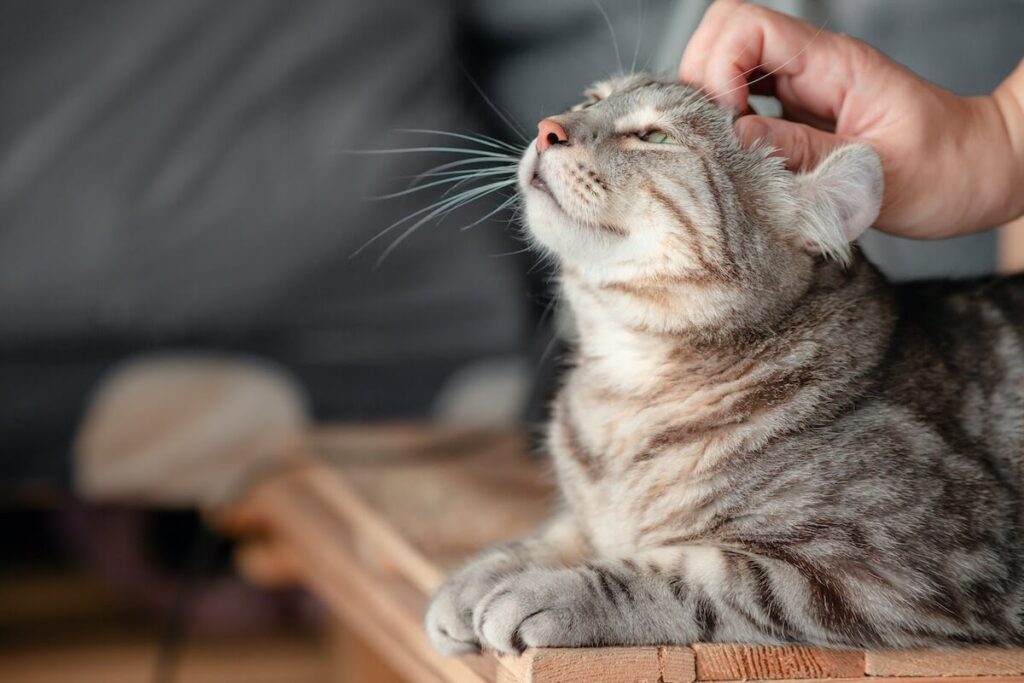
Some cats drool heavily when being petted. Hard to believe, but it really is a sign of happiness.
Playfulness, Appetite, and Sleep: What a Healthy and Happy Cat Looks Like
A happy cat loves to play — especially if they’re young. Sometimes they entertain themselves: chasing a toy mouse down the hallway or attacking anything that hangs, sticks out, or sways. Sometimes they involve their owners in the game too. But the rule is simple: a playing cat is almost always a happy cat.
There are also less noticeable but very important signs. Often it’s the calm everyday habits that indicate the animal is healthy and happy:
- the cat eats well on schedule — both overeating and loss of appetite can signal problems
- sleeps a lot — most cats sleep nearly 20 hours a day, and that’s normal
- grooms themselves, fur is clean and shiny
- regularly uses the litter box
The last point is especially telling. A cat that has stopped using the litter box is often “reporting” stress or illness: urinating and defecating in inappropriate places or not doing so at all. If you notice changes in appetite, sleep, grooming, or litter box behavior — it’s worth visiting a vet.
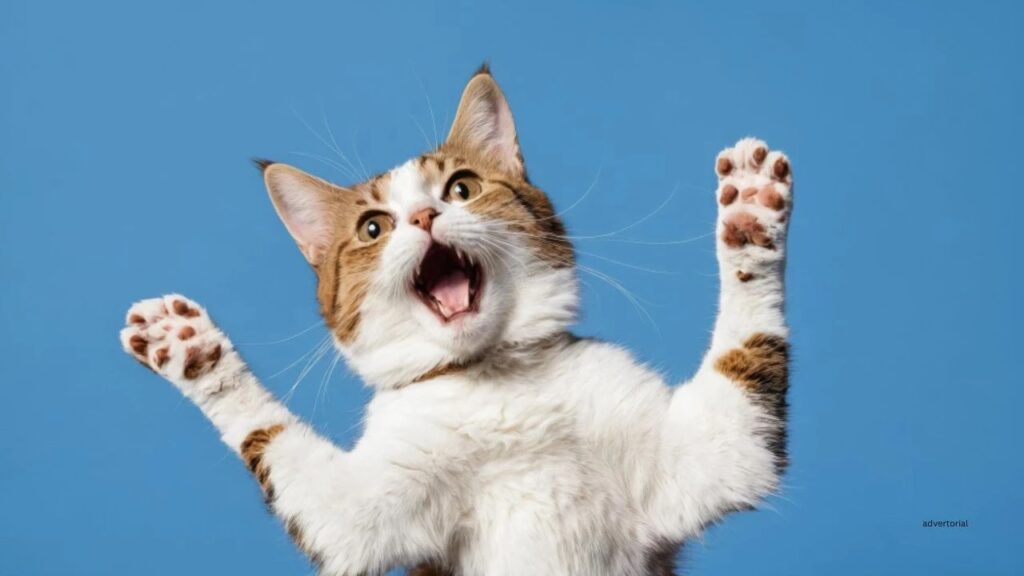
Playfulness is one of the most obvious signs that a cat is feeling good.
Slow Blinking — the Language of Love in Cats
One of the most touching signals is the so-called slow blink. The cat looks at you with a warm, calm gaze, and then unhurriedly closes and opens their eyes. Slow blinking is a feline expression of trust and love.
Interestingly, you can respond to this signal. Try slowly closing your eyes while looking at your cat — many pets will “respond” in kind. It’s a simple way to tell the animal that you’re also feeling friendly.
Meowing and Eye Contact: What Your Cat Is Talking to You About
Direct eye contact followed by meowing also indicates a good mood. Sometimes it’s one short “meow,” sometimes a whole tirade. Chatting with the owner is a sure sign of contentment, and also a way to ask for something.
Most often there’s a specific message behind the meowing: “give me a treat,” “it’s time to scratch me,” or “let’s play.” Cats are perfectly capable of showing what they want — you just need to learn to understand.
The main difference between cats and dogs is that cats show their emotions more quietly and subtly. But their language is rich: a tail held high like a pipe, warm slow blinking, gentle purring, kneading with their paws, or the simple habit of rubbing against your leg. All of these are small signals that your cat is doing well.