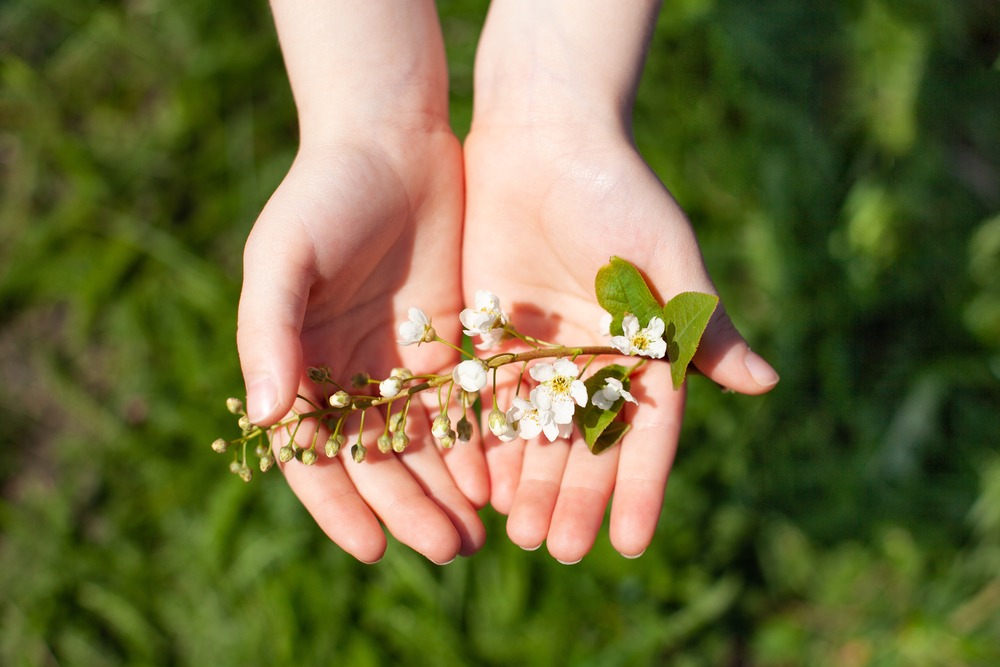
Bird cherry can’t influence the weather, but it’s still a good marker of spring
Almost every spring, the same story repeats: after several genuinely warm days, the temperature suddenly drops, rain returns, and sometimes even night frosts come back. In Russian folk tradition, this is called bird cherry cold snaps, because the cooling usually coincides with the blooming of bird cherry trees. But the connection between the tree and the weather is far more interesting than it seems at first glance.
Where Did the Expression “Bird Cherry Cold Snaps” Come From
Bird cherry is one of the most noticeable spring trees in central Russia. White clusters of flowers, a strong fragrance — it’s impossible not to notice. It blooms for about two weeks on average, right in May, when the weather is still spring-like and unstable.
In Russia, people noticed long ago that sharp cold snaps often coincide with the bird cherry blooming period, and gave them a beautiful name. Other folk weather terms emerged in roughly the same way: Epiphany frosts — severe cold at the end of January, Indian summer — warm days in September.
All these terms work the same way: people associated weather with the nearest noticeable natural or church event. Bird cherry bloomed brightly and abundantly — so it became the one to blame.
Does Bird Cherry Cause the Cold?
The key thing to understand is that there is no cause-and-effect relationship between bird cherry blooming and temperature drops. Weather forecasters confirm this unequivocally. As Lyudmila Parshina, head of the Hydrometeorological Center laboratory, explained, changeable May weather is connected not with bird cherry blooming, but with climatic phenomena.
The mechanism here is simple. Bird cherry blooms for about two weeks. During that time, atmospheric processes in the middle latitudes change more than once, and at least one noticeable cold snap is virtually guaranteed. People see white flowers, feel the cold — and merge the two events into one. It’s a classic perception error: we notice coincidences and remember them, while cases when bird cherry bloomed without any cold are conveniently forgotten.
Alexander Shuvalov, head of the “Meteo” forecasting center, puts it even more simply: cold snaps in May are normal, bird cherry blooming is also normal, and bird cherry cold snaps are a coincidence of two natural phenomena, nothing more.
Why Is It Cold in May
If it’s not about the bird cherry, then why does cold so often return in May? The answer lies in geography and atmospheric physics.
In May, snow still lies in the north, rivers in some places haven’t broken free of ice, and northern seas haven’t had time to warm up. The warm Gulf Stream hasn’t yet raised water temperatures to summer levels. At this time of year, all it takes is for the wind to shift to the north, and within hours the temperature can drop by 15–20 degrees.
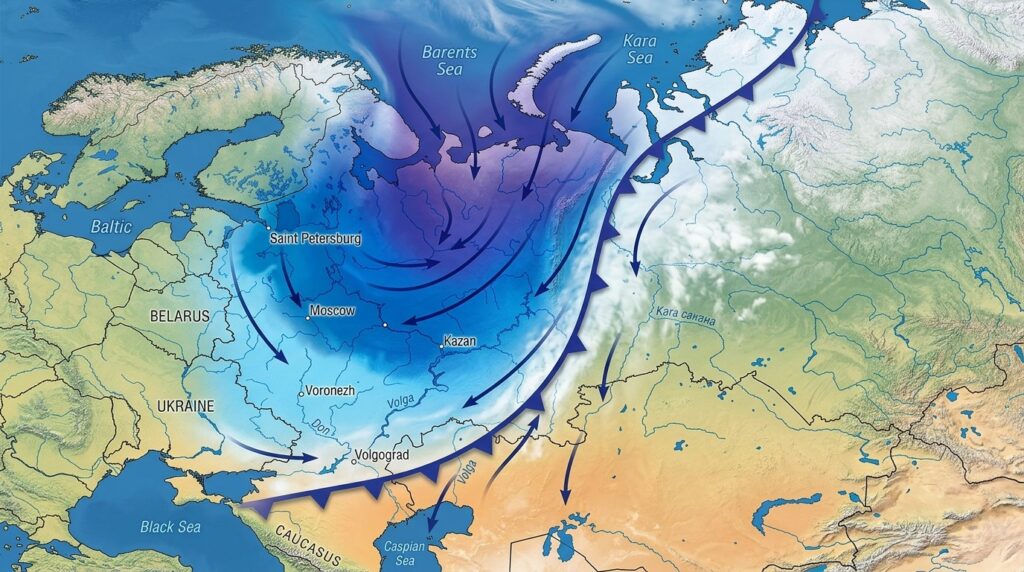
Diagram of Arctic air intrusion into the middle latitudes
Here’s what happens from a meteorological perspective:
- A massive reserve of cold air remains over the Arctic;
- Atmospheric circulation in May is unstable — warm and cold air masses actively “compete” for territory;
- When cyclones form over already-warmed land, northern air masses are easily drawn into the middle latitudes;
- The result is a sharp cold snap against a backdrop of familiar warmth, which feels especially dramatic by contrast.
Meteorologist Evgeny Tishkovets explains this as an Arctic air mass breakthrough — the last one of the season. Until the Gulf Stream has warmed the waters of the northern seas, such breakthroughs are quite possible, and they tend to fall right in the second ten days of May.
How to Predict Weather by Bird Cherry
Although bird cherry doesn’t control the weather, it plays an interesting role in phenology — the science of seasonal natural phenomena. The tree begins to bloom not by the calendar, but after a certain sum of heat has accumulated: several consecutive days with temperatures above approximately +5 degrees.
This means that bird cherry blooming is a reliable indicator that nature has entered the active phase of spring. Phenologists and agronomists use it alongside birch and alder to assess how quickly the warm season is developing. If bird cherry bloomed early, a long summer likely lies ahead. If late — spring is drawn out, and there may be several waves of cold.
That’s precisely why the coincidence of blooming with cold snaps isn’t random in a statistical sense. Bird cherry “switches on” during the very period when the Arctic hasn’t yet released its cold and the atmosphere is still unstable. The tree doesn’t cause frost — but it blooms exactly when frost is most likely.
For gardeners, this is essentially a working signal. If bird cherry has bloomed, it means warm days have already occurred, but it’s too early to relax. Return frosts are quite real, so it’s better to wait before putting heat-loving seedlings in open ground.
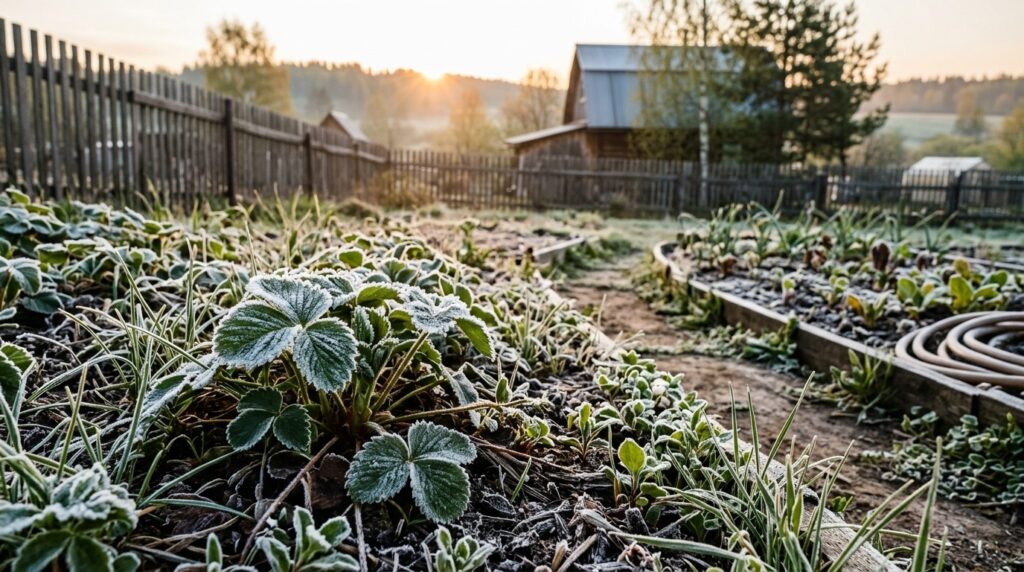
Night frosts are a serious threat for gardeners and horticulturists
How Long Do Bird Cherry Cold Snaps Last
A typical May cold snap lasts from one to two weeks. During this period, daytime temperatures may stay in the range of +5…+15 degrees, night frosts are possible, and precipitation returns in the form of cold rain or even wet snow.
But it’s important to understand: bird cherry cold snaps are not a law of nature, but a statistical tendency. Not every May brings a sharp cold snap during blooming. Natural processes are infinitely varied, and there are years when bird cherry blooms in comfortable warmth without any surprises.
Meteorological statistics confirm that notably prolonged cold characterized, for example, May 1980 and 1999, when average temperatures were a full 5 degrees below normal. Meanwhile, May 2010, 2013, and 2018 were summer-like warm almost the entire month.
The Folk Weather Calendar
Bird cherry cold snaps are part of a larger system of folk weather signs that developed over centuries. Epiphany frosts are tied to January 19th, Indian summer to September, and “strawberry winters” describe anomalously warm winter weather. They all follow the same principle: a memorable calendar event plus characteristic weather.
Meteorologists take such signs calmly: they don’t reject them, but they don’t blindly trust them either. Epiphany frosts prove accurate only in about a third of cases; in the remaining years, mid-January passes without extreme cold. Bird cherry cold snaps follow the same pattern: they occur frequently, but not always, and it’s impossible to tie them to the blooming of a specific tree.
Nevertheless, folk markers remain useful as guidelines. They don’t replace forecasts, but they serve as reminders that May is an unstable month, and it’s worth preparing for return frosts every year, even if it’s already +25 outside.
Bird cherry cold snaps are one of those stories where folk observation and modern meteorology say the same thing, just in different words. For centuries, people noticed that cold follows warmth in May. Scientists explained the mechanism — Arctic air breakthroughs into the middle latitudes. And bird cherry simply turned out to be the most visible witness to this annual tug-of-war between winter and summer.