Why walking in the forest is good for you: 4 amazing effects you’ll feel
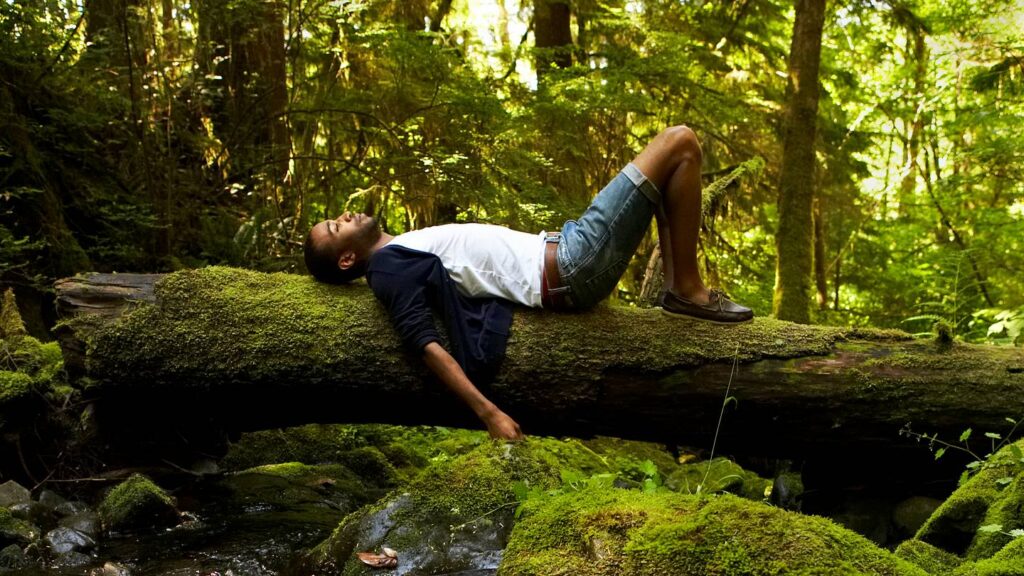
When was the last time you went to the forest and hugged a tree? Think it’s silly? Science actually approves: spending calm time among trees genuinely changes the state of your body and mind. In Japan, they even coined a term for it — shinrin-yoku, or “forest bathing.” And no, nobody’s asking you to literally bathe in the forest. The idea is this: no power walking, no Nordic walking — just mindful presence in the forest, where you notice the rustle of leaves, birdsong, the scent of pine needles, and simply breathe. It’s no wonder that time feels like it passes more slowly in nature, at least subjectively. The practice was invented in Japan back in the 1980s as a form of prevention, and it’s been studied seriously ever since. Below are four effects that make it worth getting under the tree canopy more often.
How the Forest Reduces Stress and Cortisol Levels
If you’ve ever felt the urge to “clear your head” on a walk — your intuition was right. But it’s not just about fresh air and a change of scenery. A walk specifically in the forest affects stress levels, heart rate, and blood pressure more powerfully than the same walk through a city.
One study showed that time among trees is associated with lower cortisol levels — the primary stress hormone. Here’s how it works: in the forest, you inevitably slow down. Soft light, muffled sounds, the absence of urban noise — it becomes easier for the body to relax.
Comparing urban and forest walks, scientists consistently see the same thing: stress markers drop significantly more in the forest. So if you’re choosing where to walk after a tough day — a park or a street along a road — the answer is quite obvious.
Why You Sleep Better After Being in the Forest
Blue light from screens keeps us awake — everyone knows that by now. But daytime sunlight has the opposite effect, if you get enough of it. Time among trees helps calibrate the body’s internal clock — the circadian rhythm, our built-in alarm clock — making it easier to fall asleep in the evening.
There’s also a simpler explanation: more oxygen and less stress during the day means deeper sleep at night. A recent study from 2025 linked forest walks with more restorative sleep and fewer insomnia symptoms. Admittedly, the effect was most noticeable right after time spent in nature.
The takeaway here is utterly practical: more daylight and outdoor movement — a calmer night.
How a Walk in the Forest Helps Restore Concentration
Oxygen and calm are useful not only for sleep but also in the middle of a workday when your brain refuses to function. There is evidence that the forest helps restore attention and relieve mental fatigue — especially after long hours in front of a screen.
The explanation is quite logical: the brain finds it easier to rest where it isn’t bombarded with stimuli. The city constantly demands attention — advertisements, cars, crowds. The forest demands almost nothing, and your tired attention has a chance to reboot.
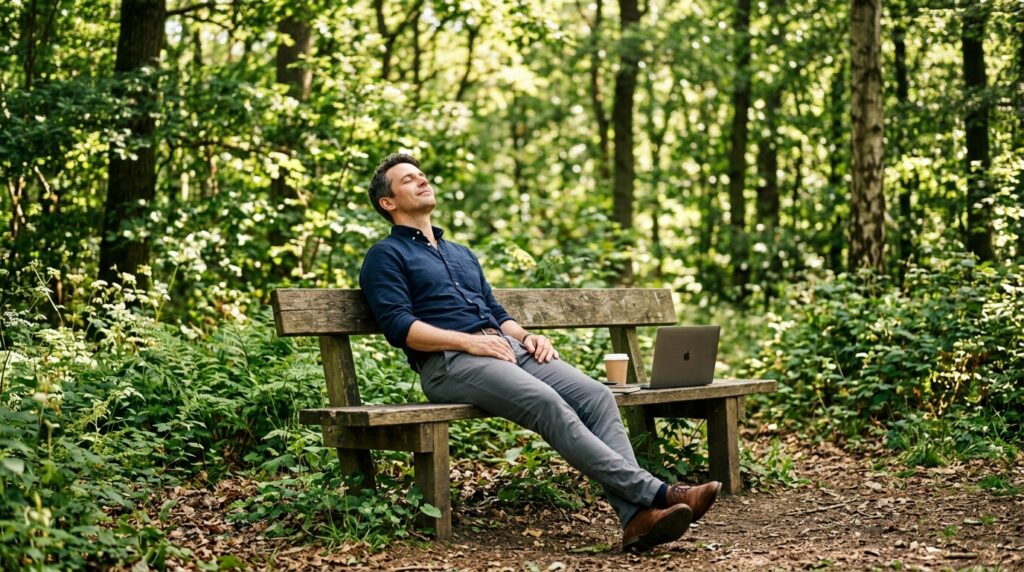
The forest doesn’t demand constant attention — and the brain gets a chance to rest
Interestingly, the effect has been observed in children too: in one study, children with ADHD (attention deficit hyperactivity disorder) performed better on concentration tasks and showed fewer symptoms of inattention after time in nature compared to time in the city. Put simply, nature gives attention a pause, and after a pause it’s easier to focus.
How Tree Phytoncides Help the Immune System
You can forget about trendy immunity lozenges: sometimes it’s enough to simply head out into nature. Time in the forest has been linked to increased activity of natural killer (NK) cells — cells that help the body fight infections and “abnormal” cells.
Scientists suspect that phytoncides are behind this — natural compounds released by trees that we inhale in the forest. That’s exactly why a pine forest smells so pleasant. A small Japanese study showed that people who spent several days in the forest experienced a temporary increase in NK-cell activity, along with other changes in the body’s defense system.
It’s important not to get carried away: the effect wasn’t permanent. And it’s not a substitute for medical treatment, nor a magic cure — rather a short-term boost for the immune system. But it’s nice to know that the scent of pine needles on a morning walk works on more than just your mood.
How Much Time Should You Spend in the Forest
Good news for those who don’t have time for hours-long hikes. Some studies suggest that 120 minutes per week or 17 minutes per day in nature can already improve well-being. That’s less than one episode of a TV series.
To reap the benefits, you don’t need to head deep into the wilderness. It’s enough to:
- choose a green route instead of a street along a road
- slow down and notice the sounds, smells, and light around you
- put your phone in your pocket at least for the duration of the walk
- breathe calmly and not turn it into an athletic workout
The key difference between forest bathing and regular walking is mindfulness. You’re not clocking kilometers — you’re giving yourself and your mind a break.
Essentially, the forest is a free and almost foolproof way to take some load off your nervous system. Science isn’t promising miracles yet and honestly notes that some effects are short-lived and studied in small groups. But reducing stress, sleeping better, and restoring concentration are quite achievable.