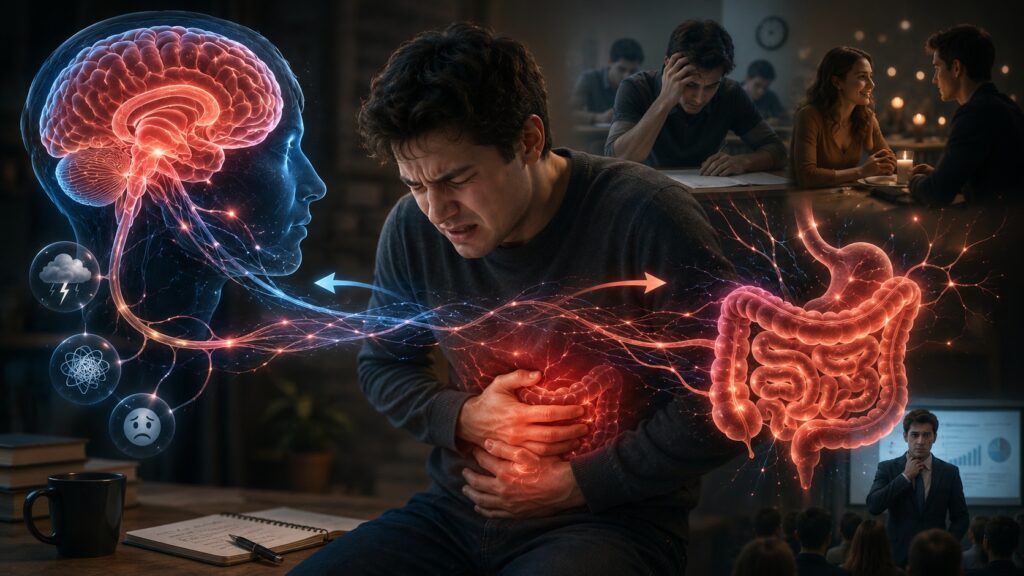
Stress makes many of us need to use the bathroom, and there is a scientific explanation for it
Do you also get an upset stomach before an exam or another important event? Once, before a date, I literally spent half the day in the bathroom. Usually, when people say their stomach is churning, they mean cramps, rumbling, nausea, bloating, and sudden urges. In reality, this isn’t just your imagination or a weakness of character. There is a constant two-way connection between the brain and the gut, and stress genuinely changes how digestion works.
How the Gut and the Brain Are Connected
The brain affects the stomach and intestines through several pathways at once: the autonomic nervous system, stress hormones, immune signals, and the vagus nerve. This is a large nerve that connects the brain to the abdominal organs. At the same time, the gut constantly sends signals back to the brain.
The connection between the brain and the gut is so close that even a thought or emotion can resonate in the abdomen. According to Harvard Health, anxiety, stress, and emotional tension can cause cramps, loose stools, nausea, and other unpleasant sensations.
The gut itself has its own neural network called the enteric nervous system. It controls intestinal contractions, movement of food, secretion of fluids and enzymes, blood flow, and wall sensitivity. Cleveland Clinic separately describes this connection as a signaling system between the central nervous system, the gut, and the microbiome — that is, the bacteria living inside us. This is precisely why the gut reacts not only to food but also to our emotions.
Why Your Stomach Churns During Stress
When a person is anxious, the body launches a stress response. Adrenaline, noradrenaline, and cortisol — the main stress hormones — are released into the bloodstream. From the body’s perspective, stress is a threat signal, so the body redistributes resources. It boosts heart function, prepares muscles for action, changes breathing, and switches digestion to “background” mode.
A detailed review in PubMed states that stress affects intestinal contractions, internal organ sensitivity, secretion, mucosal permeability, blood flow, and microbiota. Essentially, the body decides that digesting lunch isn’t the priority right now — there’s a bigger threat to deal with.
Because of this, the gut begins contracting differently. If contractions intensify and become sharper, cramps, “churning,” rumbling, and the urge to go to the bathroom appear. This is the very physiology that causes severe abdominal pain during intestinal disturbances, even when there’s no serious illness.
Why Anxiety Can Cause Either Diarrhea or Constipation
The same stress produces different symptoms in different people. It all depends on which part of the GI tract reacts more strongly.
During acute stress, some people experience more active contractions of the large intestine. This speeds up the movement of contents, water doesn’t have time to be properly absorbed, and loose stools, rumbling, cramps, and a sense of urgency appear. When the brain-gut connection is disrupted, food moves too quickly in some people and too slowly in others, and bowel habits change accordingly.

Stress before an important event can affect the stomach in different ways
The cause of constipation is different. Stress doesn’t always simply speed up the gut — sometimes it disrupts the coordination of contractions: some sections work spastically, others slow down, and the movement of contents becomes sluggish. Also, during stress, people often eat and drink less, sleep poorly, move less, and rely heavily on coffee. All of this worsens bloating and constipation.
The stomach also receives signals from the nervous system. During intense anxiety, its motility, acid secretion, and emptying speed change. This is where nausea, a feeling of a lump, fullness, and sometimes heartburn come from.
Why Your Stomach Hurts Without Food Poisoning or Infection
Here, the key role is played by visceral sensitivity. During stress, the nervous system can amplify the perception of signals from the gut. What would feel like ordinary gas or stool movement in a calm state is perceived as pain or severe discomfort against a backdrop of anxiety.
Scientists explain visceral hypersensitivity as a condition in which the pain threshold of internal organs is lowered, and normal processes within the GI tract begin to feel painful. Simply put, the volume of signals from the abdomen is turned up higher than usual.
This is exactly why everything is fine with the body, yet the stomach still churns: muscles contract abnormally, sensitivity is heightened, and signals between the brain and the gut become too strong. These conditions are now called disorders of gut-brain interaction.
What to Do When Stress Makes Your Stomach Churn
If your stomach is churning specifically from stress, the first thing you need to do is calm the nervous system. Diet, sleep, and hydration also require special attention.
- Normalize your eating habits: don’t go long periods without eating, don’t overload your stomach with heavy fatty food before stressful events, and don’t drink too much coffee;
- Watch your sleep and water intake: sleep deprivation increases nervous system reactivity, and dehydration impairs gut function;
- Stay more active: add walking, light exercise, stretching;
- During an acute episode, slow breathing with a long exhale helps, as do calm walking, warm water in small sips, and temporarily avoiding coffee, alcohol, spicy, and fatty foods.
When Stomach Pain Requires Emergency Medical Attention
It’s important to distinguish a normal stress response from warning signs. If your stomach churns due to anxiety and goes away after using the bathroom, resting, or once the situation calms down, everything is fine.
However, there are symptoms that require seeing a doctor. Mayo Clinic lists the following signs of a serious condition:
- blood in stool or black stool;
- unexplained weight loss;
- fever and nighttime diarrhea;
- repeated vomiting and anemia;
- severe, worsening pain that doesn’t go away after a bowel movement or passing gas;
- symptoms that first appeared after age 50.
If the problem is recurring and interferes with work, commuting, or eating normally, it’s worth seeing a gastroenterologist. Not because things are bad, but to rule out serious causes and understand what’s going on.
In summary, stress makes you need the bathroom because it directly interferes with gut management. It changes muscle contractions, the speed of food movement, receptor sensitivity, and microbiota function. This is real physiology, not a whim. But precisely for this reason, if symptoms are frequent, severe, or unusual, they shouldn’t be automatically attributed to nerves alone.