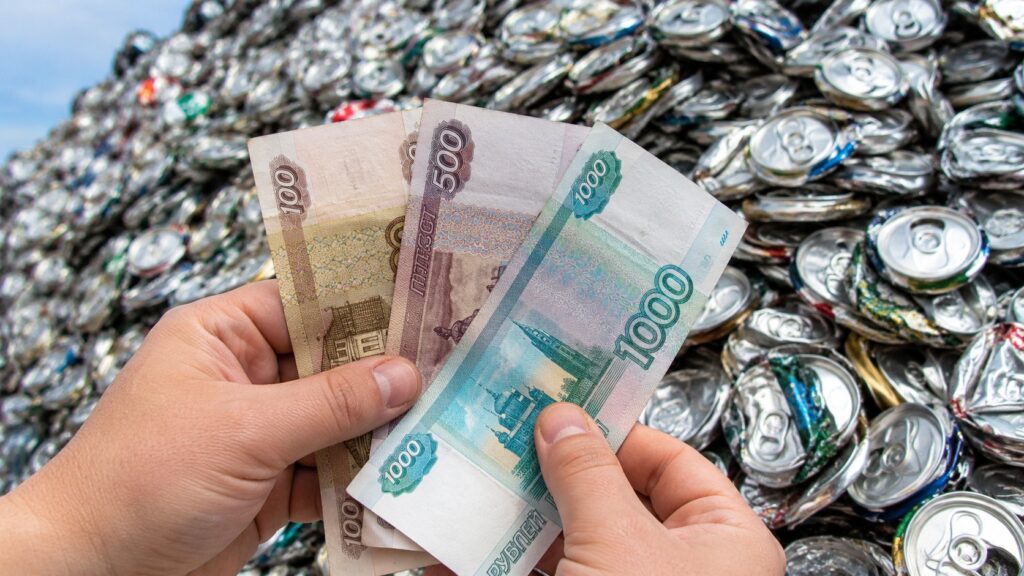
One type of container is worth more than all the others
As a child, returning empty bottles for money was the norm. Today this way of earning still exists, but it works quite differently from what you remember. The main pitfall is that most people misjudge the value of containers and walk away empty-handed or with pennies, when they could have earned more. We figured out how the system actually works and who really makes money from it.
Which Bottles Are Most Profitable to Recycle
As of mid-2026, the most valuable mass-market container remains the aluminum beverage can. According to the price table on the Vtorlom website, depending on the region and batch size, recycling centers are willing to pay from 30 to 137 rubles per kilogram of aluminum. Considering that one standard beer can weighs about 15–20 grams, you would need to collect approximately 50–66 cans to get one kilogram.
The situation with plastic is much more complicated. Ordinary PET bottles are valued at just 5–18 rubles per kilogram. To earn even 10 rubles, you would need to find and crush about 25 one-and-a-half-liter bottles. Glass, despite its impressive weight, costs very little — from 1 to 5 rubles per kilogram of cullet. Hauling several heavy bottles across the city is pointless, as transportation costs will instantly eat up all the profit.
Where to Recycle Containers for Money
Before you start stockpiling cans on your balcony, it’s important to understand that not all collection points are willing to pay you cash. In modern cities, there are three completely different formats for dealing with waste.
Eco-centers and brightly colored street containers are intended exclusively for environmentally conscious citizens who are willing to recycle for free. Popular automatic terminals work in a similar way — reverse vending machines (fandomats) only dispense discounts or loyalty points that can be spent at partner stores, but converting them into real rubles is not possible.
For real money, you’ll need to go to specialized paid container collection points. You should search for them using queries like “non-ferrous metal recycling” or “PET bottle collection.” Before going, be sure to call to find out the current price and clarify the minimum batch weight. Some facilities simply won’t deal with a person who brings less than 20 kilograms of material.
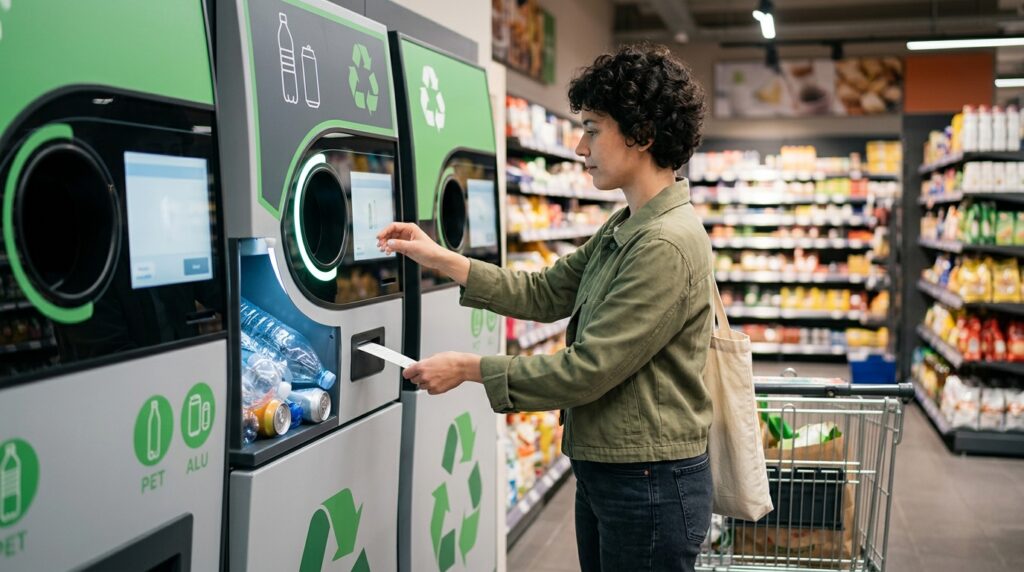
Modern reverse vending machines issue discount coupons, not cash
Where to Find Empty Bottles for Sale
Aimlessly wandering the streets looking for empty bottles is the most inefficient way to earn money. To consistently make money, you need to find steady sources.
The most effective and profitable strategy is to make arrangements with local bars or cafés. A single establishment generates several huge bags of empty bottles over a weekend. You can offer the bartender to take this packaging for free: the venue reduces its waste volume, and you get a ready batch of material.
Additionally, cans can be collected in parks in the morning after holidays, or you can arrange with office colleagues by placing a separate box for water and energy drink containers. The key is to legally obtain the containers before they end up in an official waste bin, so as not to violate waste ownership laws.
How to Prepare Bottles for Collection Points
Even if you’ve gathered an excellent batch, a recycler can easily lower the price or refuse to accept the containers altogether if they aren’t properly prepared. All containers need to be rinsed of beverage residue and thoroughly dried.
Plastic PET bottles must be stripped of shrink-wrap labels and crushed as flat as possible so they don’t take up extra space. Glass should be carefully packed in sturdy boxes without breaking it in advance. Aluminum should also be crushed, after first checking it with a magnet — a genuine aluminum can will not be attracted to a magnet.
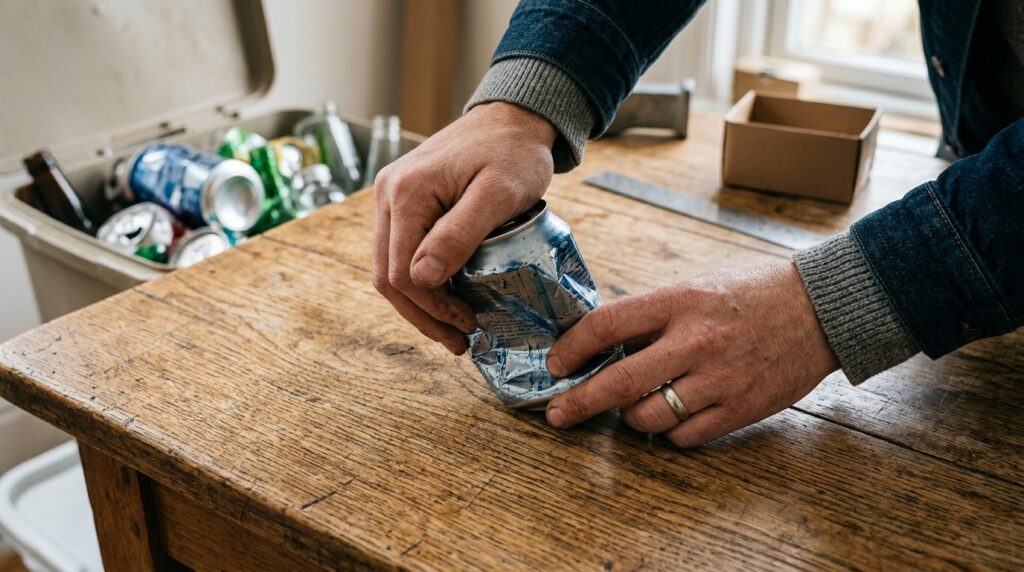
Crushing cans and plastic bottles is a mandatory step that saves space during transportation
An important legal nuance: recycling non-ferrous metal requires a passport. Under Russian 2026 laws, official collection points are required to verify the identity of the person turning in scrap metal. Moreover, payments to individuals are made only via cashless bank card transfers. So the requirement to show identification is not a whim of the recycler, but a strict government regulation.
An average person can earn from 100 to 500 rubles per active day collecting containers. Earnings above 1,000 rubles are quite realistic, but only if you systematically collect hundreds of aluminum cans and cooperate with food service establishments.