Choosing the right iPhone for professional use means balancing screen size, processing power, battery life, and budget. Five models are available or expected in 2026 — from the flagship iPhone 17 Pro Max down to the budget-friendly iPhone 17e, plus the ultra-slim iPhone Air, the older iPhone 15, and the rumored foldable iPhone Ultra. Below is a breakdown of each option with specifications, strengths, and trade-offs.
What you need to know
- All current-generation models (iPhone 17 Pro Max, iPhone Air, iPhone 17e) run the A19 or A19 Pro chip with at least 8 GB of RAM and support Apple Intelligence.
- The iPhone 17e reportedly outperformed the iPhone 16 Pro in early benchmark tests, making it a strong budget option.
- The iPhone Ultra — Apple’s rumored first foldable — has not been officially announced; all its specifications are based on leaks and rumors.

Exploring which iPhone is best suited for business use
iPhone 17 Pro Max: The no-compromise flagship
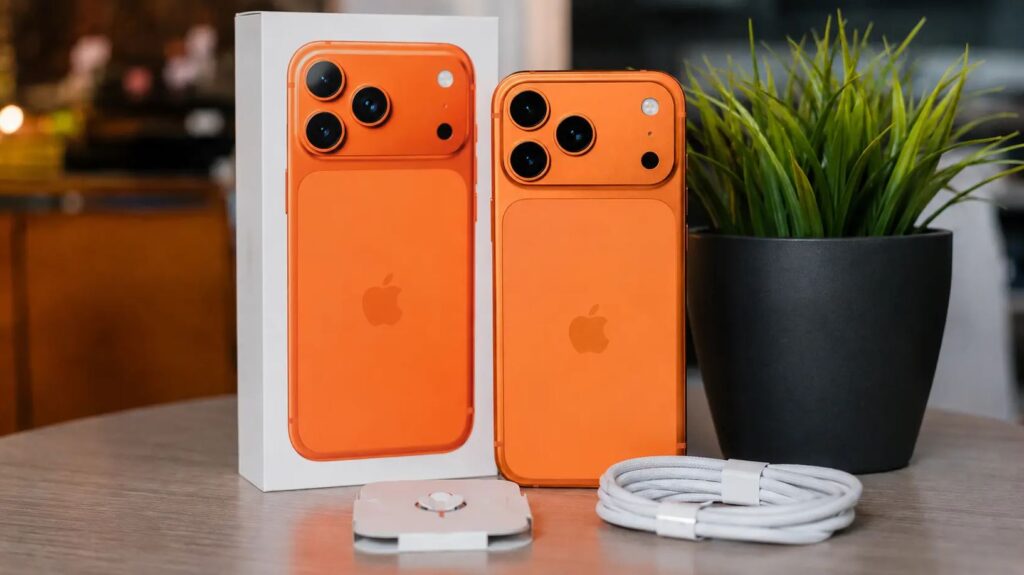
Apple’s top flagship — the strongest all-around model for business
When the phone is your primary work tool and budget is not the main constraint, the iPhone 17 Pro Max sits at the top. It offers the largest screen in the lineup for documents and video calls, Apple’s most powerful silicon, and the longest battery life.
| Specification | iPhone 17 Pro Max |
|---|---|
| Display | 6.9 inches, OLED, 120 Hz |
| Processor | A19 Pro, 12 GB RAM |
| Battery | Approximately 5,000 mAh — largest in the lineup |
| Storage | 256 GB to 2 TB |
| Camera | Triple 48 MP rear, up to 8× optical zoom; 18 MP front |
The source states that the A19 Pro should keep the device capable for at least five years of software updates, noting that iOS 27 runs smoothly on it. The only notable downside is that it is the most expensive model in the family.
iPhone Air: Ultra-thin and image-conscious
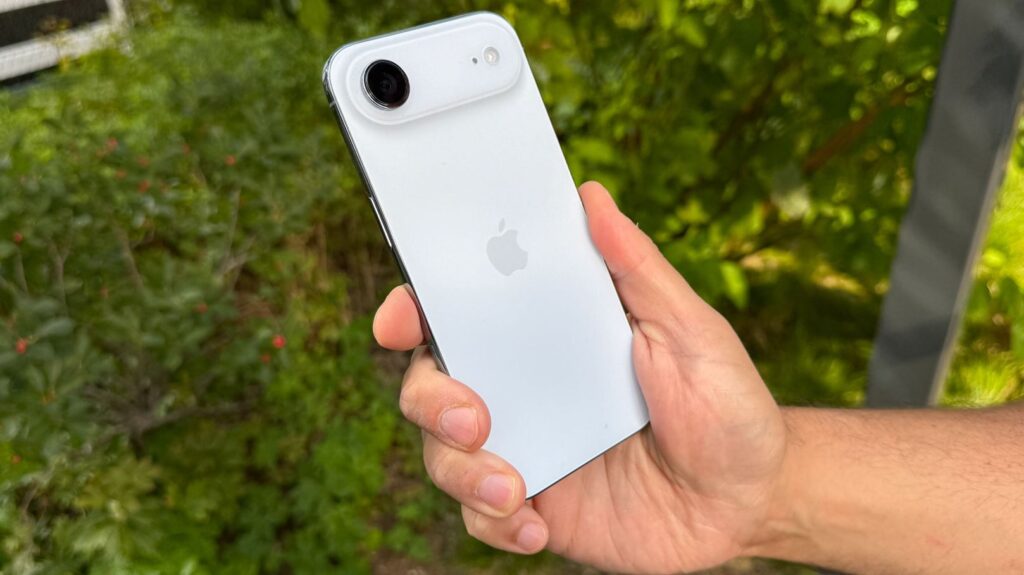
A business smartphone should be not only powerful but also stylish
At just 5.6 mm thick, the iPhone Air is Apple’s slimmest iPhone. It shares the same A19 Pro chip and 12 GB of RAM as the Pro Max, so raw performance is not a concern. The trade-offs for that slim profile are a single rear camera and a smaller 3,149 mAh battery.
| Specification | iPhone Air |
|---|---|
| Display | 6.5 inches, OLED, 120 Hz |
| Processor | A19 Pro, 12 GB RAM |
| Battery | 3,149 mAh — up to 27 hours of video playback |
| Storage | 256 GB to 1 TB |
| Camera | Single 48 MP rear; 18 MP front |
The source notes that Apple is reportedly planning to address the Air’s main shortcomings in a second-generation model. For professionals who prioritize design and portability over camera versatility, the current Air remains a compelling option.
iPhone 15: A proven, lower-cost workhorse
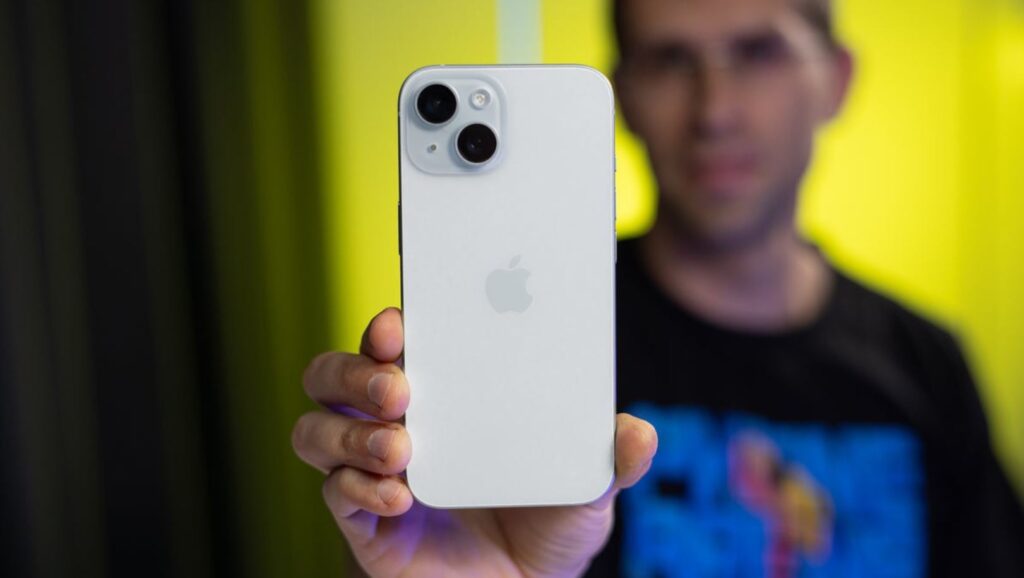
The iPhone 15 has nothing left to prove: a balanced model with few weak spots
Not every professional needs the latest flagship. The iPhone 15 offers USB-C, Dynamic Island, and a capable dual-camera system at a lower price point than current-generation models. Its main limitations are the 60 Hz display refresh rate and 6 GB of RAM.
| Specification | iPhone 15 |
|---|---|
| Display | 6.1 inches, OLED, 60 Hz |
| Processor | A16 Bionic, 6 GB RAM |
| Battery | 3,349 mAh — up to 20 hours of video playback |
| Storage | 128 GB to 512 GB |
| Camera | Dual rear (48 MP + 12 MP); 12 MP front |
For email, calls, messaging, and basic document work, the source considers the iPhone 15 more than sufficient for years to come — a reliable option without paying for the latest generation.
iPhone 17e: The budget-friendly current-gen option
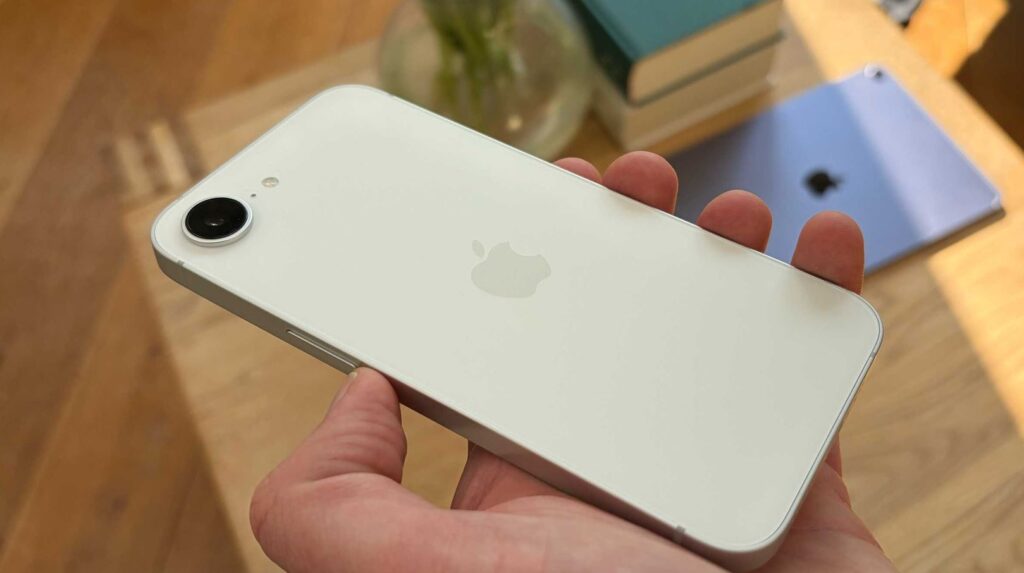
An affordable yet powerful model for any task
When the goal is to equip an entire team or provide a straightforward work phone, the iPhone 17e is the most cost-effective current-generation option. It runs the same A19 chip (non-Pro variant) with 8 GB of RAM, which is enough to support Apple Intelligence. The source reports that in early benchmark tests, the 17e outperformed even the iPhone 16 Pro.
| Specification | iPhone 17e |
|---|---|
| Display | 6.1 inches, OLED, 60 Hz |
| Processor | A19, 8 GB RAM |
| Battery | Up to 26 hours of video playback |
| Storage | 256 GB or 512 GB |
| Camera | Single 48 MP rear; 12 MP front |
The trade-offs mirror those of the iPhone 15: a 60 Hz screen and a single rear camera. But the significantly newer processor and Apple Intelligence support give it a longer useful lifespan.
iPhone Ultra: The rumored foldable (unconfirmed)
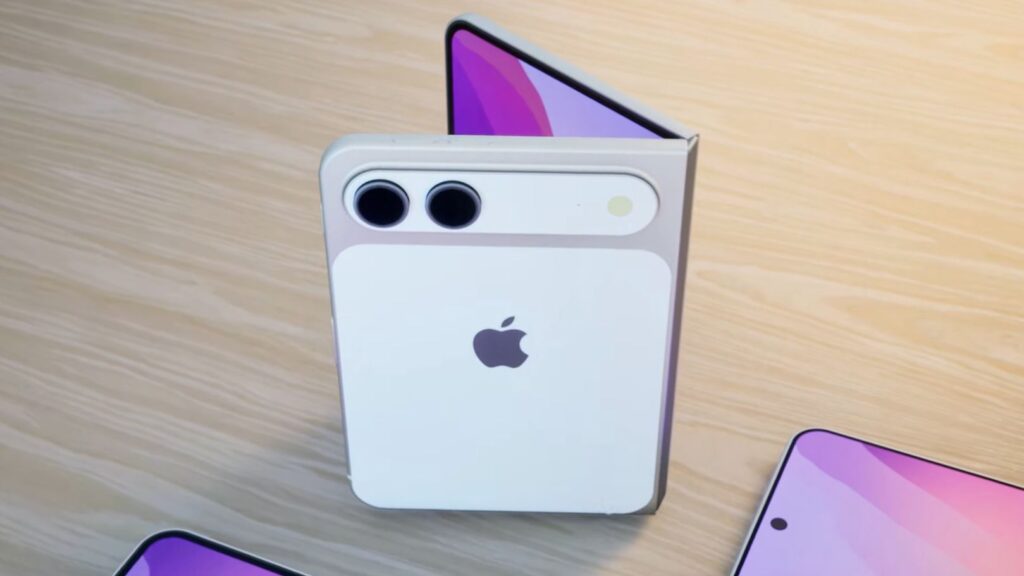
Apple’s foldable iPhone may be worth waiting for
Important caveat: The iPhone Ultra has not been officially announced by Apple. All specifications below are based on rumors and leaks and should be treated as unconfirmed. The source suggests Apple may unveil it alongside the iPhone 18 Pro lineup in the fall.
| Specification | iPhone Ultra (rumored) |
|---|---|
| Display | Foldable — 7.8 inches inner, 5.5 inches outer |
| Processor | A20 Pro |
| Battery | Approximately 5,500 mAh — would be the largest in any iPhone |
| RAM / Storage | 12 GB RAM, from 256 GB |
| Camera | Dual 48 MP rear; two 18 MP front cameras |
The key appeal for business users would be multitasking: the large inner display could run two apps side by side, effectively turning the phone into a mini-tablet for email, spreadsheets, and video calls. According to the source, references to the device’s interface have already appeared in macOS 27 code. If it materializes, it is expected to be the most expensive iPhone ever.
Which model fits which need?
The choice ultimately depends on priorities. The iPhone 17 Pro Max covers every base but costs the most. The iPhone Air matches its processing power in a dramatically thinner body, at the expense of camera versatility and battery capacity. The iPhone 15 and iPhone 17e serve professionals who need a reliable, no-frills work phone without flagship pricing — with the 17e offering a newer chip and Apple Intelligence support. And the rumored iPhone Ultra could redefine mobile multitasking, though it remains unconfirmed and is expected to carry a premium price.