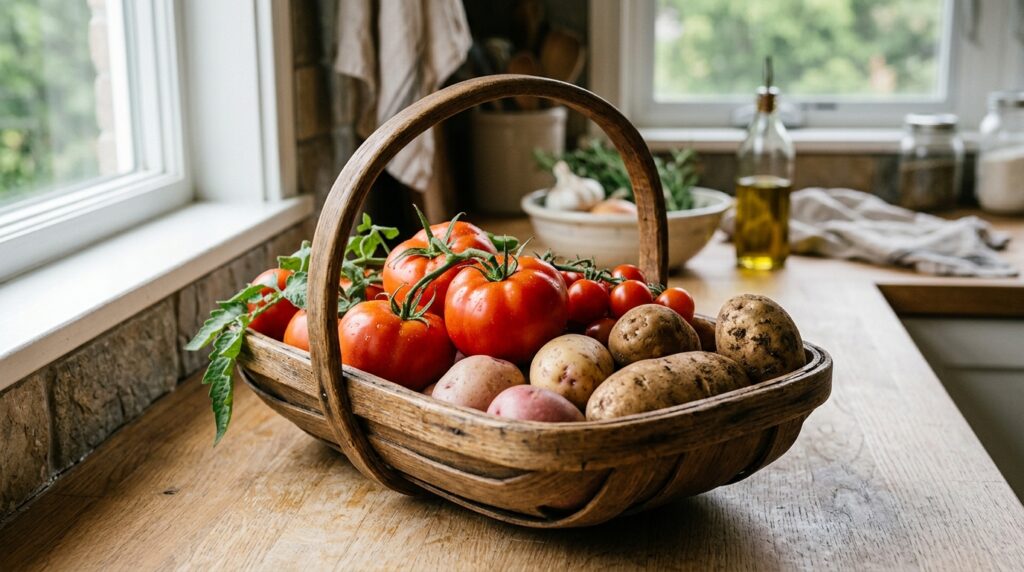
Some foods are better stored in a dark and dry place than in the fridge
Everyone has a fridge, and we automatically put almost any food in there because it seems safer. But in reality, cold doesn’t always work in your favor. It changes the texture, taste, and even the smell of foods, and not for the better. The foods themselves remain edible in the fridge, but they lose everything we love about them. We’ve put together a list of things that shouldn’t be kept in the fridge, and chances are you’re storing at least half of them there.
Which vegetables shouldn’t be stored in the fridge
The most common mistake is putting tomatoes in the vegetable drawer. In the cold, the processes responsible for producing aromatic compounds stop. Without the right temperature, they become mushy and develop a plasticky taste.
Storing potatoes in the fridge is also a bad idea. Due to the low temperature, some of the starch converts into sugar, making the tubers unusually sweet and changing their texture when fried or boiled.
Storing onions and garlic in the fridge presents a different problem. Inside the compartment, it’s too humid and air circulation is minimal. Because of this, the dry bulbs quickly become damp, turn soft, or even develop mold. Their ideal place is a dark, well-ventilated cabinet away from potatoes.
Which fruits spoil in the fridge
Heat-loving fruits suffer from refrigeration the most. If you put an unripe banana in the fridge, it will never become sweet, and its peel will quickly darken due to a stress reaction to the cold.
The same applies to firm avocados and mangoes. Low temperatures significantly slow down the ripening of the fruit, so they can remain hard and completely tasteless for weeks. If you want them to soften faster, simply place them on the counter next to a ripe apple, because the ethylene it releases will speed up the process.
A whole pineapple in the cold can start to turn brown. However, it’s important to remember that pineapples, unlike bananas, cannot fully ripen after being picked. If the fruit was harvested green, sitting on the counter won’t make it sweet.
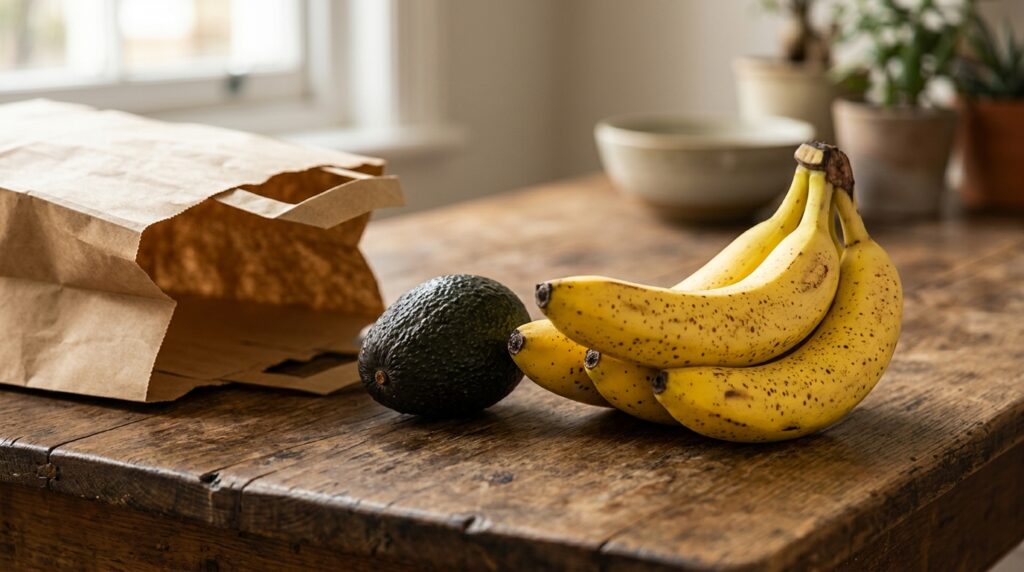
Bananas and avocados ripen better outside the fridge
What happens to bread, chocolate, and coffee
It seems logical to hide baked goods from mold in the cold, but there they go stale rapidly. At low temperatures, the starch in the crumb changes its structure, making regular bread hard and dry. On top of that, it instantly absorbs the smells of sausage or yesterday’s soup. So storing bread in the fridge is not recommended.
Chocolate in the fridge suffers from humidity and temperature fluctuations. When you take a cold bar out into a warm room, condensation forms on it. The moisture dissolves sugar particles, and after drying, a white coating appears. The chocolate remains safe to eat, but its texture and appearance are significantly affected.
Coffee and dry tea in the fridge act as powerful sorbents. In the fridge, they absorb foreign aromas and moisture. Honey in the cold doesn’t spoil either, but it quickly thickens and crystallizes, making it extremely inconvenient to scoop out with a spoon.
How to store cut fruits and vegetables
Cucumbers, eggplants, and bell peppers don’t like overcooling, which causes them to lose their firmness and become watery. If you plan to eat them within the next few days, it’s better to leave the vegetables in a dark place right in the kitchen. The exception is summer heat above +30 degrees — then the vegetable drawer becomes the lesser of two evils.
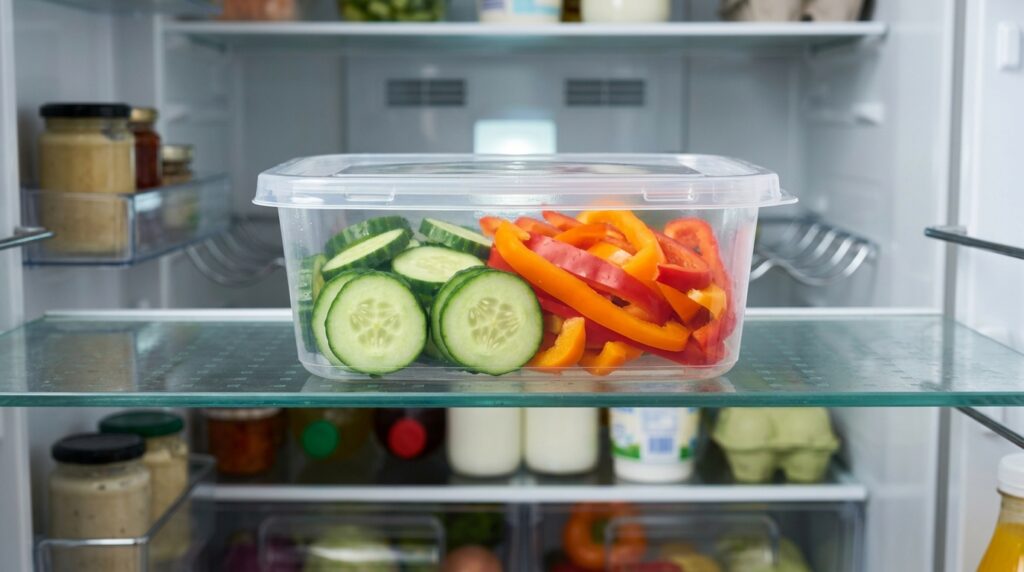
As soon as you cut vegetables, you need to put them in the cold right away
Here the main food storage rule comes into play. Whole and unripe products often feel better on the counter. But as soon as you break their outer layer, the situation changes fundamentally.
You should store in the fridge:
- any cut fruits and vegetables;
- peeled garlic cloves and halved onions;
- the flesh of a cut pumpkin;
- bread and pastries with perishable fillings.
So the fridge is a great tool if you use it wisely. Read labels carefully, let exotic fruits ripen in warmth, and don’t overchill your tomatoes. That way your food will be not only safe but truly delicious.