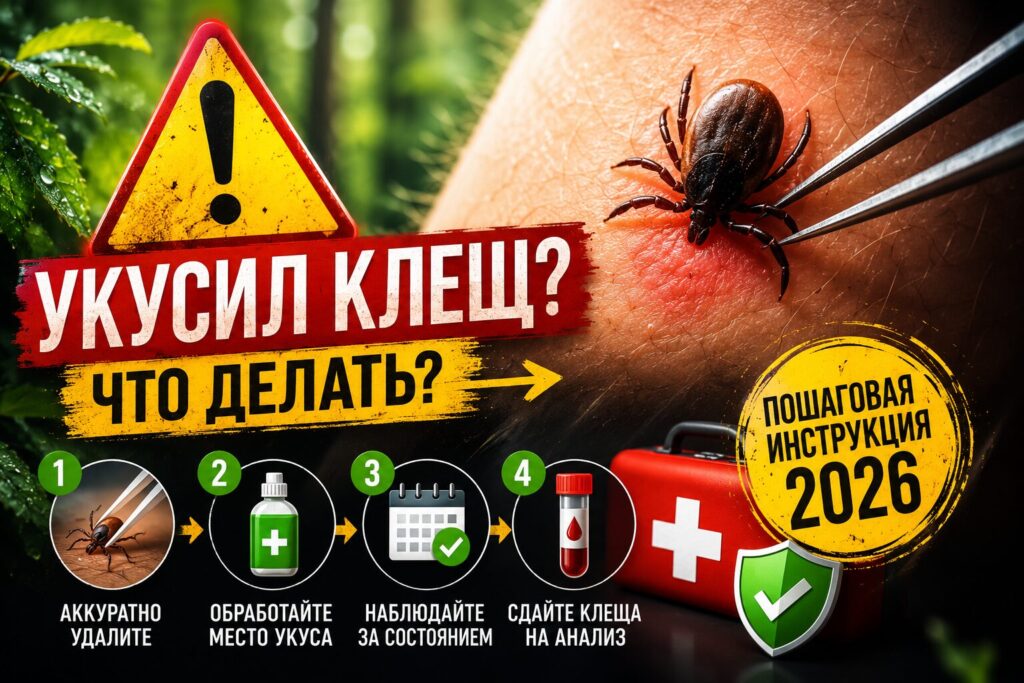
Simply removing a tick from the wound is not enough
The tick season in Russia in 2026 began as early as the third week of March — Rospotrebnadzor issued a warning about this. By that time, over 100 cases of tick bite victims had already been recorded, with nearly half occurring in Krasnodar Krai and Crimea. This is one and a half times fewer than the previous year, but it’s too early to relax: peak activity traditionally falls between late May and mid-June, although ticks bite people throughout the entire summer and even into autumn. Let’s go through step by step what to do if a tick has made it to your skin.
When Does Tick Season Start in 2026
Traditionally, ticks become active as soon as the temperature rises to approximately plus five to seven degrees Celsius. They don’t jump from trees, as is commonly believed, but sit on grass and bushes up to half a meter high and latch onto passing people or animals. That’s why it’s not just dense forests that are dangerous, but also ordinary city grass, country gardens, and parks.
To reduce the risk of mass bites, acaricidal treatments (spraying tick-killing agents) are carried out in places where people gather — on the grounds of schools, summer camps, and parks. But you can’t rely on them entirely: personal protection remains the main barrier.
How to Properly Remove a Tick at Home
The main rule is to remove the tick as quickly as possible. The longer it stays in the skin, the higher the risk of disease transmission. At the same time, you need to act carefully so as not to crush the insect or leave its head in the wound.
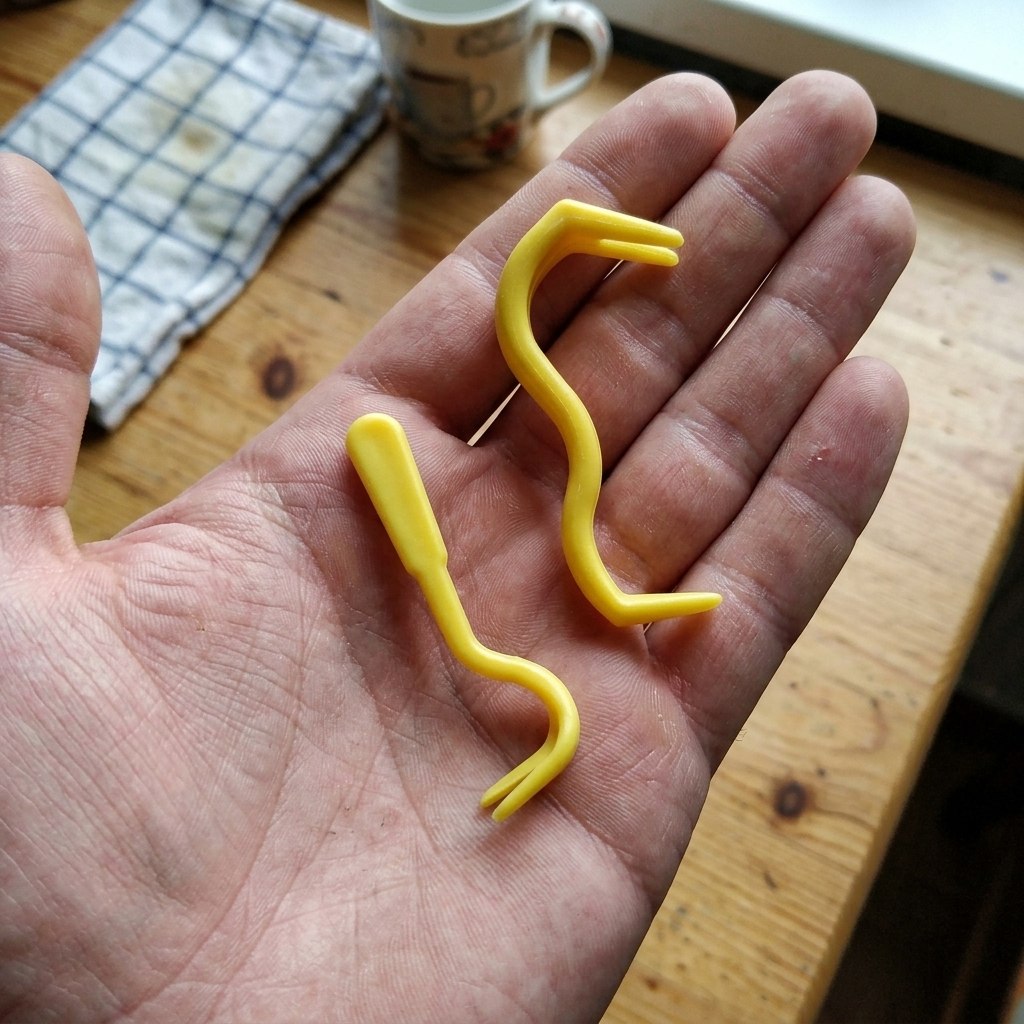
Tick twisters come in different sizes for different ticks
Rospotrebnadzor recommends using a special device — a tick twister, which is sold in pharmacies. If you don’t have one on hand, tweezers or a sturdy thread will work. Here’s the procedure:
- Grasp the tick as close to the skin as possible, right at the mouthparts, without squeezing the abdomen.
- Slowly twist it with rotational movements counterclockwise or clockwise — the tick screws itself into the skin, so twisting helps extract it in one piece.
- Don’t jerk sharply upward: you risk tearing the body from the head.
- After removal, treat the bite site with an antiseptic — rubbing alcohol, iodine, or chlorhexidine.
- Wash your hands thoroughly.
Forget folk remedies like “drop some oil on it” or “burn it with a match.” When suffocating, the tick releases more saliva into the wound, and with it — potential disease-causing pathogens. This only increases the risk of infection.
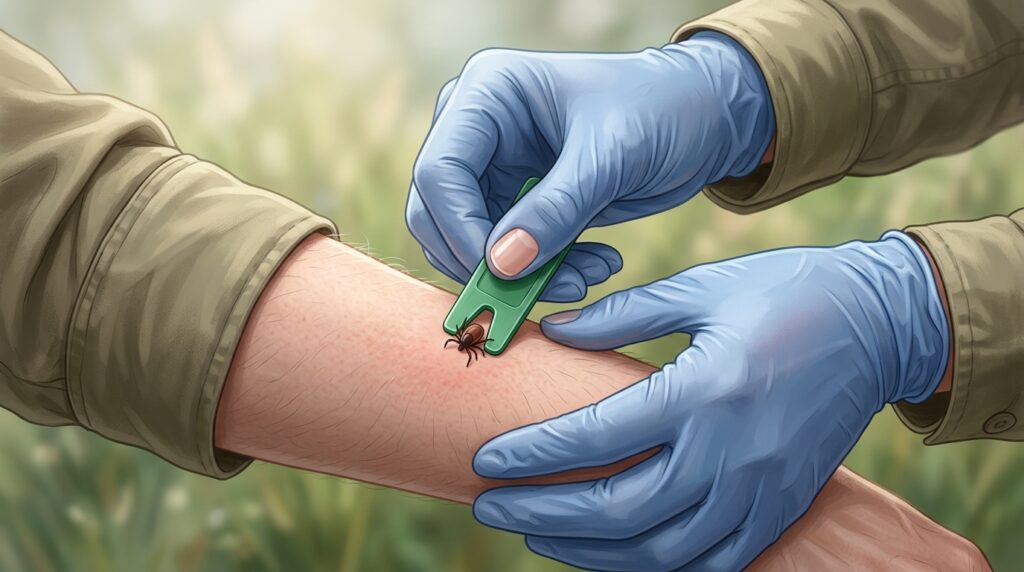
A tick is extracted with a special device, grasping it close to the skin
If you can’t remove the tick yourself or the head remains in the skin, don’t torment yourself — go to the nearest emergency room or hospital. A doctor will remove the remains and treat the wound.
Where to Submit a Tick and What Tests Are Needed
It’s important not to throw away the extracted tick. Rospotrebnadzor recommends packaging the tick and delivering it for testing within 72 hours — a check for pathogen contamination. This way you’ll find out whether it was a carrier of dangerous infections and can start prevention in time.
To ensure the tick reaches the laboratory alive or suitable for analysis, package it properly:
- place it in a small airtight container — for example, a jar with a lid;
- or wrap it tightly in a piece of gauze slightly moistened with water;
- store it in a cool place, such as a refrigerator, until submission.
Tick analysis checks it for tick-borne encephalitis, borreliosis (Lyme disease), and other infections. If pathogens are found in the insect, the doctor will prescribe emergency prevention — this may include immunoglobulin injection or a course of antibiotics depending on the identified infection.
What to Do If the Tick Wasn’t Preserved
It happens that the tick was lost, crushed, or simply thrown away in the heat of the moment. This isn’t a catastrophe, but it requires more careful self-monitoring. If submitting the tick for analysis didn’t work out, do the following:
- remember or write down the date of the bite — this is important for the doctor;
- monitor the bite site for several weeks;
- if alarming symptoms appear, see a doctor immediately and tell them about the bite.
In some cases, the person themselves can have their blood tested for antibodies, but doing so right away doesn’t make sense: pathogens need time to show up in tests. The specific timing and necessary tests will be prescribed by an infectious disease specialist — self-diagnosis is not advisable here.
Why Encephalitis Ticks Are Dangerous and Their First Symptoms
The most serious threat from a bite is tick-borne encephalitis, a viral disease that affects the nervous system and brain. In severe cases, it leads to persistent neurological disorders and even disability.
The insidious part is that symptoms don’t appear immediately but one to two weeks after the bite. What to watch for:
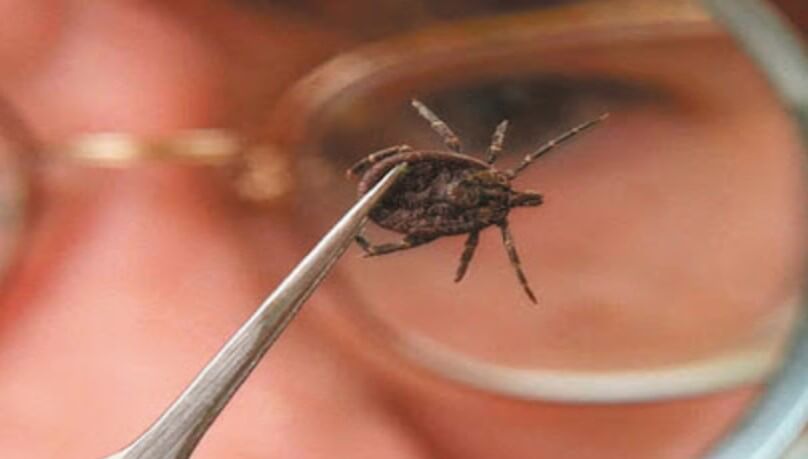
There is still no effective cure for encephalitis
- sudden rise in temperature to 38–39 degrees;
- severe headache, aching muscles and joints;
- nausea, weakness, overall feeling like a severe flu;
- later — impaired consciousness, seizures, movement problems.
A separate issue is borreliosis (Lyme disease). Its characteristic sign is a gradually expanding red spot around the bite site in the shape of a ring. If you notice this, it’s a reason to see a doctor immediately.
The most reliable protection against tick-borne encephalitis is vaccination. The vaccine is given in advance; the course usually begins several months before the season, so you should think about it as early as winter or early spring. If you’ve already been bitten by a tick and haven’t been vaccinated, the vaccine won’t help — only emergency prevention prescribed by a doctor works in this case.
What to Do If a Tick Bites a Child
For children, the course of action is the same, but there are nuances. A child is more likely to scratch the bite site and introduce infection, and it’s harder for them to describe how they feel. Therefore, you need to act with extra care.
The procedure is the same: carefully remove the tick (preferably with a special device), treat the wound with an antiseptic, and preserve the insect for analysis. But after that, it’s better to take the child to a doctor right away, without waiting for symptoms. A child’s body reacts to infections more acutely, and the decision about emergency prevention should be made by a pediatrician or infectious disease specialist.

After a walk in nature, it’s important to carefully examine the child
After every walk in nature, inspect your child thoroughly, paying special attention to skin folds, behind the ears, on the neck, and behind the knees — ticks like to hide in warm and hard-to-reach places.
How to Protect Yourself from Ticks in the 2026 Season
The best strategy is to not let the tick reach your skin. Prevention is simple and costs almost nothing, but it genuinely reduces the risk. Here’s what experts recommend:
- use repellents — tick-repelling agents, applying them to clothing and exposed skin;
- wear covering clothing: long sleeves, pants tucked into socks or boots, a hat;
- choose light-colored clothing — it’s easier to spot a crawling tick on it;
- every couple of hours outdoors, inspect yourself and your companions;
- after returning home, thoroughly inspect your entire body and clothing.