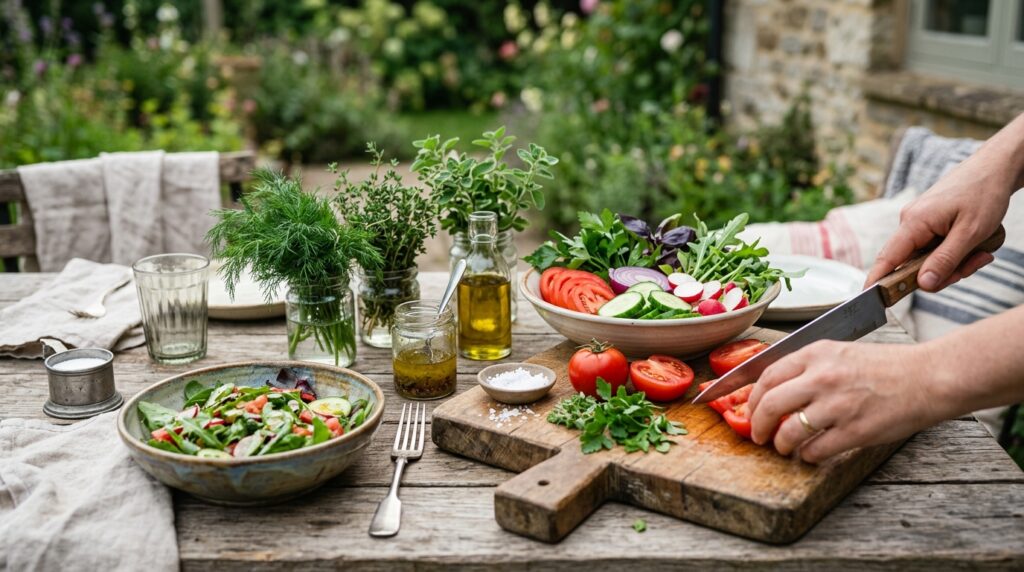
What to cook in summer at the dacha in 20 minutes
In summer, you really don’t want to spend half the day cooking in a stuffy kitchen, especially when vegetables and herbs are already growing in your garden beds just a few steps from the house. A dacha meal can be prepared in 20 minutes if you know a few tricks and simple combinations in advance. This way you’ll save time, energy, and maximum vitamins without turning cooking into a separate ordeal. Plus, fresh vegetables, herbs, and cold soups help you cope with the heat more easily.
How to Cut Down Cooking Time at the Dacha
The most convenient trick is to boil potatoes, beets, carrots, and eggs in the evening when it gets cooler. In the morning, all you’ll need to do is chop the ingredients: the base for salads and cold soups will already be ready.
There are other ways to spend less time at the stove:
- cut vegetables into large pieces so they retain their texture and don’t turn to mush;
- use a thick-bottomed skillet instead of the oven;
- mix a simple dressing from oil, lemon juice, salt, garlic, or mustard;
- cook only as much as you can eat in one sitting;
- turn leftover herbs into a quick sauce with garlic, oil, and nuts.
In the heat, dishes that only need to be chopped, mixed, or quickly pan-fried are especially convenient. That’s why cold soups, vegetable appetizers, and salads are often more practical in summer than hot borscht or a complex casserole.
Cold Soups Made from Beets and Sorrel
For beet soup on kefir, boil the beets and eggs in advance. Grate the beets, chop cucumbers, radishes, and herbs, then pour a mixture of kefir and water in a 1:1 ratio over everything. You can also use tan or ayran instead. Just add salt and a little mustard.
Cold sorrel soup with egg is even simpler. Wash a large bunch of sorrel, roughly chop it, and blend it with a small amount of broth. Then add sour cream, chopped egg, and fresh cucumber. You get a quick cold soup that can be served with dark bread.
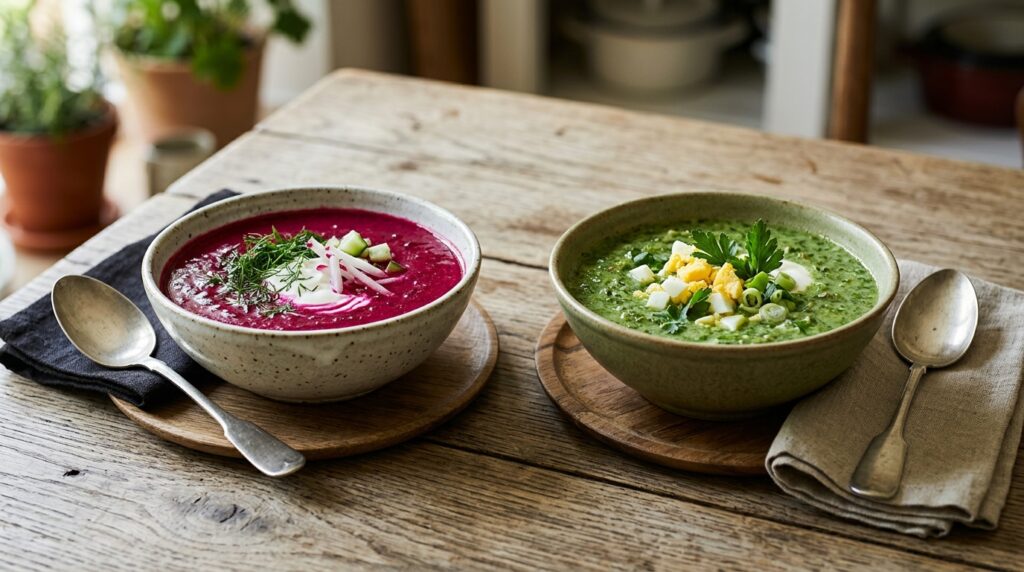
Beet soup and sorrel soup for a hot day
The main advantage of these dishes is that almost all the ingredients can be prepared in the evening. The next day, cooking comes down to just chopping and mixing.
Vegetable Dishes on the Skillet in 10–15 Minutes
For “Colorful Garden Bed” ratatouille, roughly chop zucchini, eggplant, bell pepper, and tomatoes. Sauté the vegetables with onion and garlic under a lid for 10 minutes. At the end, add basil and a drizzle of olive oil. The vegetable stew can be served on its own or with previously boiled potatoes.
Another option is zucchini rolls with cheese. Slice the zucchini into long thin strips and fry them for about two minutes on each side. Mix cream cheese with garlic and dill, place the filling on the zucchini, and roll it up.
For fans of fresh vegetables, pea tartare is a great choice. Mash young peas with a fork along with mint and olive oil, place on a plate, and top with diced radish and feta cheese. You can eat it with a spoon or spread it on crispbreads.
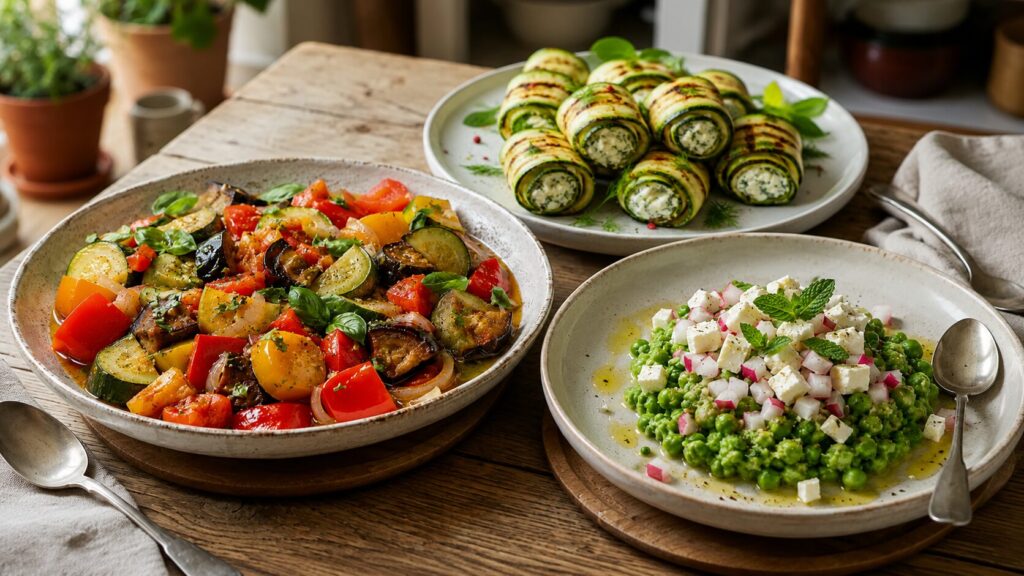
“Colorful Garden Bed” ratatouille, zucchini rolls with cheese, and pea tartare.
Salads and Drinks with Fresh Berries
“Berry Mix” salad. Tart berries can replace the usual vinegar in a salad dressing. Mix arugula, thinly sliced cucumber, and a handful of green gooseberries or red currants. For the dressing, use olive oil, lemon juice, a little honey, and salt. The berries will add a tangy note and make a simple dish more vibrant.
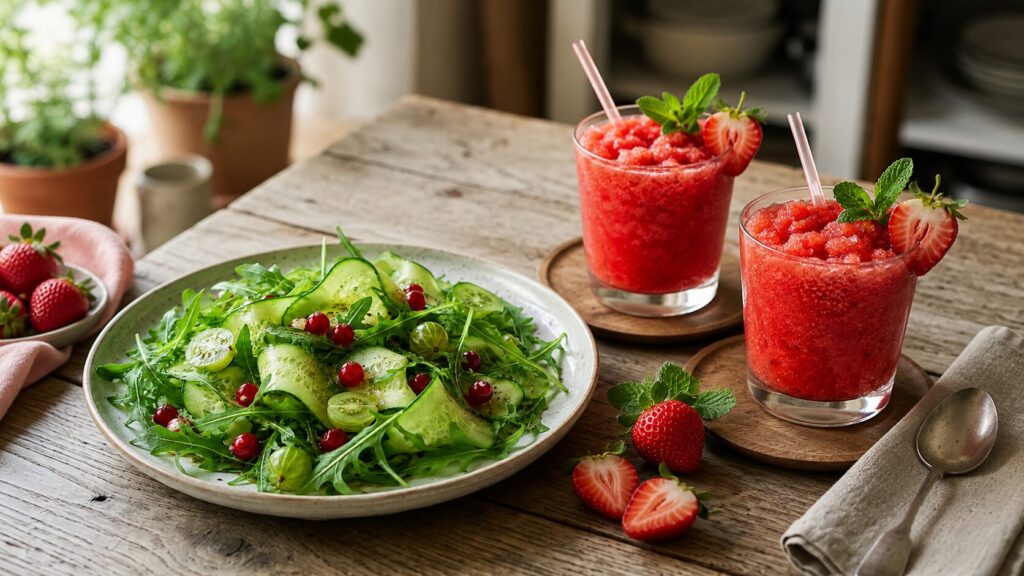
“Berry Mix” salad and berry fresh mix.
Berry fresh mix. You can make a delicious and healthy cold lemonade from strawberries in just a few minutes. Blend the berries with mint, lemon juice, and ice. This mix serves as both a refreshing drink and a light dessert.
If you end up with too many berries, spread them in a single layer on a flat plate and freeze them. Then transfer the berries to a bag — this way they’ll stick together less and will be perfect in winter for compotes, baking, or yogurt.
You don’t have to cook five dishes at once. Pick one cold soup, salad, or vegetable appetizer and use only the harvest you can eat in time. This approach is exactly what turns cooking at the dacha into a quick process rather than yet another exhausting chore.