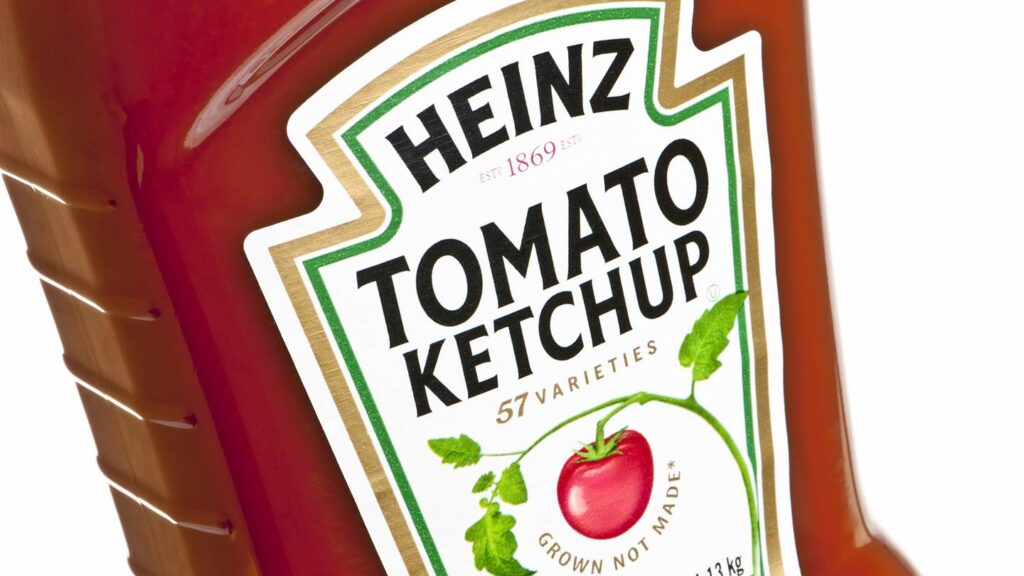
Why the number 57 is printed on Heinz ketchup bottles
If you look closely at a classic Heinz ketchup bottle, you’ll notice a neat inscription on the neck: “57 Varieties.” On some packages, you’ll find just the number 57. Most people assume it’s either related to the company’s product range or that it describes some characteristic of the product. In reality, the number 57 never reflected the number of products in the Heinz lineup or inside the ketchup bottle itself. It appeared thanks to a shoe advertisement that the company’s founder happened to see on a New York street.
Who Invented the Heinz “57 Varieties” Slogan and When
To understand the story behind the number, we need to start with a man named Henry John Heinz. Heinz was born in 1844 in the town of Birmingham, Pennsylvania, and his interest in the food trade emerged very early. By the age of 16, he had already hired several workers who delivered products to grocery stores in Pittsburgh.
Heinz’s first business was built on horseradish, which was grown in the family garden and prepared using his mother’s recipe. That company, Heinz Noble & Company, suffered from the financial panic of 1873 and went bankrupt in 1875. But Henry recovered quickly: in 1876, together with his cousin Frederick and his brother John, he founded the firm F & J Heinz. That same year, the famous Heinz tomato ketchup was released.
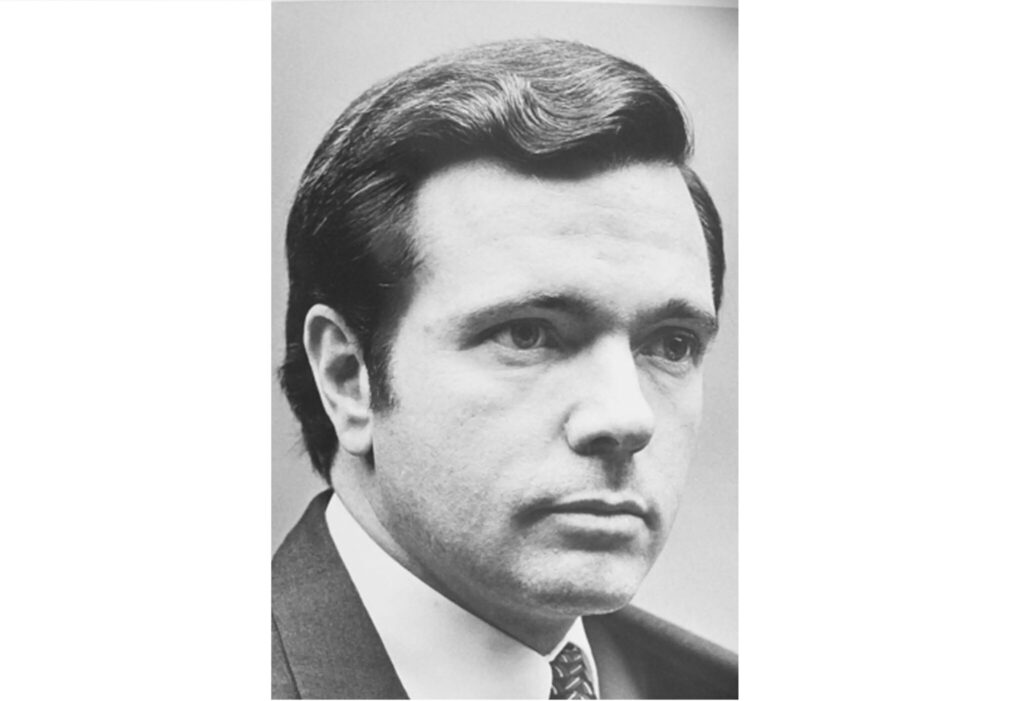
Henry John Heinz III.
The Shoe Ad That Inspired Henry Heinz to Choose the Number 57
The most interesting part of this story is the source of inspiration. The “57 Varieties” slogan first appeared in 1896 and was conceived by Henry Heinz himself. He was inspired by a shoe advertisement he saw in New York that claimed “21 styles” were available.
Logic would suggest the number should have corresponded to the actual product range. But by 1896, H.J. Heinz (the name changed in 1888) was already selling more than 60 product varieties. So why did Henry choose 57?
Why Heinz Chose Specifically 57, Not 60 or 100
The explanation turned out to be far more personal than a marketing calculation. Henry himself said that five and seven were the lucky numbers of him and his wife, and he additionally considered the number seven special because of its long-standing association with mysticism and luck.
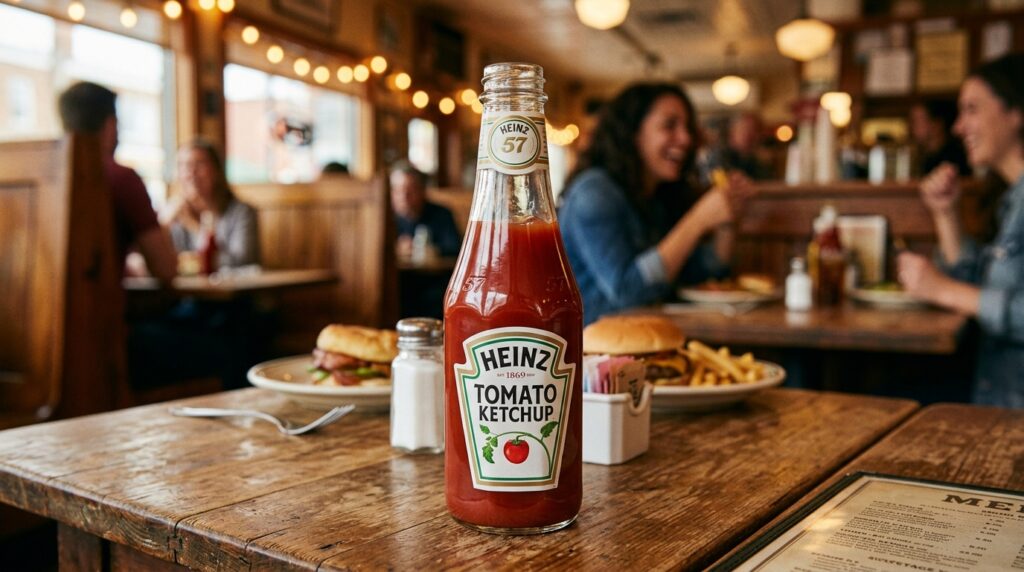
The “57 Varieties” inscription on the neck of the classic bottle
It’s worth noting honestly: this explanation comes from Heinz himself, and we can no longer verify what was going on in his mind. The real motivation could have been simpler: a catchy and easily memorable number for advertising. But whatever the true reason, the result speaks for itself: the number 57 became synonymous with Heinz products and is recognized around the world.
From Heinz Tomato Ketchup to the International Space Station
The famous Heinz tomato ketchup was launched in 1876, consisted of just five everyday ingredients, and was originally called “catsup.” Interestingly, its path to worldwide fame began not in America but in Britain: it was the company’s first product to be sold at the prestigious London store Fortnum & Mason.
After that, the scale only grew. In 1888, Henry became the sole owner of the enterprise, and it received the name H.J. Heinz Company, under which it is still known today. By 1900, the company was the world’s largest manufacturer of tomato-based products.
Recognition came from both government and space. In 1954, Queen Elizabeth II granted the company a Royal Warrant, making it an official supplier to the royal households. Later, Heinz products went even higher: in the 1990s, they were approved by NASA for use on the International Space Station.
But the most recognizable symbol of Heinz was still not the royal seal or space food, but the number 57 on the bottle. It communicates nothing about the product — it doesn’t indicate the number of varieties, doesn’t describe the ingredients, and doesn’t promise anything to the buyer. And yet, for over a hundred years, this number has become so firmly associated with the brand that it is recognized worldwide.