
Scientists know little about what people feel when falling from a great height. But some things are known
From a medical standpoint, a fall from a height of several dozen meters should be almost certainly fatal. Although there are paradoxes: for example, a fall from the third floor can be even more dangerous than from the fourth. But real stories challenge this logic. In the summer of 2023, a 13-year-old boy from North Dakota survived a fall from nearly 50 meters on the North Rim of the Grand Canyon — and this is far from an isolated case. Let’s explore what a person feels during such a fall, whether they lose consciousness before impact, and what ultimately determines whether they survive or not.
What Happens in the First Seconds of Free Fall
When a person plunges downward, the main force acting on them is gravity. But the faster they fall, the more the air resists their movement. At a certain point, air resistance balances out Earth’s gravitational pull — and the person continues to fall, but at a constant speed. This speed is called the terminal velocity, and this is the same principle that makes parachutes work.
The numbers here are very illustrative. With an open parachute, the descent speed is about 16 km/h, which is quite tolerable for the body. Without a parachute, a person accelerates to approximately 241 km/h, as explained by Anette Hosoi, a professor at the Massachusetts Institute of Technology. This is the speed at which hitting the ground becomes truly dangerous.
It’s important to understand that at terminal velocity, the fall no longer “accelerates” — the sensation of flight becomes steady. The body stops gaining speed, and the person essentially hangs in a stream of air that pushes against them from below with enormous force.
Is It True That a Person Loses Consciousness Before Impact

Much depends on the circumstances under which the person fell
There is no universal answer here — everything depends on the circumstances. In a typical fall, a person usually remains conscious and experiences every second of the descent. But in extreme situations, especially those involving aviation, other factors come into play.
A good example is the famous case of flight attendant Vesna Vulović. She survived a fall from a height of about 15 km from an airplane without a parachute in the 1970s. Doctors believe that her low blood pressure played a role: after the cabin depressurized, she quickly lost consciousness, and this may have saved her life. The thing is, a sudden impact often causes cardiac rupture — destruction of the heart’s walls, muscles, or valves — and high blood pressure increases this risk. Loss of consciousness and low blood pressure, according to doctors, may have prevented such a rupture.
In other words, in rare cases, fainting before impact is not just nature’s mercy but a real survival factor. However, you can’t count on it as a rule: more often, a person remains conscious.
Does a Person Feel the Moment of Impact During a Fall
Scientists do not give a direct answer about subjective sensations at the moment of impact — and it’s more honest to acknowledge this than to speculate. However, doctors do understand well what determines the severity of injuries. And the key factor here is not the height itself, but how abruptly the body stops.
What matters is how fast a person is falling and how suddenly they stop. If you land on a slope and slide downward, the energy of the fall is expended gradually, and this is far safer than an instantaneous stop against a hard flat surface. For the same reason, it’s better to fall onto something soft that will give way or break before your body does — for example, onto bushes or branches.
The part of the body that meets the ground also plays a role. The worst outcome is landing on your head, says Dr. Demetrios Demetriades, a professor of surgery at the Keck School of Medicine at the University of Southern California. Landing on your feet gives better chances: the fractures will be severe, but bones can at least be treated, unlike a head or spinal cord injury that can leave a person paralyzed forever.
At What Height Does a Fall Become Fatal
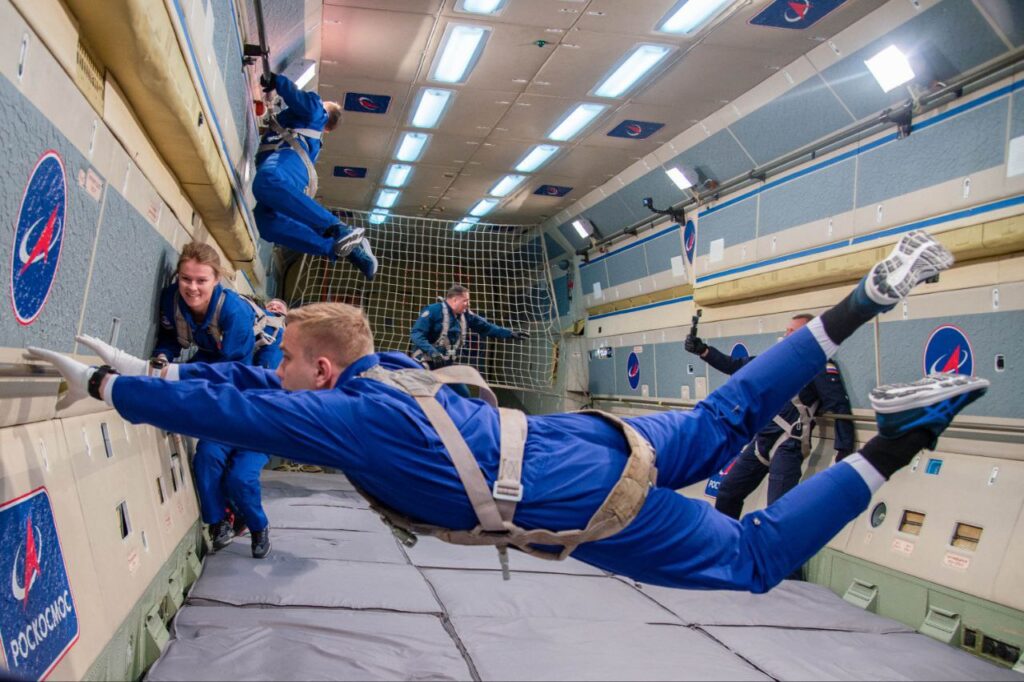
You can experience free fall right inside an airplane: that’s how cosmonauts are trained. And their sensations are quite different from someone who simply fell from a height
Doctors have approximate benchmarks, and they are sobering. A fall from 15 meters — about four stories — is fatal in roughly half the cases, says Demetriades. A fall from more than 18 meters usually ends in death. And if a person fell from more than 24 meters and was later able to tell the story, doctors call it almost a miracle.
This is exactly why cases like the boy’s fall from 50 meters are so astonishing: they are far beyond what is considered survivable. This doesn’t negate the statistics — these are rare exceptions where several favorable factors aligned at once: the nature of the surface, the angle of landing, and the characteristics of the body.
Why Children Survive Falls From Height More Often
In news stories about miraculous rescues after falls, children are almost always involved — and this is no coincidence. Among victims over 65, the mortality rate is approximately five times higher than among those younger than 15, when falling from the same height, reports Demetriades.
There are several reasons, and they are quite physiological:
- Good physiological reserve — a child’s body recovers noticeably better
- A child’s bones are designed to handle greater loads and withstand impact more easily
- A small child has a greater ratio of body surface area to weight, so they experience more air resistance — and fall slightly slower
The last point is especially interesting: the same principle that slows a light leaf compared to a stone also works slightly in favor of a small body. It’s the same physics of terminal velocity, just from the other side.
A child’s light body is slowed more by air, and their bones handle impact better
What Can You Do During a Fall to Improve Your Chances
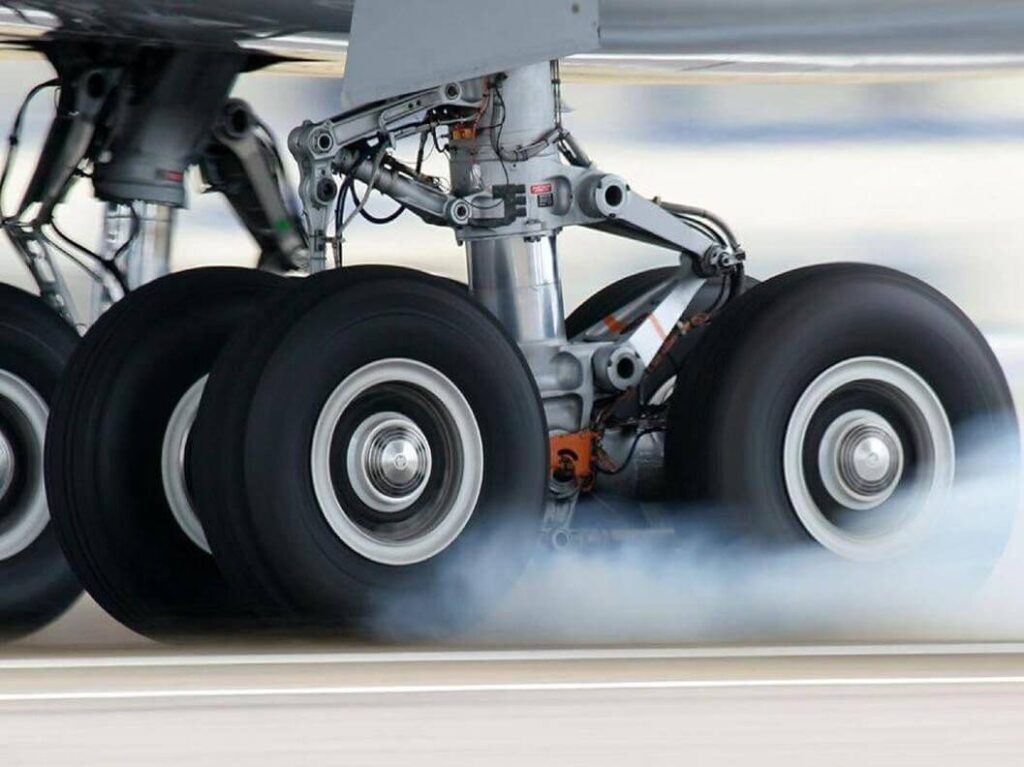
Just as it’s safer for an airplane to land with its landing gear deployed, it’s safer for a person to fall on their feet rather than other body parts
Reacting effectively in a split second is nearly impossible, and that’s an honest fact. But if there is time, experts give specific advice.
- Try to interrupt the fall if there is something nearby to grab onto — a rock, a tree, or a ledge
- If possible, land on your feet: severe fractures are better than a head or spine injury
- Increase air resistance by spreading out and extending your limbs — this slightly reduces terminal velocity
- Try to land on something soft that will give way before your body does
These recommendations offer no guarantees — they are about shifting probabilities, not a magical rescue. But in the case of Vesna Vulović, it was precisely a combination of circumstances that worked: she was pinned against the fuselage by a food cart, and then she landed at a favorable angle in deep snow in a forest. A perfect coincidence of details that is impossible to plan.
What Ultimately Determines Whether a Person Survives a Fall
If we put it all together, surviving a fall from a great height is not due to a single cause but a combination of factors.