
In real life, people don’t drown like they do in movies
Every year, around 400,000 people drown worldwide, and most of them — right before the eyes of people who didn’t notice a thing. The fact is that real drowning looks almost nothing like the dramatic movie scenes with screaming and arm-waving. In reality, people most often drown quietly, quickly, and frighteningly unnoticeably. Let’s break down step by step what a person feels when drowning, why they don’t call for help, and how this knowledge helps save lives.
The First Seconds Underwater: Instinct and Panic
When a person unexpectedly ends up in water and can’t reach the bottom, an ancient instinct kicks in: the legs start searching for a foothold. They can’t find one, and it’s at this exact moment that panic sets in — the drowning person’s worst enemy.
Panic turns a calm person into a source of chaotic movements. They flail their arms and legs harder, the heart pounds faster, and along with this, oxygen is rapidly depleted. It becomes a vicious cycle: the stronger the fear, the more active the movements, the faster oxygen deprivation sets in.
Why a Drowning Person Can’t Call for Help
This is perhaps the most important and unexpected fact. In movies, a drowning person screams and calls for help, but in reality, they are silent. The reason is simple: to scream, you need to breathe, and for a drowning person, every gulp of air goes solely toward surviving for just a couple more seconds.
A person fighting for air physically cannot simultaneously wave their arms, call for help, and keep their head above water. All energy goes toward short, desperate breaths. From the outside, it looks almost calm — as if the person is simply floating in the water. This is precisely why drowning often goes unnoticed, even when other people are nearby.
What Happens to the Lungs and Brain During Drowning
When there is a critical lack of oxygen, the body can no longer hold on. The moment comes when a person involuntarily inhales underwater — and instead of air, water enters the airways.
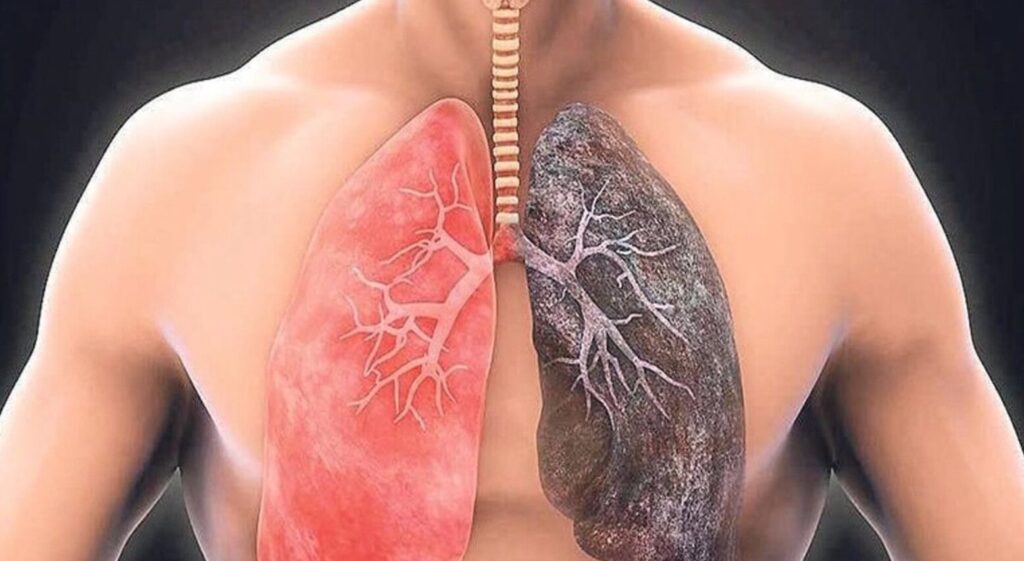
When inhaling underwater, fluid enters the airways and causes coughing
Water causes coughing, and coughing leads to more inhalations — flooding the lungs with even more liquid. The brain, deprived of oxygen, quickly stops functioning: the person loses consciousness. From this point, the countdown is literally in minutes, because nerve cells die from oxygen deprivation extremely quickly.
The main reasons people drown are actually few:
- Intoxication — alcohol dulls reflexes and the sense of danger
- Panic — turns any difficult situation in water into a life-threatening one
- Loss of consciousness before water enters the lungs — for example, due to an impact or heatstroke
Silent Drowning: Why It Goes Unnoticed
From everything described above, the main paradox emerges: a drowning person hardly attracts any attention. There are no screams, no splashing, no theatrical arm-waving. There is a quiet person with their head tilted back, trying to take a breath.
This is exactly why tragedies occur at crowded beaches and swimming pools, where dozens of people are around. Bystanders simply don’t read what’s happening as danger — they think the person is resting on the water or fooling around. Understanding this quiet picture of drowning is perhaps the most useful skill to keep in mind when near water.
How to Stay Afloat and Not Drown
The good news is that any person’s lung volume is sufficient to stay afloat if they stop panicking. The key is to relax and let the body float. Here are a few simple techniques.
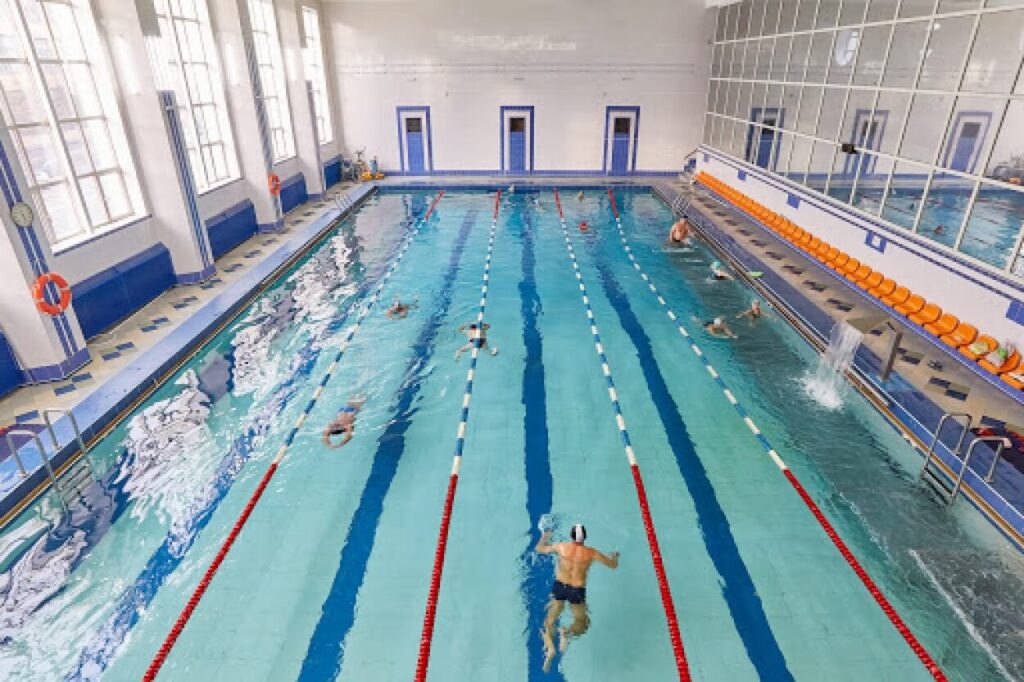
A calm horizontal position helps stay on the surface
- Sheet of paper — the more of your body’s surface area you position parallel to the water surface, the more confidently you’ll float on it
- Float — take a good breath and stop moving your arms and legs; lungs full of air will keep you on the surface
- Bubble — if you’re underwater and have lost orientation, release a little air from your mouth: wherever it goes, that’s where the surface is
If you need to not just stay afloat but also move toward shore, assume a horizontal or slightly vertical position and work your arms with smooth wave-like movements, as if parting and joining the water. With your legs, make smooth alternating circular movements. This creates a water support beneath you that allows you to both stay afloat and move forward.
How to Properly Rescue a Drowning Person
The urge to immediately jump into the water is understandable, but doing so alone and without preparation is dangerous — a panicking drowning person can pull the rescuer under as well. Therefore, you need to act in order.
- First, attract as much attention as possible and try to call rescue services
- Only then go to help — otherwise you risk ending up in the water together in a helpless state
- Swim up to the person from behind: from the front, they may grab onto you in panic and pull you down
- Grab the victim by the shoulder or hair, lifting their pelvis forward, and transport them to shore this way, calming them along the way
If the drowning person has grabbed you tightly and is pulling you down, there is a counterintuitive but effective technique: take a breath and deliberately “sink.” As soon as the person feels there is no longer any support in you, they will reflexively let go — and you can approach them from behind again.
What Rescued Survivors Remember After Drowning
People who have been rescued from drowning often describe the same thing: everything happened much more quietly and quickly than they expected. There was no strength to scream, no time to think — just an instinctive fight for air and rapidly escalating panic. This experience clearly explains why drowning is so insidious: it doesn’t look like a catastrophe from either the inside or the outside.
The main takeaway is simple: water is dangerous not because of its depth, but because of how imperceptibly disaster unfolds. Understanding that a drowning person is silent and barely moving, plus a couple of learned techniques for staying afloat — this is what truly reduces risk. And the most reliable way to protect yourself and your loved ones is to learn to swim confidently and never enter the water while intoxicated.