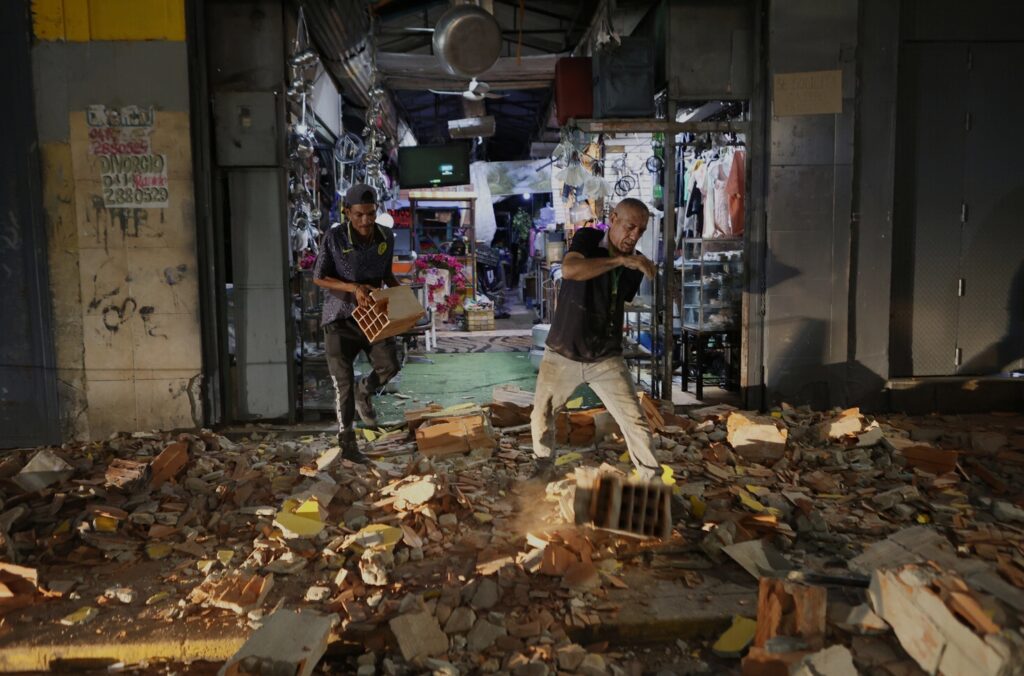
The earthquake in Venezuela may have claimed up to 100,000 lives. Photo source: Pedro Mattey/AP
On the evening of June 24, 2026, a powerful earthquake struck Venezuela. But the main factor that made it so devastating was not the magnitude, but the fact that there were two shocks just 39 seconds apart. People survived the first strike, but the second one caught them as they had already run outside or were trying to save their belongings. Buildings that withstood the first tremor could not withstand the second. And it is precisely this double strike that explains why the death toll may reach tens of thousands.
Timeline of the Venezuela Earthquake on June 24, 2026
The seismic event began at a depth of approximately 10 kilometers underground, which is considered a shallow and very dangerous focal depth. The epicenter was located 16 kilometers from the city of Morón in Carabobo state.
Instruments first recorded a shock with a magnitude of 7.2. But exactly 39 seconds later, when people had only just begun to comprehend what was happening, a second, even more powerful strike of magnitude 7.5 followed. Waves from both sources reached the country’s capital, Caracas, located 160 kilometers to the east.
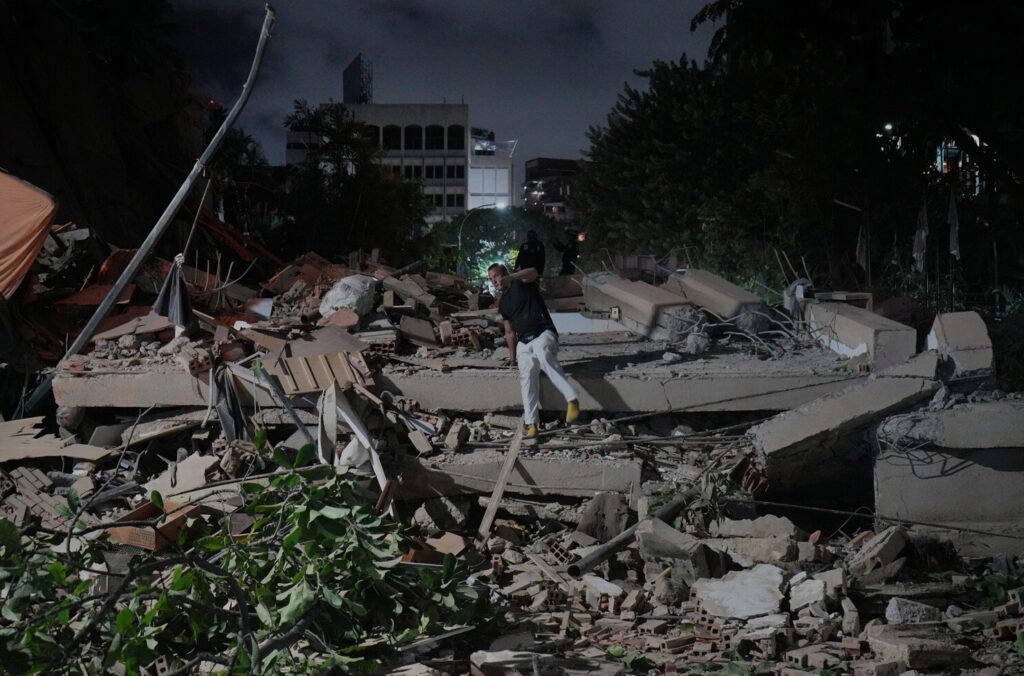
Aftermath of the 2026 earthquake in Caracas. Photo source: Adrian Naranjo/AP
What Is a Double Earthquake in Simple Terms
In seismology, there is a concept called a doublet earthquake, and it is the worst-case scenario for any urban development. Two strong earthquakes in rapid succession work like a professional boxer: the first punch breaks through the defense, the second delivers the knockout.
When the first shock occurs, micro-cracks form in concrete slabs and load-bearing walls. The building may still stand, having exhausted its margin of safety. But 39 seconds later, the second wave arrives. The weakened structure, which hasn’t even stopped swaying yet, cannot withstand the resonance and cumulative stress, collapsing like a house of cards.
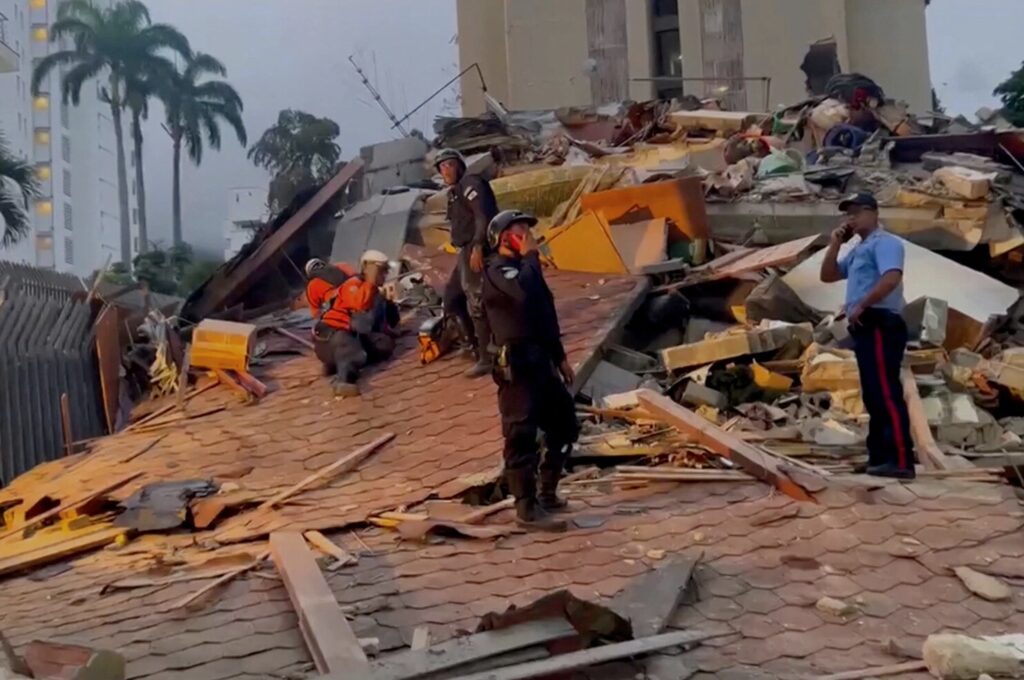
Rescuers near a collapsed building in Venezuela. Photo source:
Reuters
Destruction After the Earthquake in Caracas
Despite the distance from the epicenter, Venezuela’s capital took a devastating blow. Interior Minister Diosdado Cabello reported a critical situation in the upscale neighborhoods of Altamira and Los Palos Grandes, where multi-story residential buildings collapsed. The underground tremors also damaged the states of Trujillo, Yaracuy, Aragua, Miranda, and La Guaira.
Beyond the human casualties, the country faced colossal financial losses. The disaster struck a major industrial hub where oil refineries are located. According to American analysts’ estimates, Venezuela could lose up to 20% of its GDP due to the destruction of critically important production infrastructure.
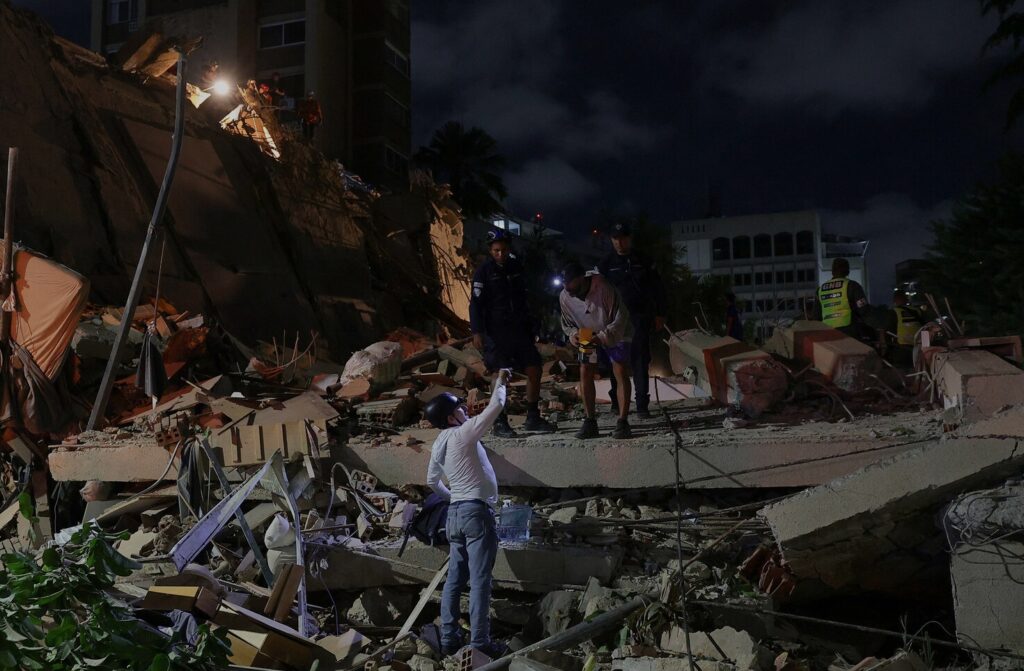
Emergency services at work after the earthquake in Caracas. Photo source: Reuters
What Are Aftershocks After an Earthquake
Immediately after the disaster, authorities urged citizens to stay outdoors. Even if a building looks intact from the outside, load-bearing beams inside may have shifted and stairwells may have lost their support.
The main threat now is aftershocks — repeated tremors that always follow a major earthquake. The Earth’s crust tries to release remaining stress and stabilize. The danger of aftershocks lies in the fact that they don’t need high magnitude. Even a weak tremor is enough to bring down a fractured building right on top of people who have returned to retrieve their belongings.
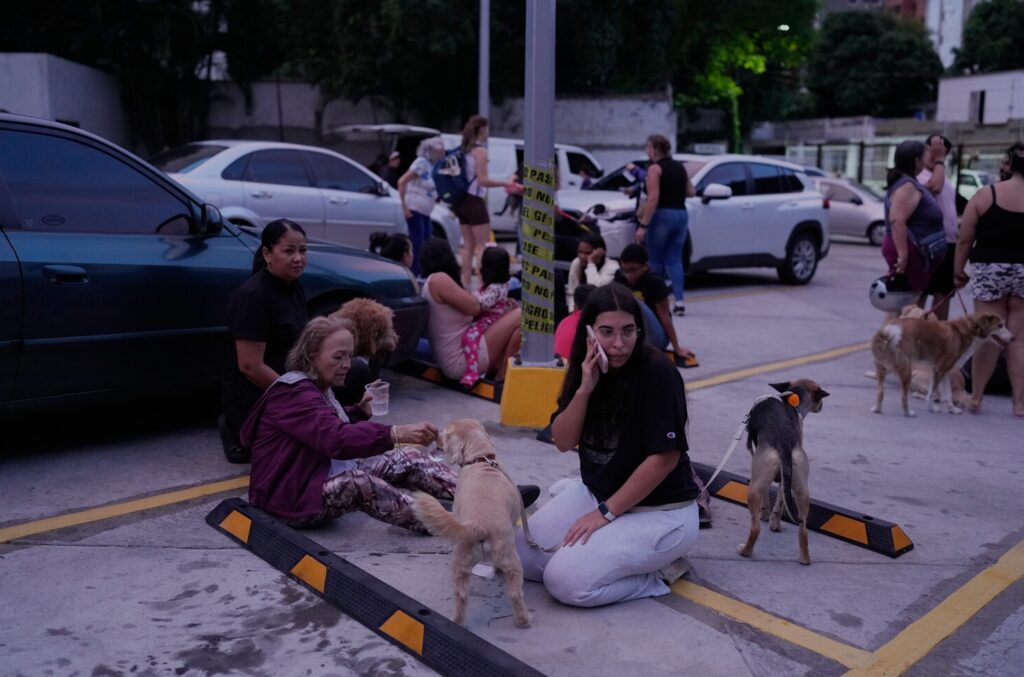
People in Caracas after the earthquake. Photo source: Ariana Cubillos/AP
Transportation Infrastructure Paralysis and Rescue Operations
Authorities immediately declared a state of emergency in Venezuela. However, rescue services, firefighters, police, and medics have to work under conditions of destroyed logistics. Roads may be blocked by debris or torn apart by deep cracks.
The aviation situation is also critical. At the main Simón Bolívar International Airport in Maiquetía, part of the passenger terminal roof collapsed. All flights have been canceled, complicating the delivery of international humanitarian aid. The Russian embassy is currently determining the fate of its citizens, maintaining contact with local authorities.
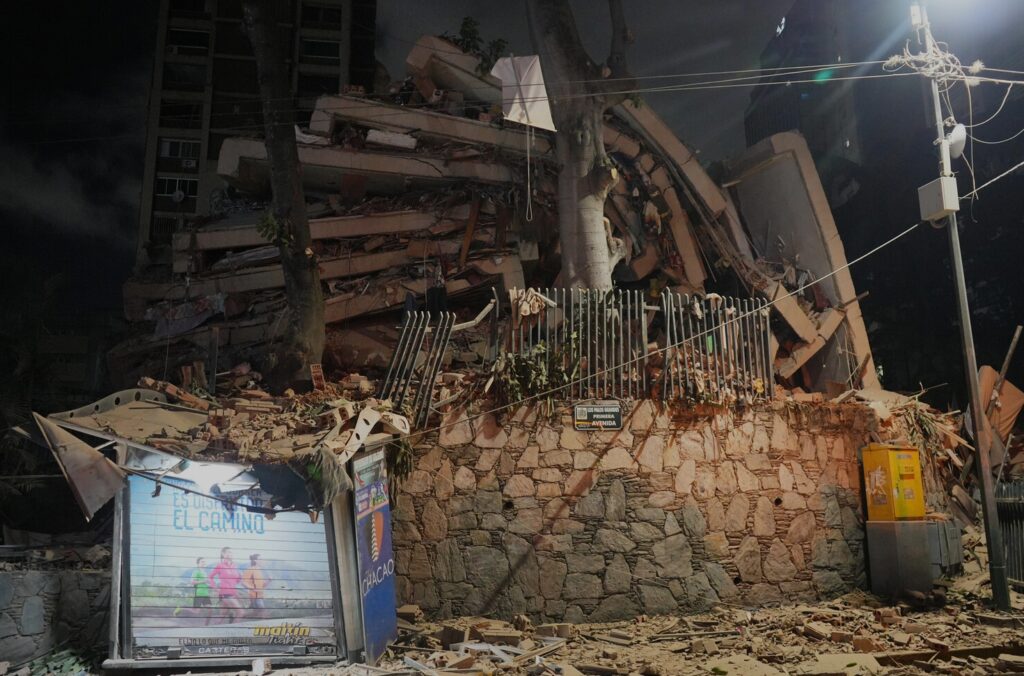
A collapsed building after the earthquake in Venezuela. Photo source: Adrian Naranjo/AP
Earthquake Survival Rules Indoors and Outdoors
When the ground gives way beneath your feet, every second counts. Trying to run out of a multi-story building during active shaking is the most common and fatal mistake, as staircases collapse first.
Basic earthquake safety rules at home:
- Immediately move away from windows, mirrors, and heavy furniture;
- Stand in a load-bearing wall doorway or take cover under a sturdy table, protecting your head with your arms;
- Wait for the initial shaking to stop and only then quickly leave the building without using the elevator.
Here is what to do during an earthquake outdoors:
- Run as far away from tall buildings as possible, because facades and glass can scatter tens of meters around;
- Avoid power lines, billboards, and trees;
- Stay in an open area until official clearance from authorities.
Risk of Major Earthquakes in Russia
Looking at footage from South America, many wonder whether something similar could happen in Russia. After all, Russia is a vast country, and about 20% of its territory is located in seismically hazardous zones.
The greatest risk of a major earthquake exists in Kamchatka, the Kuril Islands, and Sakhalin, which are part of the Pacific Ring of Fire. The Baikal Rift Zone, the Caucasus, and Crimea also experience periodic seismic activity. However, strict building codes are in effect in these regions: modern buildings there are designed to withstand underground strikes of up to 8-9 on the intensity scale.
The catastrophe in Venezuela has become a terrifying reminder that nature is unpredictable.