Butterfly caterpillars can look scary while not actually being dangerous
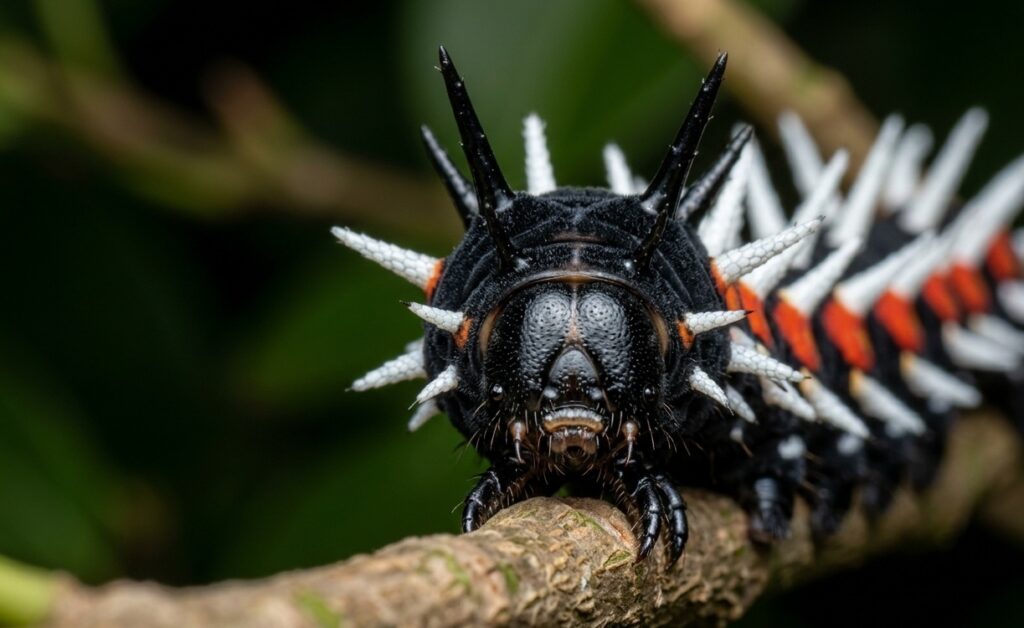
If you saw this creature in the forest, you would hardly want to get closer. The caterpillar of the Bunaea alcinoe butterfly is covered with long spines, looks menacing, and resembles a science fiction movie character more than an ordinary insect. Nature usually uses such appearance either to scare off predators or to warn of danger. But in this case, things are not what they seem at first glance. So why does the caterpillar need such a frightening appearance, and is it truly dangerous?
Why Caterpillars Have Bright Colors and Spines
The black caterpillar of the cabbage tree butterfly is one of the most impressive insects in the world. At 70 millimeters long and about 15 millimeters in diameter, it looks massive and heavy. Its body is painted in contrasting colors that immediately catch the eyes of predators.
There are several color variants of this species. The most common are coal-black individuals with sharp white spines, as well as red caterpillars with bright yellow growths. Bright coloration in the animal world warns predators that the prey is poisonous or inedible. However, in this case, it is merely a clever visual trick.
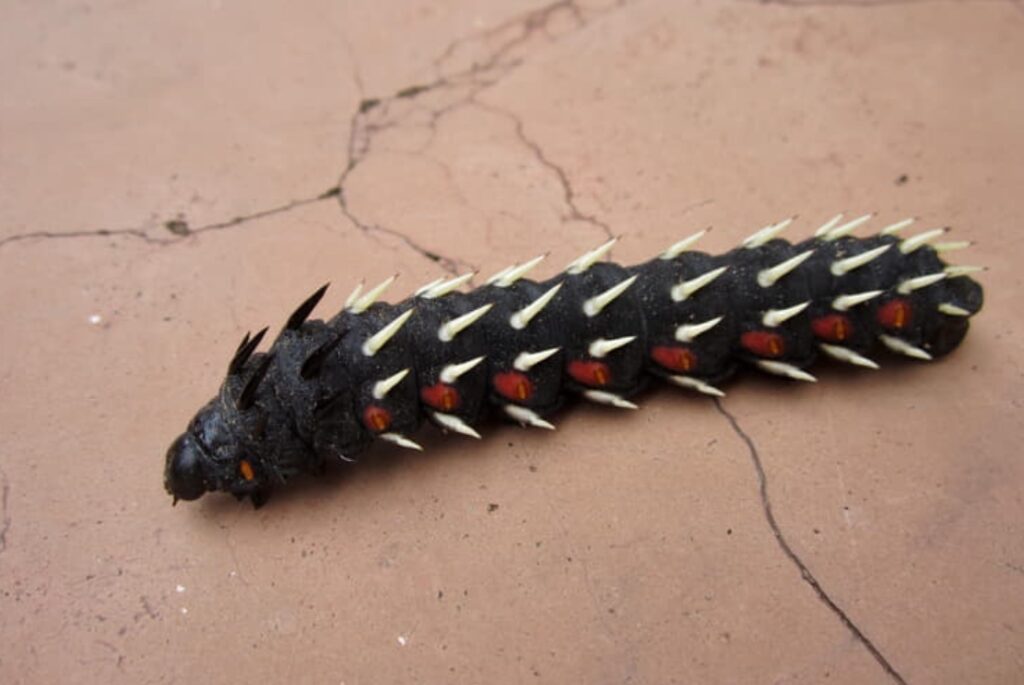
Black caterpillar of the Bunaea alcinoe butterfly. Image source: odditycentral.com
Despite their intimidating armor, these creatures are incapable of causing harm. Their spines turn out to be soft and elastic to the touch. They contain no toxins, do not pierce skin, and serve exclusively for the psychological deterrence of birds and small animals that prefer not to deal with an unfamiliar spiny object.
What Butterfly Caterpillars Eat
To maintain such large body sizes, the insect requires an enormous amount of energy. These caterpillars with spines on their backs have an incredibly voracious appetite. Their main goal at this stage of life is to continuously eat and grow.
As their primary food source, they choose the leaves of cabbage trees. In a very short period of time, the insects can completely strip a tree bare, leaving nothing but naked branches where a lush crown once stood.
The caterpillar eats so much for several reasons:
- It rapidly builds body mass for a successful transition to the next stage of development;
- The organism stores nutrients to survive the lengthy transformation process;
- The insect accumulates necessary moisture from fresh foliage to maintain its metabolism.
Why People Eat Caterpillars
Ironically, the terrifying alien monster not only poses no threat to humans but actually provides direct benefits. In Tropical Africa, where this species lives, local residents know perfectly well what hides behind the menacing appearance.
For the African population, these insects are an important food source. Thanks to their impressive size and rich nutrient composition, the caterpillars are highly valued in cuisine. This was reported by the authors of the Oddity Central website.
Their regular consumption has great economic significance for entire regions. The larvae are rich in protein and micronutrients, making them an excellent and accessible alternative to conventional meat in hot climate conditions.
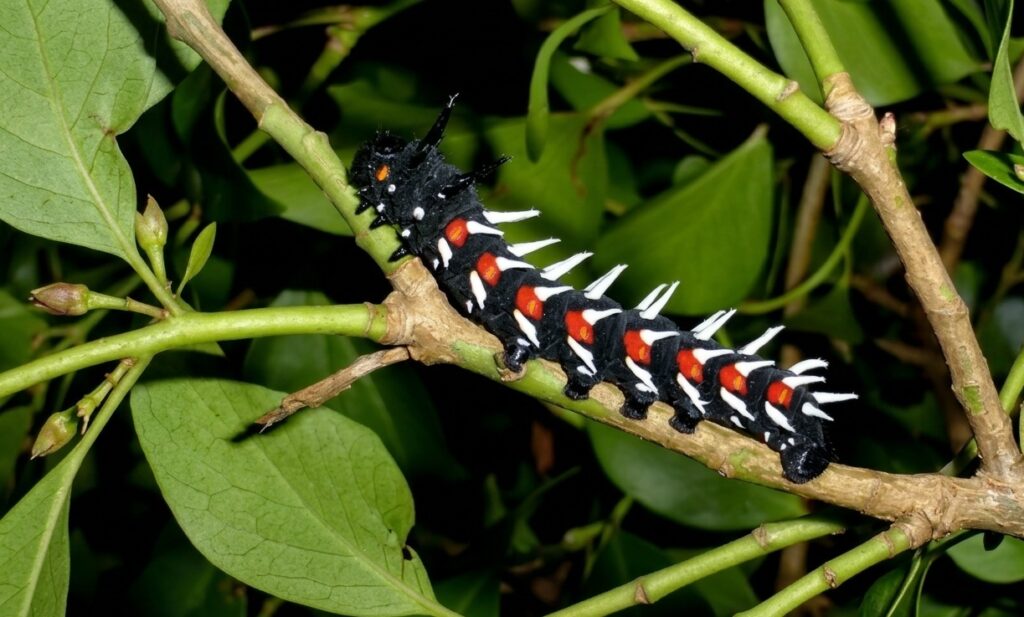
The scary caterpillar from another angle
The Giant Caterpillar’s Transformation into a Butterfly
Life as an alien spiny larva is only a temporary stage. As soon as the caterpillar reaches its maximum size and accumulates enough energy, its behavior changes dramatically. It stops feeding and begins descending from the trunk of its host tree to the ground.
Once at the bottom, the larvae burrow into the soil for pupation. Under the protection of a layer of earth, they spend some time motionless, completely restructuring their organism.
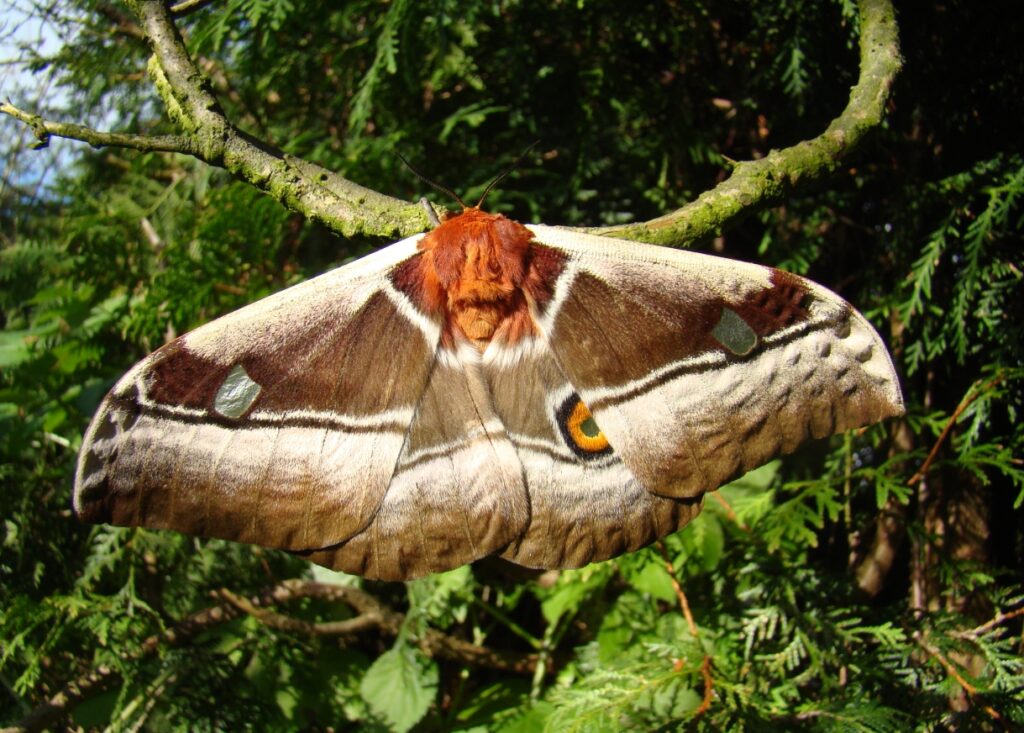
Bunaea alcinoe butterfly. Image source: breedingbutterflies.com
From the pupa emerges a large brown moth with a complex pattern on its wings. The adult lacks any spines or provocatively bright colors. Its new appearance is designed for perfect blending with tree bark and fallen leaves.
As you may have already noticed, nature is incredibly pragmatic. Creating the illusion of a poisonous monster requires far fewer resources from the organism than producing a real complex toxin. And the example of the cabbage tree moth caterpillar perfectly demonstrates: to survive, sometimes it is enough to simply appear dangerous while remaining a soft and vulnerable creature.