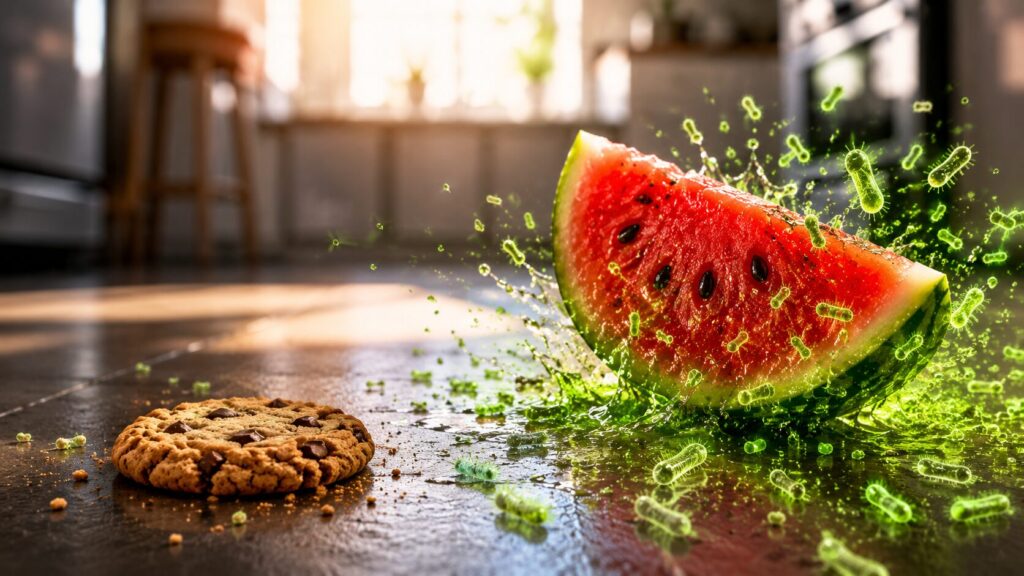
The five-second rule doesn’t work: what happens to food on the floor.
You’ve probably managed at least once to snatch up a dropped cookie and pop it right into your mouth — after all, five seconds hadn’t passed yet. Roskachestvo calls this rule a dangerous misconception and advises treating dropped food more seriously than we’d like. Even a surface that looks clean can be teeming with microbes. Let’s figure out where the famous “five-second rule” came from, how quickly bacteria transfer to food, and which foods pick up the most microbes from the floor.
The Five-Second Rule Doesn’t Work
The idea is convenient: supposedly bacteria need a bit of time, and if you pick up the piece quickly, nothing bad will happen. In practice, there is no safe time window — microbes can transfer from the floor to food in less than a second.
Even the fastest reaction doesn’t guarantee safety. As soon as food touches a contaminated surface, contact has already occurred and bacteria get onto the food. That said, time does still matter: the longer a product sits on the floor, the more microorganisms it typically collects. There simply is no five-second “safe zone.”
Some people believe that if you pick up food that fell on the floor within 5 seconds, no germs from the floor will get on it
Why Food Moisture Matters Most
The number of bacteria depends primarily on the moisture of the food and the contamination level of the surface. Microorganisms transfer to moist foods much more easily than to dry ones.
A slice of watermelon or a buttered sandwich works almost like sticky tape and quickly collects bacteria from the surface. A dry cookie or cracker will pick up noticeably fewer, but that doesn’t make them safe.
Moisture also helps microbes attach and multiply. For the same reason, bacteria thrive in the moist environment of a kitchen sink.
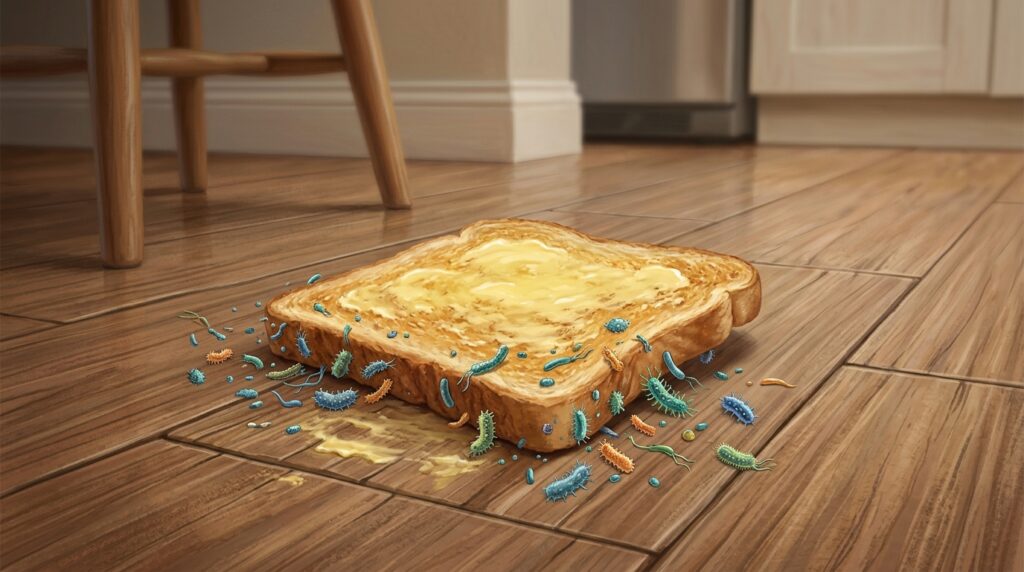
Even a visually clean floor can be a source of pathogenic bacteria such as salmonella, listeria, or E. coli.
Why Even a Clean-Looking Floor Is Dangerous
The most unpleasant part is that you can’t see this danger with the naked eye. Even a visually clean floor can be contaminated with pathogenic bacteria, such as salmonella, listeria, or E. coli. This is especially true for entryways and other areas where people walk in outdoor shoes. Studies show that bacteria from dirty shoes easily end up inside the home.
Carpet can’t be considered a clean surface either: dust, crumbs, pet hair, and other contaminants get trapped in its fibers. However, in experiments, bacteria transferred from carpet to food less effectively than from tile or metal. This doesn’t make a dropped piece safe — everything depends on the specific contamination, food moisture, and contact time.
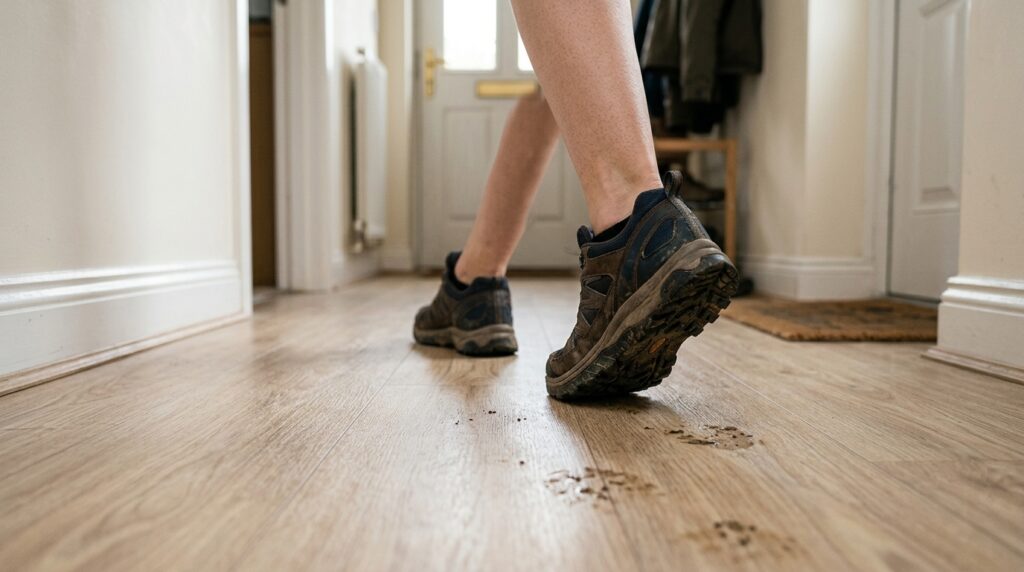
Outdoor shoes bring bacteria into the home that are invisible on the floor
What to Do with Food That Falls on the Floor
The recommendation is simple and a bit disappointing for those who like to pick up and finish their food: it’s safer to replace the five-second rule with a zero-second rule. Anything that falls on the floor is better off in the trash. Testing how well your body’s natural defense against food poisoning works is definitely not worth it.
The key points can be summed up in five items:
- bacteria can transfer to food almost instantly;
- the longer a product sits on the floor, the higher the contamination;
- moist foods like watermelon or sandwiches collect more microbes;
- a clean-looking floor can still be contaminated;
- the safest option is to throw away the dropped piece.
Yes, it’s a little sad to waste food. But your health is worth more than one cookie.
So Can You Eat Food That Fell on the Floor?
It’s better not to. For microbes, it makes no difference whether you picked up the food in one second or counted past five: they start transferring to the product immediately. The five-second rule likely emerged more from the desire not to throw away a tasty morsel than from scientific evidence.
And the next time your sandwich treacherously lands butter-side down, remember everything you’ve just learned. The smartest decision is to throw away the dropped piece without regret.