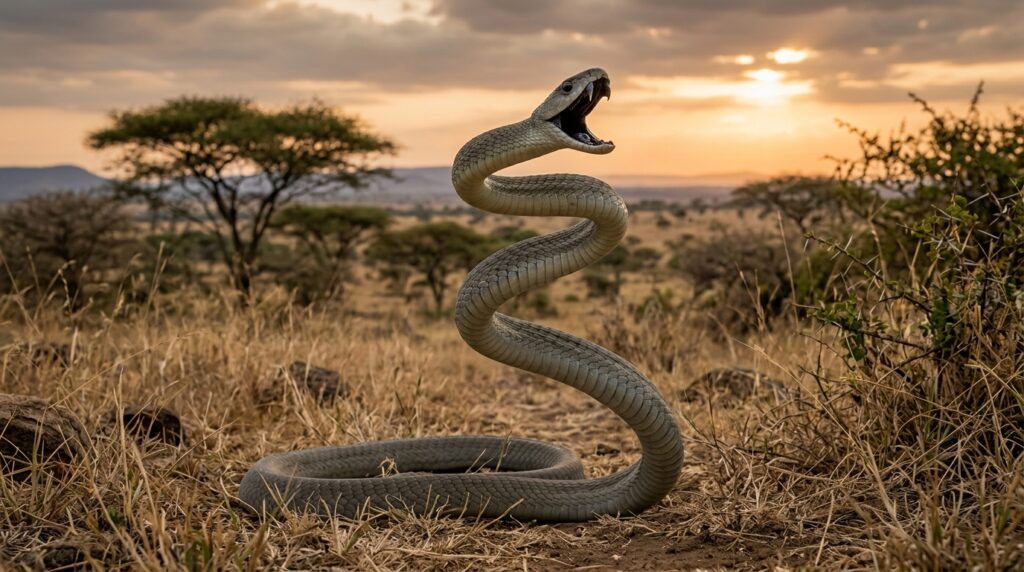
The black mamba snake is dangerous, but it never deliberately hunts humans
The black mamba has a reputation as one of the most terrifying creatures in Africa, but cinema and urban legends have greatly distorted the reality. Black scales and deliberate hunting of humans are just a small part of the myths about this snake. In fact, its biology and behavior conceal far more complex and fascinating survival mechanisms. Yes, the black mamba is indeed the fastest snake in the world. But demonizing it is certainly not warranted.
The True Color of the Black Mamba and the Secret Behind Its Name
The simplest way to surprise someone is to tell the truth about this reptile’s appearance. In the wild, the black mamba is usually not black.
Its body most often has a gray, olive-gray, or brownish hue. The snake got its menacing name exclusively from the black interior of its mouth. This is noted, for example, in the Encyclopædia Britannica.
When the reptile senses danger, it opens its mouth wide, and this dark “abyss” functions as a vivid warning signal to enemies. Because of the name, many people imagine a coal-black monster, but the real mamba looks far less cinematic.
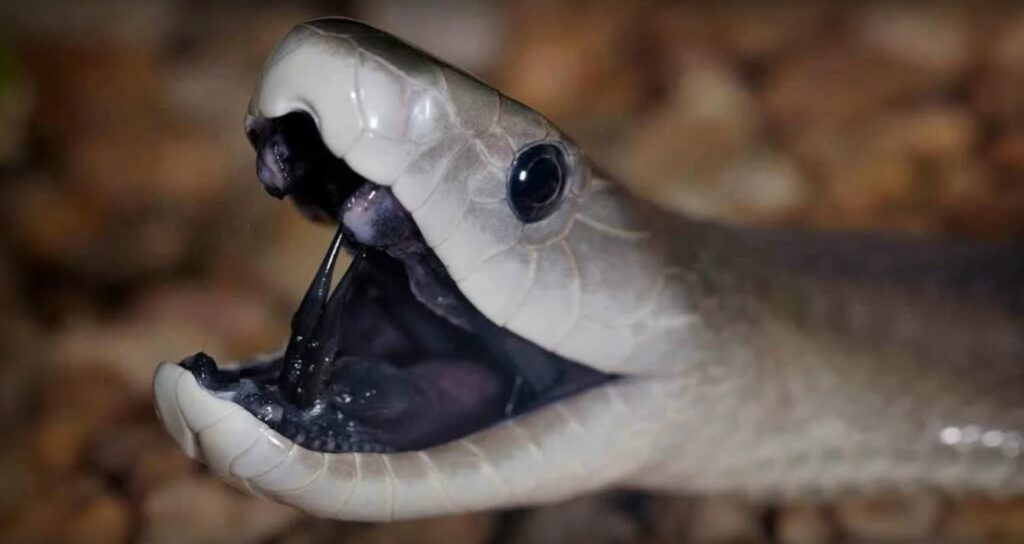
The black mouth of the black mamba. Image source: YouTube
The Black Mamba and Hunting Humans
This reptile is often described as an aggressive predator that supposedly deliberately tracks and pursues humans. But snake specialists claim the opposite: the black mamba tries to get away from people at every opportunity.
It becomes dangerous only when it is cornered, someone accidentally steps near it, or its escape route is blocked. If the mamba is frightened, it doesn’t attack immediately but gives clear warning signals:
- it raises the front part of its body off the ground;
- it opens its mouth wide, displaying that signature black interior;
- it slightly flattens its neck, preparing for a possible strike.
The paradox is that this snake is truly deadly, but not because of innate malice. It is simply very nervous and skittish, and it uses its most powerful natural weapon as defense.
How Fast Is the Black Mamba
Among all reptiles, this snake is considered one of the swiftest. According to researchers, it can reach speeds of approximately 19 km/h (12 mph), moving across the ground with its head partially raised.
However, the popular image of a reptile chasing a jeep or a tourist across the savanna at tremendous speed is greatly exaggerated. The mamba uses its remarkable speed for fleeing, not for pursuit. If there are nearby bushes, a burrow, or a crack in the rocks, it will prefer to instantly disappear into cover.
What Is Black Mamba Venom Made Of
The danger of this snake lies not only in the potency of its venom but also in its complex chemical composition. Its venom is a sophisticated cocktail containing dozens of proteins and specific toxins. Alpha-neurotoxins and dendrotoxins play the main roles. Some components disrupt signal transmission in muscles, while others block the function of nerve cells.
It is precisely because of this cocktail that the effects develop rapidly. With a serious bite, breathing difficulties can begin in less than half an hour, and without emergency administration of antivenom, the outcome becomes fatal within just a few hours.
Why Scientists Extract Black Mamba Venom
The most unexpected fact about this reptile is connected to modern science. Substances found in the venom of one of the planet’s most dangerous snakes could become the basis for new painkillers.

Scientists study components of snake venom to create new medications
Researchers isolated special peptides from the venom, named mambalgins. In laboratory conditions, these molecules effectively suppress pain by acting on specific ion channels of the human nervous system. This is described on the scientific portal PubMed.
This absolutely does not mean that a black mamba bite has a healing effect. It is exclusively about the targeted isolation of specific molecules. They help pharmaceutical scientists understand pain mechanisms and may inspire the creation of drugs that do not cause the same addiction as traditional analgesics.
Why Baby Black Mambas Are Dangerous
These reptiles have no safe and carefree period of growing up. Young snakes hatch from eggs fully functional and with already developed venom glands.
The female black mamba does not exhibit maternal instinct. She simply lays her eggs in a suitable warm shelter or another animal’s burrow, and then leaves permanently. After a couple of months of incubation, the hatchlings break through the shell and become lethally dangerous within mere minutes of birth, beginning their independent lives.
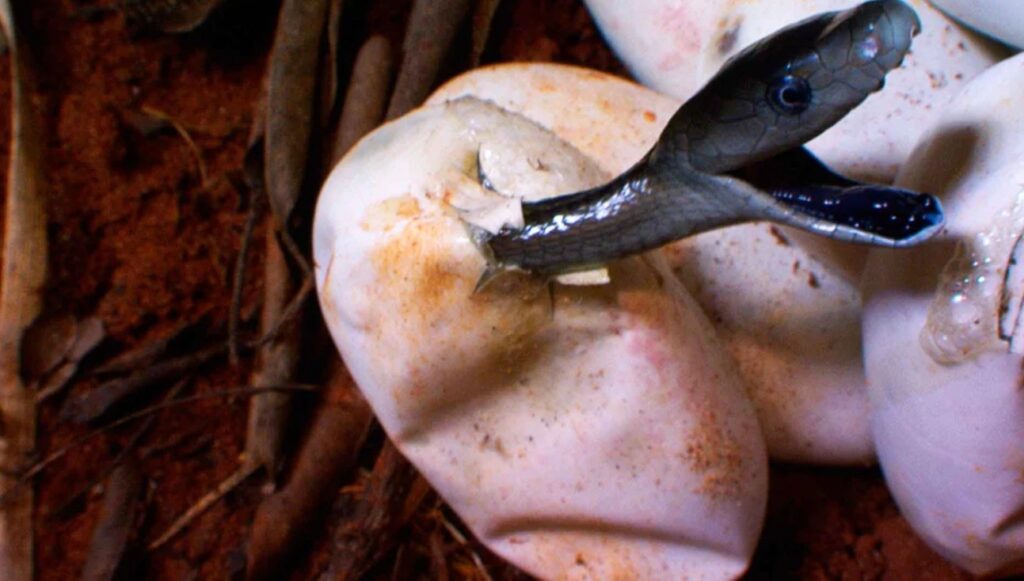
A baby black mamba hatching from an egg. Image source: fishki.net
The Mating Dance of the Black Mamba
During the breeding season, an astonishing sight can be observed in the savanna: two enormous snakes intertwine their bodies and raise their heads nearly a meter above the ground. From the outside, this graceful display truly resembles mating, but in reality it is a battle between males for territory and access to a female.
During such a tournament, the reptiles try to press their opponent’s head to the ground, fundamentally never using venomous bites in the process. The winner earns the right to reproduce, and the loser slithers away.
Such complex behavior, combined with excellent eyesight and daytime activity, makes the mamba a unique creature. It notices any sudden movements perfectly well, which is why the primary recommendation upon an accidental encounter is to freeze and let the snake quietly disappear.
Understanding the real behavior of the black mamba shatters the image of a mindless killer monster. It is a highly developed, swift, and very cautious predator that uses its deadly weapon only for survival in the harsh conditions of African nature — and now also helps scientists advance medicine.