
Popular bone vitamins don’t prevent fractures — study surprises scientists
Millions of people around the world take calcium and vitamin D to keep their bones strong as they age. The logic is simple: calcium is the building block of bone, vitamin D helps the body absorb it, so supplements should protect against fractures. But a major new analysis calls this idea into question: for the average adult, such supplements change almost nothing.
Calcium and Vitamin D: What 69 Clinical Trials Showed
This is about a very large body of work, not a single experiment. Scientists compiled data from 69 clinical trials involving more than 154,000 adults from around the world. In these studies, people taking calcium, vitamin D, or their combination were compared with those receiving a placebo (an inactive substance) or nothing at all.
The goal was to answer a question that matters greatly to millions of people: do these supplements actually prevent fractures and falls?
Why Calcium and Vitamin D Alone Barely Work
When the researchers looked at calcium on its own, they found only a slight reduction in fractures and falls — or no noticeable effect at all. The same turned out to be true for vitamin D.
Vitamin D was particularly telling. Even in studies with tens of thousands of participants, vitamin D supplements barely changed fracture risk compared to taking nothing. And this was certainly not a matter of sample size where the effect might have been missed: there were very many participants, yet the difference was still almost nonexistent.
Calcium and Vitamin D Together: Do They Reduce Fracture Risk?
The combination of calcium and vitamin D at first glance looked slightly more encouraging. Combined supplementation reduced certain types of fractures, but upon closer examination the benefit turned out to be extremely modest.
To understand just how small this benefit is, consider the numbers:
- reduction in total fractures — approximately one fewer case per 100 people taking supplements
- hip fracture, one of the most serious injuries in the elderly — only about three fewer cases per 1,000 people
The study authors drew a direct conclusion: this benefit is too small to be considered clinically significant for most people. In other words, the effect technically exists, but in the real life of an average older person, it is unlikely to noticeably change anything.
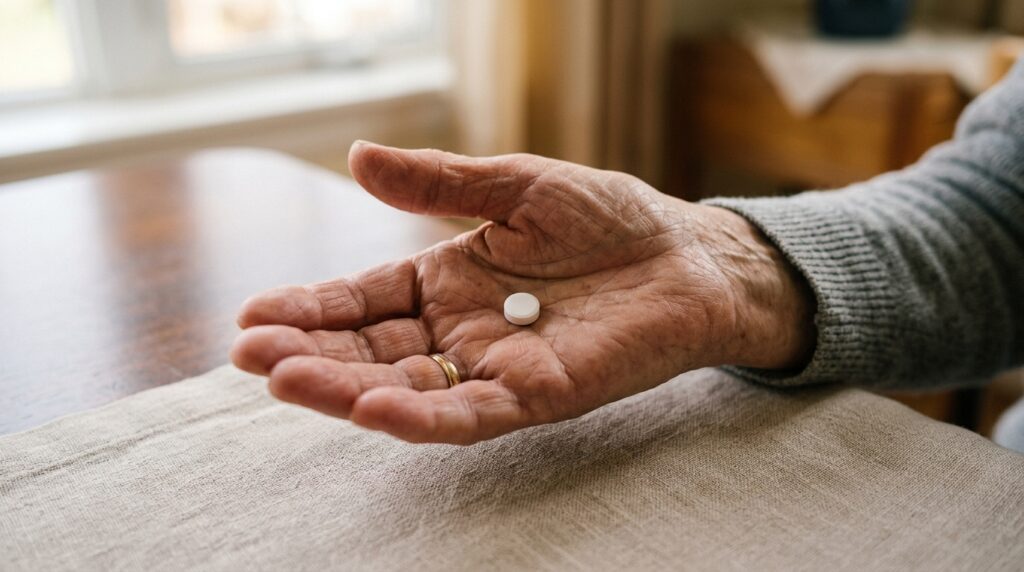
On paper the benefit exists, but in everyday life it’s almost imperceptible
Why Falls and Fractures in the Elderly Are a Growing Problem
This topic is far from abstract, because falls and fractures pose a serious threat to the health of older adults. Approximately one in three adults over 65 falls at least once a year.
The consequences can be severe: fractures, hospitalizations, loss of independence, and reduced quality of life. It’s no surprise that people are willing to do whatever it takes to reduce these risks, and supplements seem like the simplest solution. But the research shows that pills alone don’t solve this problem.
Who Actually Needs Calcium and Vitamin D Supplements
This doesn’t mean calcium and vitamin D are useless. They remain important for bones and muscles. What is being questioned is something else: the idea that everyone should be taking supplements preventively to avoid fractures.
There are groups for whom supplements may genuinely be needed as part of treatment:
- people with osteoporosis (a condition that makes bones brittle)
- people with vitamin D deficiency
- people with certain medical conditions, as prescribed by a doctor
The study’s conclusions primarily apply to the general adult population — especially those who live independently and don’t have severe vitamin D deficiency or bone disease. It’s also worth adding context to prescribing practices: spending on vitamin D prescriptions has surged dramatically over the past two decades, even as confidence in their effectiveness has been declining.
What Actually Helps Keep Bones Strong
If supplements aren’t the answer, then what works? Here the evidence base is actually strong: the most reliable way to help bones is regular physical activity, especially weight-bearing exercises and strength training that load muscles and bones.
Simple and accessible things are beneficial:
- walking
- strength training
- balance exercises
- tai chi (a gentle Chinese exercise practice)
These types of activity help maintain bone strength, improve stability, and reduce the risk of falls.

Strength exercises and balance training strengthen bones better than pills
The Key Takeaway from the Bone Supplement Study
The bottom line is that calcium and vitamin D supplements on their own don’t lead to fewer fractures in ordinary people, even though both substances do play a key role in bone biology. For many adults, bone health depends on how active they are, whether their diet is balanced, and whether they’ve made their home safe from falls.
As the population ages, the issue of fracture prevention is only becoming more pressing. And the new data suggest that the familiar strategy of “just take supplements,” long considered the cornerstone of prevention, may not provide the protection people expect from it. Going forward, it will be worth watching how these findings change doctors’ recommendations and the habit of millions of people buying supplements “just in case.”