Sunscreen may have a side effect that isn’t immediately noticeable
For years, dermatologists have recommended using moisturizers and sunscreens daily. This is considered a cornerstone of personal care, and most men and women follow this advice. But recent studies have made experts wonder whether there is a link between everyday cosmetics and problems that no one associates with them. It turns out there is, and it’s quite common.
What Is Frontal Fibrosing Alopecia
Frontal fibrosing alopecia (FFA) is not just age-related hair thinning. It is a so-called scarring form of hair loss in which inflammation damages hair follicles so deeply that scar tissue forms in their place. After this, it is impossible to restore the lost hair.
The disease usually begins unnoticeably. A person may notice that the hairline on the forehead has crept upward, the temples have thinned out, and the outer tips of the eyebrows have become sparse. This process is often accompanied by itching, burning, or increased scalp sensitivity.
Most commonly affected are women after menopause, but men and younger people can also face this problem. The exact causes of frontal fibrosing alopecia remain a mystery to medicine. What is clear is that a whole cocktail of genetics, hormonal fluctuations, immune system malfunctions, and external factors is involved.
How Creams May Cause Hair Loss
The idea that skincare could harm hair emerged after large-scale surveys that began in 2016. In 2023, a major meta-analysis was published, combining data from thousands of patients. A curious pattern emerged: people with a confirmed diagnosis used sunscreens and moisturizing face creams significantly more often than participants in the healthy control group.
Interestingly, shampoos, conditioners, styling gels, hair dyes, and facial cleansers showed no such association. Suspicion fell specifically on leave-on cosmetics. Scientists hypothesized that cream residues accumulate along the hairline and on the eyebrows — precisely where hair loss begins. Certain chemical components may trigger a local allergic reaction or irritate already vulnerable follicles.
Why the Link Between Cosmetics and Hair Loss Remains Unproven
It sounds alarming, but it’s too early to draw radical conclusions. In science, correlation does not always mean causation. Getting to the truth often takes researchers years.
Many other studies significantly complicate the picture. For example, a large-scale study by Brazilian scientists confirmed a link between FFA and regular facial soap and moisturizers but found no connection with sunscreen products. A study from Thailand showed that moisturizers were used more frequently not only by people with FFA but also by those suffering from common hair loss. Additionally, all these surveys suffer from recall bias — people simply cannot accurately remember which jars they applied to their faces five years ago.
The most elegant explanation was proposed by yet another group of researchers. They noticed that patients with FFA often show significant signs of sun damage to the skin. It is entirely possible that people use sunscreen more often simply because their skin has already suffered considerable UV damage. In other words, it may be the sun, not the cream, that is one of the triggers of the disease.
What to Do at the First Signs of Hair Loss
While the scientific community debates, doctors’ practical recommendations remain unchanged. Dermatologists categorically advise against giving up sun protection. Sunscreen definitively reduces the risk of skin cancer, and this real, scientifically proven benefit outweighs the still-hazy suspicions regarding alopecia.
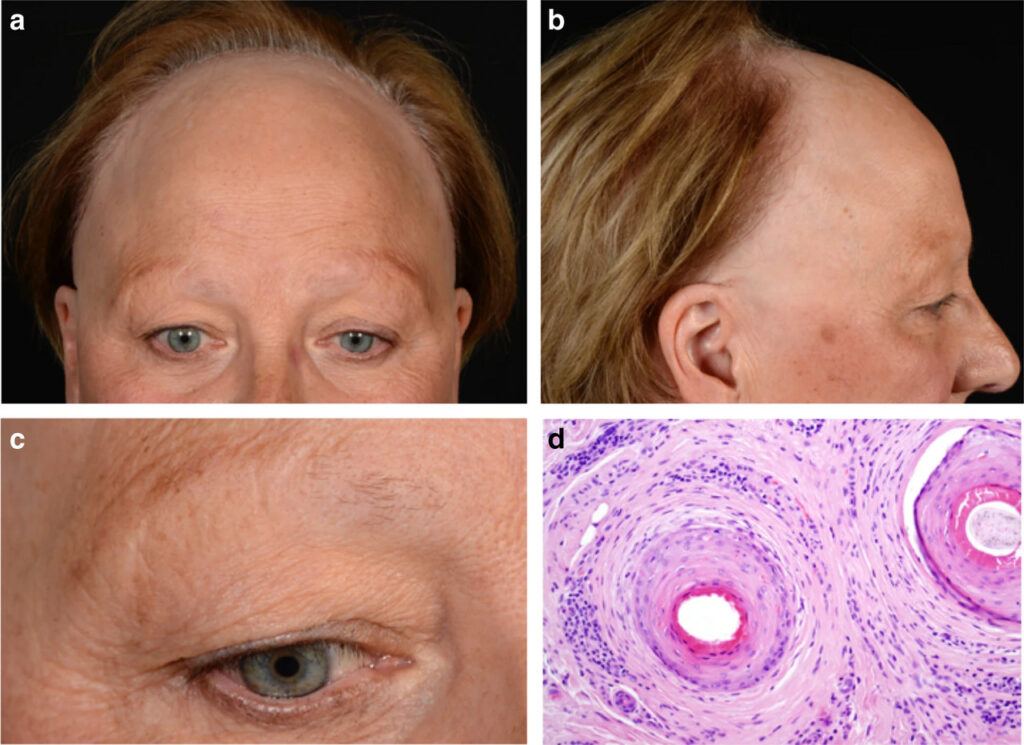
If scarring alopecia is suspected, it is important to see a doctor as soon as possible to stop the process
However, anyone who actively uses skincare products should pay closer attention to their health. Here are the warning signs to watch for:
- The hairline on the forehead is gradually receding;
- Eyebrows are noticeably thinning, especially at the outer edges;
- The skin at the hair roots is red, flaky, or itchy.
If you notice these symptoms, the main rule is don’t delay visiting a doctor. Although this type of alopecia cannot be reversed, early medical treatment can stop the inflammation and save the remaining follicles from destruction.
The mysterious link between the use of sunscreen products and the onset of hair loss remains unsolved. The jars on your bathroom shelf could be either accomplices in the process or merely witnesses. So continue protecting your skin from ultraviolet radiation, listen to your body, and remember that science takes time to deliver precise answers.