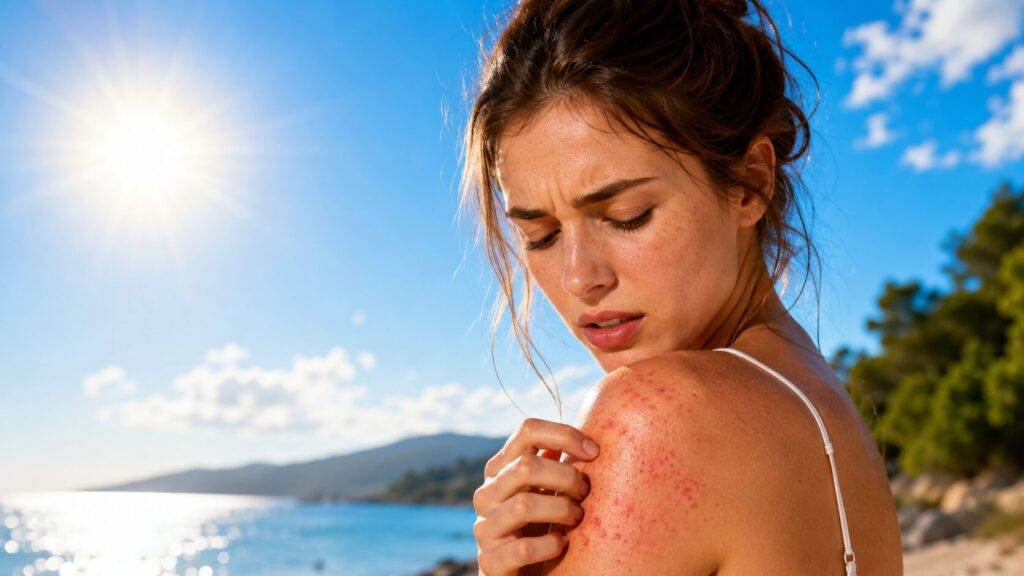
Sun allergy: three types of reactions and their symptoms.
After a few minutes or hours in the sun, the skin may become covered with red spots, blisters, and start itching intensely. Sun allergy is not a single disease but a group of conditions in which light triggers an unusual skin reaction, sometimes involving the immune system. It is not the same as a regular sunburn. The cause of the reaction may be a medication or cream that caused no problems before going outside.
What Is Called a Sun Allergy
Doctors more commonly use the term “photosensitivity.” This refers to an abnormal skin reaction to ultraviolet radiation and sometimes even to visible light. The everyday term “sun allergy” actually covers several different conditions.
The main sign of photosensitivity is a link between symptoms and sun exposure. The rash usually appears on exposed areas of the body: the face, neck, arms, or chest. Skin covered by clothing may remain clear.
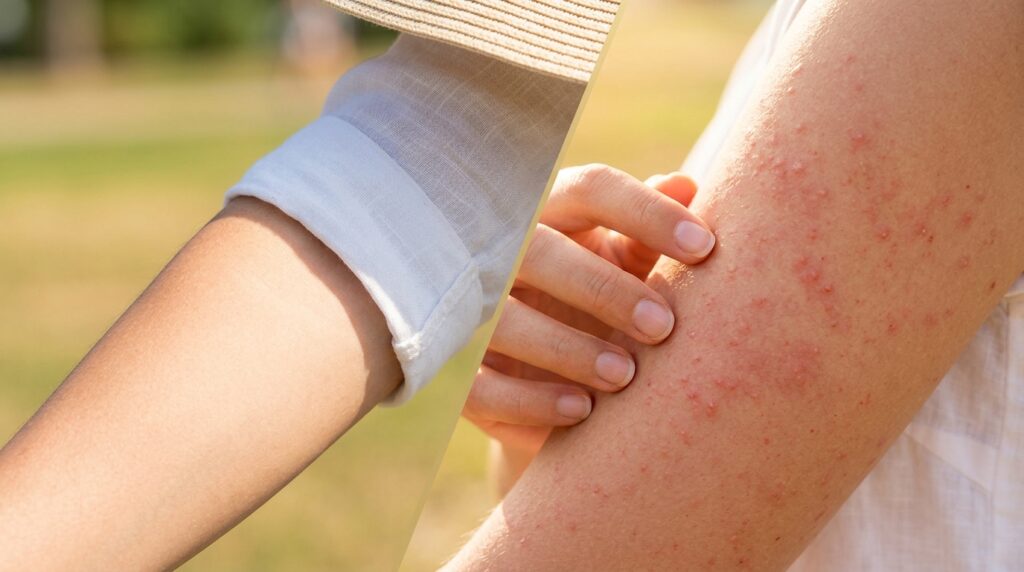
How sun allergy manifests
Three Types of Sun Allergy and Their Signs
The most common type is polymorphic light eruption. Red, itchy spots or bumps appear several hours after sun exposure and can persist for several days. This occurs more often in spring and early summer, when the skin has not yet adapted to active ultraviolet light. Sometimes the rash is accompanied by headache and nausea.
Less common is solar urticaria, but it can be more severe. Skin cells release histamine, and within minutes, intensely itchy welts appear. After leaving the sun, symptoms usually resolve faster than with polymorphic light eruption.
Another type is the photoallergic reaction. Here, ultraviolet light acts together with another substance. The trigger may be a medication, a fragrance in a cream, or a component of sunscreen. The rash often appears not immediately but one to two days later.
How to Tell Sun Allergy from a Sunburn
A sunburn usually occurs after prolonged sun exposure and presents as redness, soreness, and a feeling of hot skin. With photosensitivity, itching, spots, small bumps, hives, or blisters are more noticeable. The reaction can sometimes begin even after a short walk.
It is worth noting a few details:
- how many minutes or hours after sun exposure symptoms appeared;
- how long the rash persists after leaving the sun;
- which areas of skin were affected;
- whether you recently started taking a new medication;
- whether you used a new cream, perfume, or sunscreen.
Self-diagnosis is not advisable: similar symptoms can accompany other conditions. A dermatologist can review the history of reactions, check medications and cosmetics, perform skin tests, or conduct controlled UV exposure.
It is especially important to see a doctor if the reaction recurs, becomes more severe, or is accompanied by blisters. Do not discontinue prescribed medications on your own: first discuss a possible substitution with a specialist.

A dermatologist examination helps determine the exact cause of the reaction
Skin Protection with Photosensitivity
A diagnosis does not always mean spending the entire summer indoors. The main goal is to reduce UV exposure and, if possible, eliminate the specific triggering factor. To do this, it is important to follow several rules:
- avoid direct sunlight during the brightest midday hours;
- use a broad-spectrum sunscreen;
- wear covering (but breathable) clothing with long sleeves;
- protect the head and eyes;
- check medications and cosmetics with your doctor if the reaction started after switching them.
For many people, symptoms can be managed, and polymorphic light eruption may occur less frequently over time. But there is no universal remedy: protection and treatment depend on the specific type of reaction.
A rash after sun exposure is not always a sunburn. If the skin regularly responds to light with itching, spots, or hives, it is best to note the circumstances of the reaction and show it to a doctor — this will make it easier to find the true triggering factor and choose appropriate protection.