Dry jelly bricks eaten straight from the pack, a sweet pharmacy bar made with cattle blood albumin, tree sap sold as the cheapest juice in the shop, and “coffee” brewed from barley and chicory: for a Soviet child, these were everyday foods. To a schoolchild today, the names mean little and the flavors have to be explained almost like exotic cuisine. Some of these products are still sold, but in changed form. This explainer looks at what they were made of, how they were produced, and why their taste is so hard to convey now, drawing on Soviet standards and data from the Russian consumer-quality organization Roskachestvo.
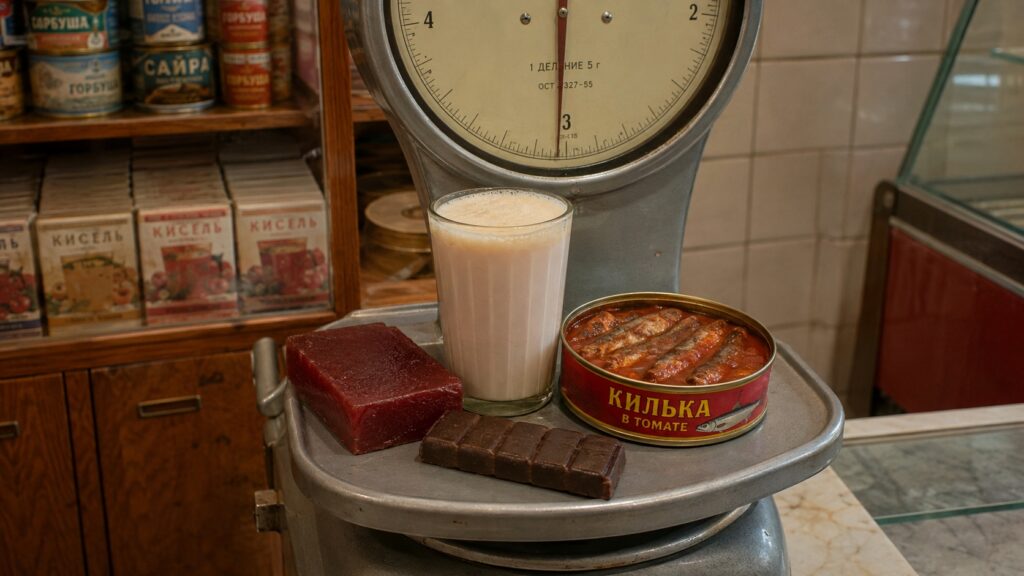
Some Soviet-era foods really did have a taste that is hard to put into words
What you need to know
- Soviet kissel was sold as a hard brick of starch, sugar and fruit or berry material that children often gnawed dry instead of cooking.
- According to Roskachestvo, children’s hematogen contained 4–5% black food albumin made from cattle blood, plus condensed milk, sugar, molasses and vanillin.
- Soviet “coffee drinks” such as “Barley” could be roughly 80% barley and 20% chicory, with no coffee at all.
- In the USSR, ice cream had to contain at least 15% fat to be called plombir; the current Russian standard allows the name from 12%.
Kissel in a brick: children gnawed it without cooking
Kissel itself is easy to explain: a sweet berry drink thickened with starch. The unusual part came before preparation. In the USSR, kissel was sold as a hard rectangular brick which, under the state standard (GOST), consisted of starch, sugar and fruit or berry raw material. The instructions said to crumble the brick, dilute it with water and boil it, producing a thick drink or near-dessert.
Children often did something else: they gnawed the dry brick straight from the pack. At first it was hard and crunchy, then it instantly crumbled in the mouth into a dry powder that was sweet, sour, floury and intensely berry-flavored all at once. The closest description is a dense tablet of starch, sugar and berry-drink powder that was somehow treated as candy. Funnily enough, some children preferred the dry version to the cooked one.
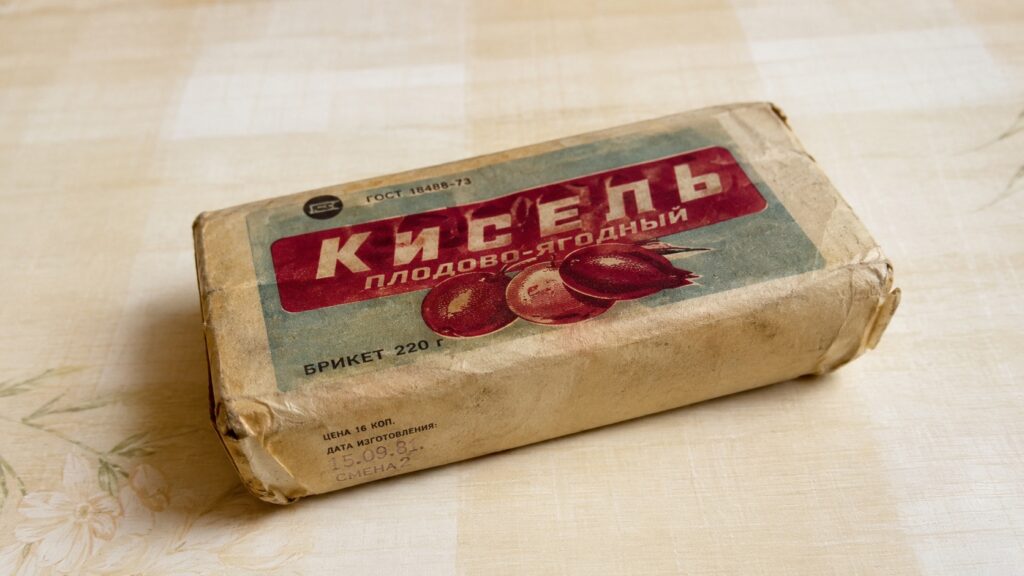
Soviet kissel could simply be gnawed dry by children
Hematogen: a sweet pharmacy bar with blood in the recipe
Soviet hematogen looked like a chocolate or toffee bar: brown, sweet, dense and slightly chewy. But there was no chocolate in it. According to Roskachestvo, the standard recipe for children’s hematogen included 4–5% black food albumin, 30–35% condensed milk, about 40% sugar, about 20% molasses and vanillin. Black food albumin is obtained from the blood of cattle or its components.
The taste sat somewhere between milk toffee, caramel and a distinct iron-like note. The sugar and condensed milk were there partly to mask the flavor of the albumin. Hematogen was sold in pharmacies and regarded as a source of iron, though it cannot be considered a treatment for anemia. Modern versions are made with chocolate, nuts and raisins, so the plain Soviet taste without additives is now harder to find.
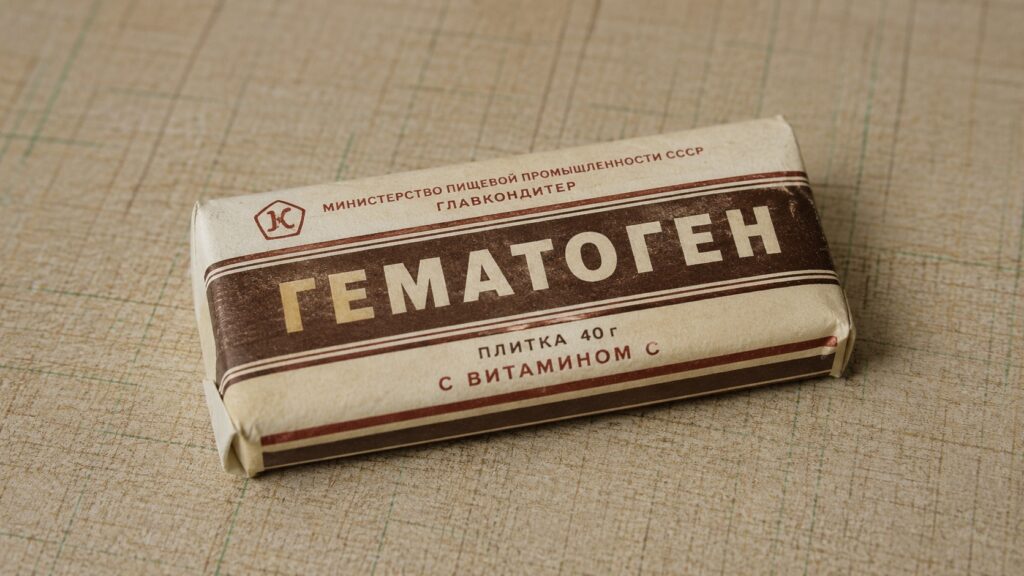
There was no chocolate in hematogen
“Coffee drinks” made from barley and chicory, with no coffee
The USSR had an entire category of coffee drinks made from barley, chicory, rye, acorns, chestnuts and other plant materials. Some blends contained natural coffee; others had none at all. The drink called “Yachmenny” (Barley), for example, could consist of roughly 80% barley and 20% chicory. A later standard for instant coffee drinks explicitly distinguished products with natural coffee, without it, and pure chicory versions. Blends such as “Baltika,” “Letny” (Summer) and “Nasha Marka” (Our Brand) were sold in shops.
The word “coffee” does not describe the taste. It was closer to a mix of toasted bread, malt, mild bitterness, chicory and sometimes something nutty. With milk and sugar the drink became soft and quite pleasant, and it was this version that was served in kindergartens. Interestingly, the idea has returned: similar blends are now sold not as a cheap coffee substitute but as caffeine-free drinks and part of a health-oriented diet.
Birch sap in three-liter jars
The phrase “juice from a tree” sounds odd to a child on its own, yet in the USSR birch sap was a mass-market product. It was harvested industrially and sold in large glass jars, and it was one of the cheapest juices in the shop.
There is a nuance: fresh birch sap and the canned store product differed noticeably. Under Soviet technology, the sap was filtered, sugar and citric acid were added, it was heated, poured into jars of up to three liters and pasteurized. The jarred version was therefore slightly sweet, mildly sour and refreshing, with a barely perceptible woody note, while fresh sap is far more delicate and strikes many people as almost like water. To a child today used to apple and multifruit juice, the line “the cheapest juice was from a birch tree” sounds like a detail from another civilization.
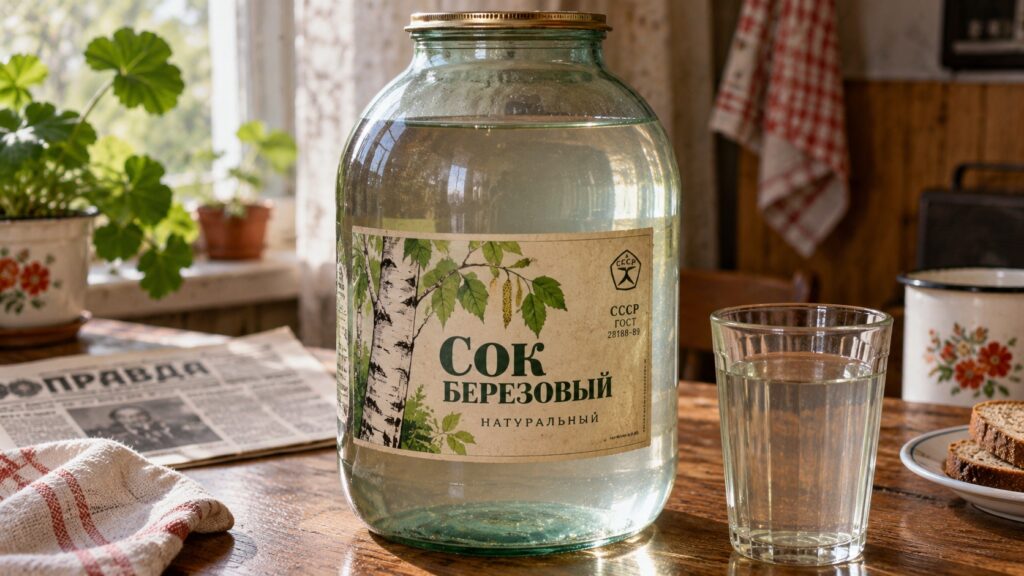
The taste of Soviet-era store-bought birch sap is hard to describe in words
Kvass from a yellow tank smelled of bread and fermentation
Kvass is still sold today, so at first glance it does not belong on this list. But a Soviet child knew it not from a plastic supermarket bottle. In summer, yellow tanker trailers appeared on the streets, and the drink was poured into mugs, jars and milk cans. It was one of the symbols of the Soviet city.
The taste had nothing in common with sweet soda. Good bread kvass combines acidity, slight sweetness, the aroma of rye bread and fermentation products: it could foam a little and carry a yeasty note. This matters because kvass is historically a fermented product, not flavored water. Roskachestvo describes kvass wort as a product made from malted grain. The easiest way to explain it to a child is as a fizzy drink made from dark bread that was deliberately left to ferment a little. After the collapse of the USSR the tanker format almost disappeared; bottled kvass is easier to store and transport, but with the tanks went the sense of a drink that lives for only a few days.
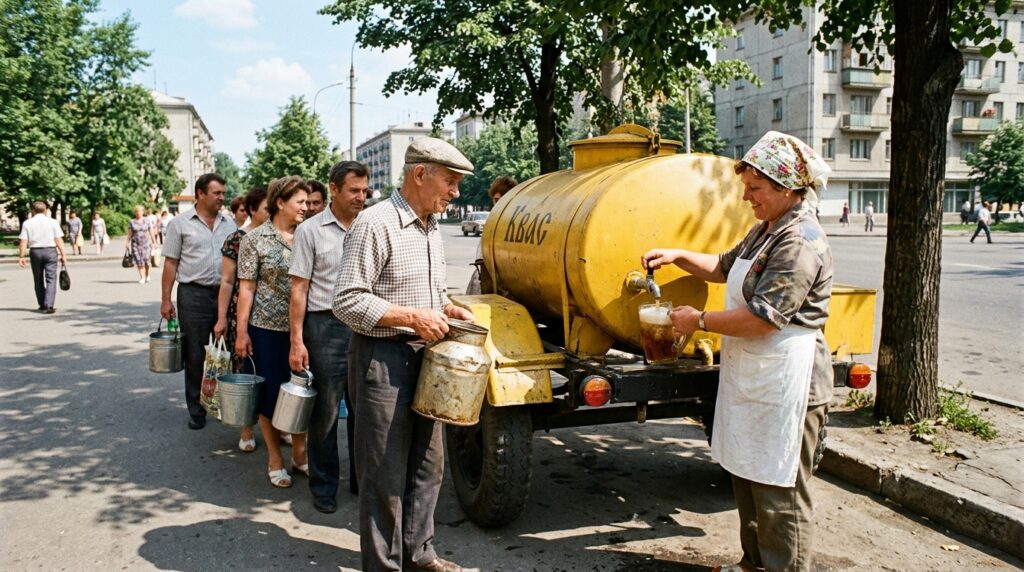
A woman pours kvass from a yellow tank for passers-by holding metal mugs
The grocery-store milkshake was foam, not dessert
Today a milkshake often means something close to a dessert: a mountain of ice cream, chocolate, caramel, cream, cookies and syrups. The Soviet version was simpler. The 1982 recipe collection for public catering includes a whole category of milk cocktails: fruit, berry, chocolate and coffee versions, including some with ice cream. The classic combination was very cold milk, ice cream and fruit or berry syrup, all whipped hard.
Texture mattered more than ingredients. Machines in grocery stores and cafeterias created a mass of tiny bubbles, and the drink came out ice-cold, light and airy with a tall cap of foam that was eaten first, before the drink itself. Cheap fruit-and-berry syrup gave it an especially recognizable taste. This can be recreated today, but a child finds it hard to understand why people made a special trip to the store for a glass of whipped milk with syrup.
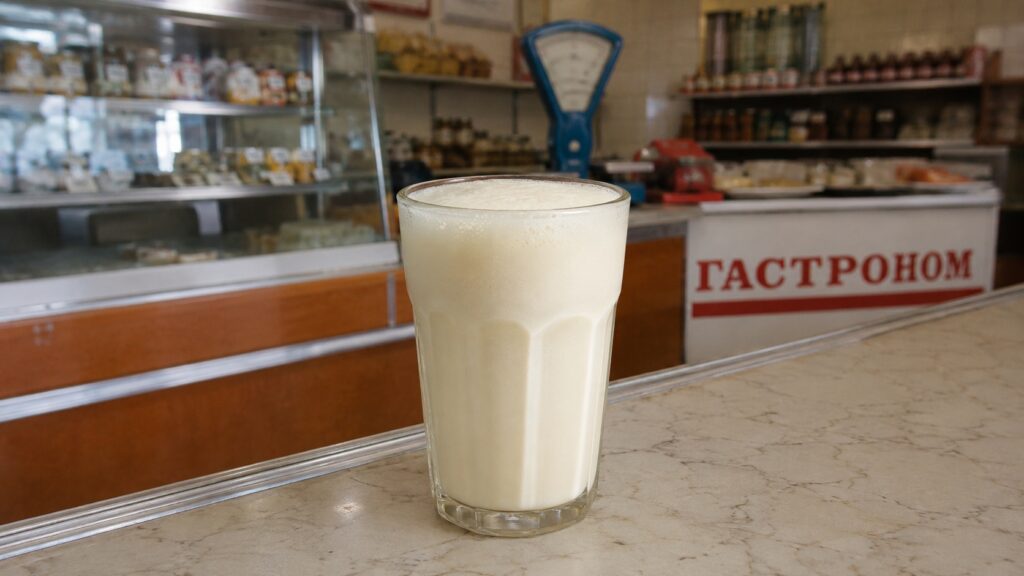
The Soviet-era milkshake had a very simple composition
Soviet plombir ice cream had a different fat threshold
Here the difference can be put in a number. According to Roskachestvo, in the USSR the name plombir was reserved for ice cream with a fat content of 15% or more, while ice cream with 12–15% fat belonged to a different category. Today the Russian standard allows a product to be called plombir from 12% fat.
Three percentage points sounds modest, but for ice cream it is noticeable: fat directly affects mouthfeel. Higher-fat ice cream feels denser and creamier, less watery, leaves flavor longer after melting and releases its cold more slowly. Classic Soviet plombir was closer to very cold whipped cream turned into dense ice cream. It is worth resisting the myth that “it’s all chemicals now”: good modern plombir can also be excellent; the threshold for the name has simply been lowered.
Sprat in tomato sauce: fish eaten bones and all
Small, uncleaned sprat was fried in vegetable oil, packed into cans, covered with tomato sauce and sterilized. Because of the long heat treatment, the small bones became so soft that they were eaten along with the fish.
In the mouth, soft oily fish, almost dissolved bones, sweet-and-sour tomato sauce, spices and a characteristic canned flavor all arrived at once. Roskachestvo still calls sprat in tomato a “people’s product” and notes that it remained available even when Soviet shops had a poor selection. A child today is more familiar with fish sticks, sushi rolls and boneless fillets, so whole little fish in a sweetish sauce as the favorite snack of several generations is a mystery.
Why these flavors seem strange today
It is not only a matter of standards. The whole set of flavors a person grows up with has changed. Soviet mass-market food was built around simple ingredients: milk, molasses, starch, bread, grains, chicory, canned fish and concentrated berry extracts. A child today encounters dozens of kinds of snack bars, yogurts, chips, sauces, nuggets, tropical fruit and a huge number of flavorings from an early age.
Against that background, the old flavors come across either as too plain or, conversely, as almost experimental cuisine: a sweet bar with albumin, a drink of roasted barley, sap from a tree, fizzy bread, a dry starch brick. That does not mean food was better or worse before. The two generations simply have different reference points, and the difference has to be explained through composition and technology rather than nostalgia.