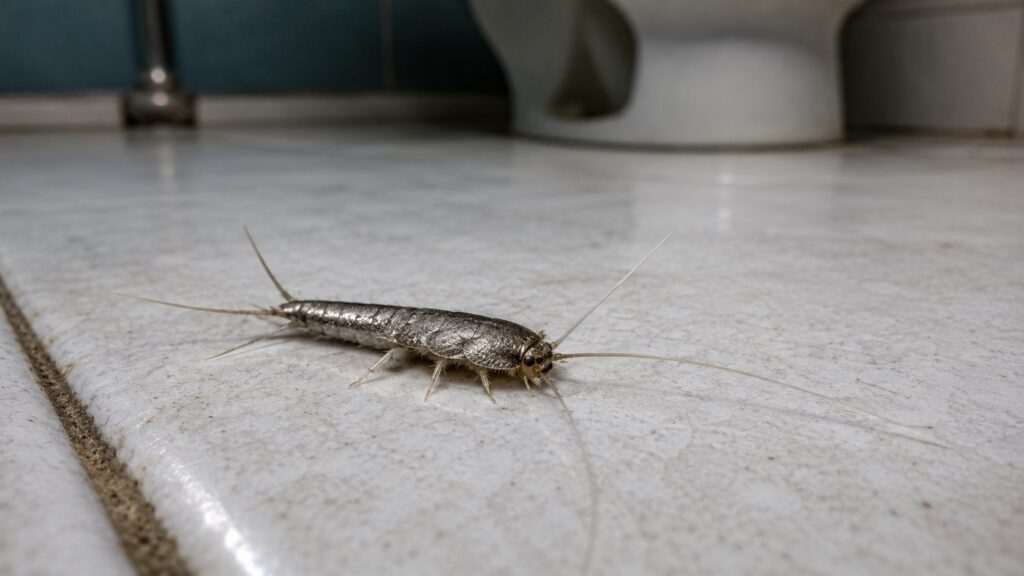
Silverfish in the apartment don’t indicate dirt, the reason for their appearance is something else entirely
At night in the bathroom, you might notice a small silvery insect running quickly across the tiles or walls. This is a silverfish. Its appearance is not related to dirt, because it’s not a cockroach. The main reasons silverfish appear in a home are high humidity, warm air, and the presence of crevices where they hide during the day. They feed on organic matter, skin particles, paper, and dust. If they’ve appeared, it means the room is damp, and that’s a reason to read our article carefully.
What Kind of Insect Is a Silverfish
A silverfish is a small wingless insect with an elongated body, long antennae, and three thin “tails” at the end. In English sources, it’s called silverfish, literally “silver fish,” because it’s silvery and when moving it wriggles as if swimming. In reference books, you can find its scientific name Lepisma saccharina.
Pest control specialists say silverfish are shiny, silvery, or pearly gray, about 1–2 cm long, active at night, and hide during the day. It’s important to understand that this is not a cockroach, not a woodlouse, and not a larva of some dangerous insect. Silverfish belong to an ancient group of wingless insects, have lived alongside humans for a very long time, and are most often found in bathrooms, toilets, kitchens, pantries, under sinks, behind baseboards, and near books.
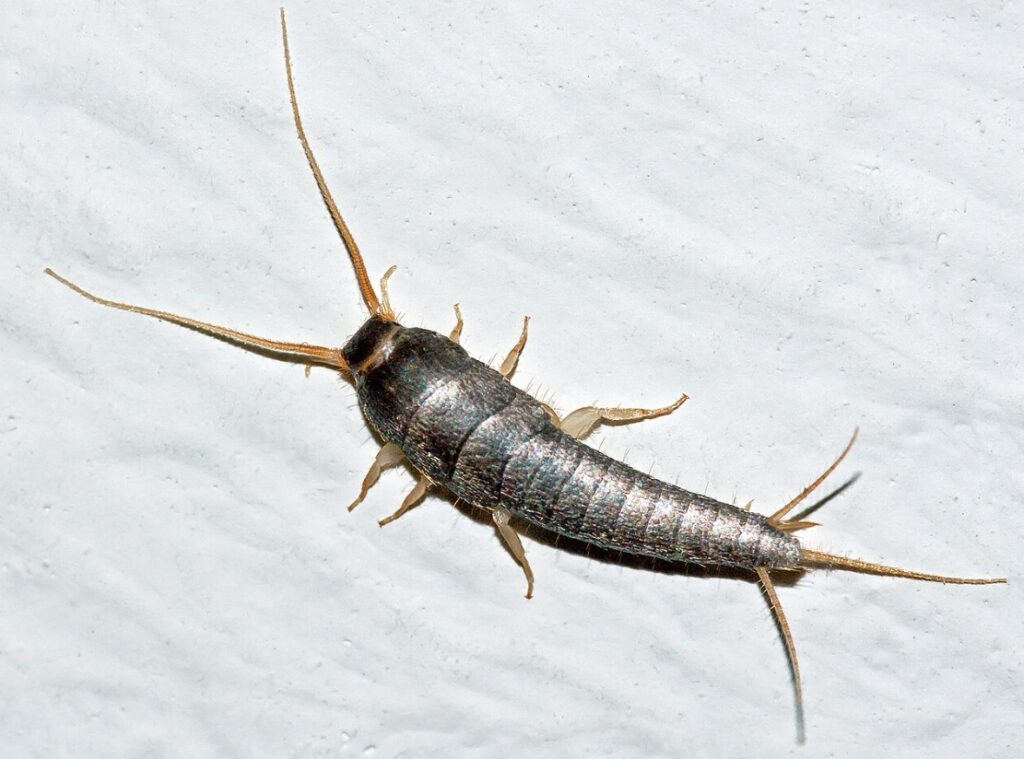
Silverfish close-up. Image source: wikipedia.org
Why Silverfish Appear Even in a Clean Home
Silverfish are attracted not by dirt in the everyday sense, but by moisture, darkness, crevices, and available food. The bathroom is almost ideal for them because after a shower the air remains humid, it’s dark under the bathtub and behind the washing machine, pipes can have condensation, and tile joints and baseboards provide plenty of hiding spots. Specialists directly associate the presence of silverfish with excessively high humidity in the area where they appear.
You can regularly wash the bathtub and floor, but if the door is closed after a shower, the exhaust fan is weak, it’s damp under the tub, and there are cracks around the pipes, that’s enough for silverfish. Silverfish prefer humidity of about 75–97% and moderate temperatures, they are active at night and are often only noticeable when accidentally disturbed during cleaning. The comparison to why bed bugs appear even in homes of neat people is apt here. The reason is also not about cleanliness but about conditions.
Another reason is that food for silverfish exists in almost any home. They don’t feed only on crumbs. They eat starch, sugary substances, paper, and glue in book bindings and wallpaper, cardboard, dust, dead insects, some fungi, and mold. Therefore, even a perfectly cleaned bathroom can be attractive if there are cardboard boxes nearby, open toilet paper, old magazines, laundry, or hidden mold.
Is It True That Silverfish Come From the Sewer
It often seems like the silverfish crawled out of the drain because they’re found in the bathtub, sink, or shower tray. But this isn’t necessarily the case. Silverfish end up near plumbing because of moisture, and sometimes they simply fall into the bathtub or sink and can’t climb out on the smooth surface because their legs slip on the porcelain.
In other words, the insect may not live in the pipe but nearby: behind the baseboard, under the bathtub, behind a panel, in a crack near the riser, in a ventilation shaft, under a damp mat, or behind the washing machine. In apartment buildings, silverfish also move through technical voids, ventilation systems, and along pipes through gaps around utilities.
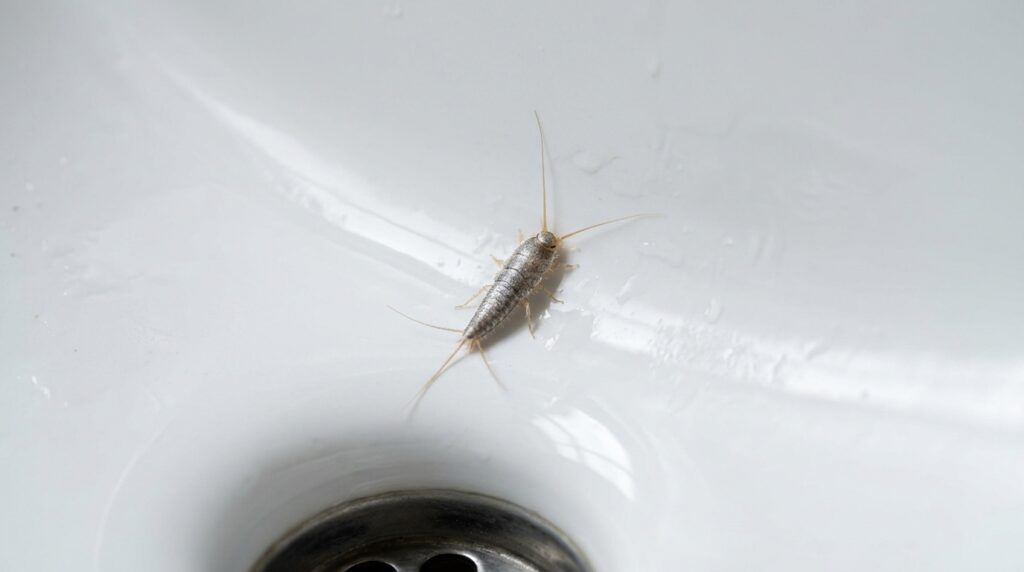
Often a silverfish simply falls into the sink and can’t climb out on the smooth wall
How Silverfish Get Into an Apartment
Silverfish get into homes in several ways. They are often brought in with boxes and old books, furniture, fabrics, building materials, or items that have been sitting in a damp basement, garage, or storage room for a long time. Insects can also wander in from outside.
Sometimes they appear after renovation or in new buildings. These creatures can enter new homes in large numbers from surrounding areas, as well as with lumber, drywall, and similar materials. The logic is simple: fresh concrete and damp wood provide moisture, and wallpaper paste provides food. This creates an ideal set of conditions for colonization.
Are Silverfish Dangerous to Humans
For humans, silverfish are usually not dangerous because they don’t bite, don’t sting, and are not venomous. Silverfish are classified as pests not because of a health threat, but because of their unpleasant appearance and ability to damage belongings.
The main problem is not health but property and humidity. Silverfish can damage paper, books, wallpaper, cardboard, fabrics, old documents, photographs, and packages of dry goods. They damage starched fabrics, cotton, linen, silk, and viscose, leaving uneven scrapes, small holes, and yellowish stains, while also feeding on mold on surfaces.
If silverfish appear frequently, this can be a sign of hidden dampness. And dampness is already more dangerous than the insect itself — it’s associated with mold, musty odors, damage to finishes, swelling furniture, and ventilation problems.
How to Distinguish Silverfish From Similar Insects
You can identify a silverfish by these features:
- the body is elongated, like a small carrot or drop;
- the color is silvery, gray, sometimes pearly;
- no wings;
- runs very fast;
- long antennae in front and three thin appendages at the back;
- most often appears at night or when you turn on the light in the bathroom.
It can be confused with the firebrat (Thermobia domestica). It looks similar but is more often brownish-gray, mottled, and prefers warmer places. Silverfish are found in cool damp places, while firebrats prefer temperatures above 30 degrees and areas near boilers, furnaces, and hot pipes.
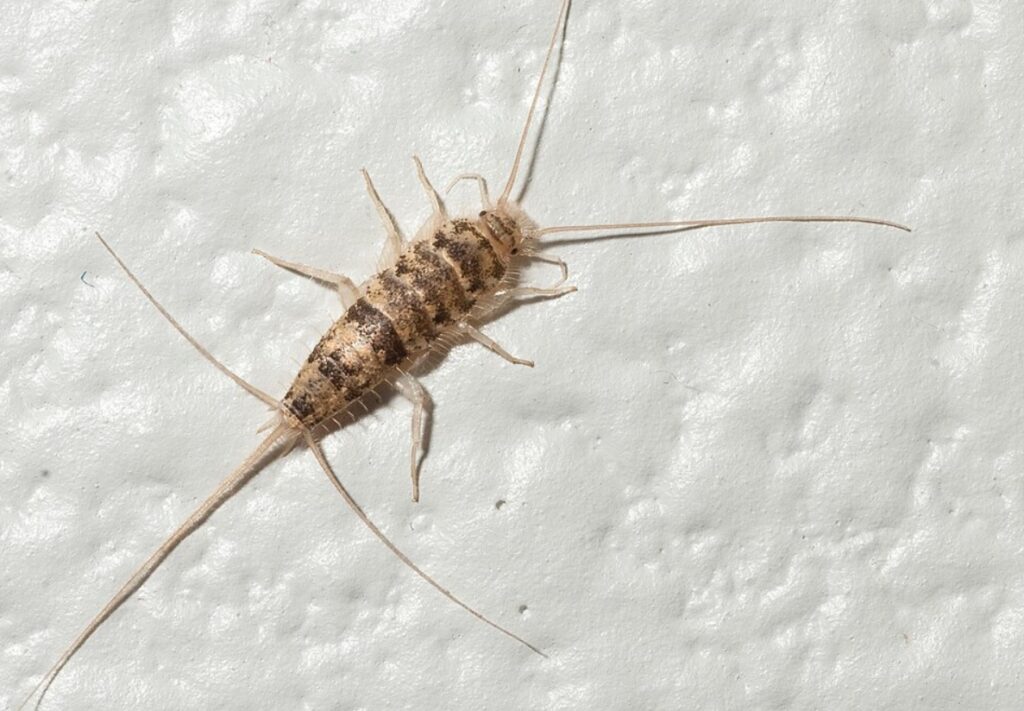
What a firebrat looks like. Image source: wikimedia.org
When Silverfish at Home Are a Problem
One silverfish every few months is unpleasant but not a disaster. It could have accidentally gotten in with belongings or run in from a neighboring area. But if you see them regularly in the same place, it’s already a reason to look for the source of moisture and their hiding spot. A single specimen is usually not considered a serious pest, but the very presence of these insects should be taken as a signal to check humidity levels.
You should be especially concerned if you notice young small silverfish, find them every week, see them in different rooms, discover damage to paper, wallpaper, and boxes, or smell dampness. This already looks not like a random guest but a permanent habitat.
How to Get Rid of Silverfish in an Apartment
You should start not with poison but with moisture. Silverfish are almost impossible to eliminate if you leave them a damp bathroom. Pest control products won’t work without eliminating moisture, food, and hiding spots that allow the insects to live.
Fighting silverfish looks like this:
- Check for moisture. Look under the bathtub, under the sink, behind the washing machine, at the risers, ventilation, silicone joints, and under mats. Look for condensation, wet spots, mold smell, dark residue, and swollen finishes;
- Fix ventilation. After a shower, leave the door ajar, turn on the exhaust fan, and wipe water off the shower walls. It’s helpful to repair leaks, remove standing water, and use dehumidifiers in bathrooms, basements, and attics;
- Remove hiding spots and food. Don’t store cardboard boxes, old magazines, paper bags, or damp mats in the bathroom. Vacuum crevices, baseboards, and the space behind the washing machine, because household dust and debris serve as food for silverfish;