
Why it’s not about the amount of protein, but about one amino acid — methionine
For many years, the nutrition debate boiled down to a simple question: how much protein should you eat — a lot or a little? But a new study led by Valter Longo suggests shifting the focus. The key factor in healthy aging may not be the amount of protein, but one specific amino acid — methionine, and what matters is its precise dosage.
What the Study on Protein and Lifespan Revealed
The team combined two types of data: a large observational sample of humans and a controlled animal experiment. The scientists analyzed data from 200,000 people to understand whether their health status was linked to the type of diet they followed.
It turned out that a low-protein diet supplemented with amino acids — primarily plant-based, with the addition of fish and small amounts of eggs and dairy products — was associated with greater longevity, lower fat mass, and reduced risk of age-related frailty. It’s important to understand: this is an observational association, not a proven cause.
The study was published in the journal Cell Metabolism and was conducted at the USC Davis School of Gerontology in collaboration with the University of Toronto and Harvard.
How Methionine Became the Star of the “Longevity Diet”
The idea was born from observations of long-lived populations. Longo noticed that populations in southern Europe, who age more healthily, mostly follow a plant-based Mediterranean diet. Such a diet provides little methionine and other essential amino acids — but perhaps not always enough: these same populations have a high rate of age-related frailty.
In other words, even regions with some of the highest life expectancies in the world are not immune to age-related health problems. This prompted the scientists to investigate: what would happen if a small amount of methionine were added to such a diet.
Methionine is an essential amino acid that the body cannot synthesize on its own and can only obtain from food. It is especially abundant in animal protein: meat, fish, eggs, and dairy products.
Mouse Experiment: Four Diets and an Unexpected Result
To isolate the effect of the diet itself from other factors, the researchers moved to animal experiments. Mice aged 20 months were assigned one of four diets:
- a standard diet
- a Western diet high in fat and sugar
- a low-carb ketogenic diet
- a low-protein “longevity diet” supplemented with methionine
As a result, mice on the “longevity diet” showed significantly better health markers: less fat mass, lower frailty levels, and an overall healthier lifespan.
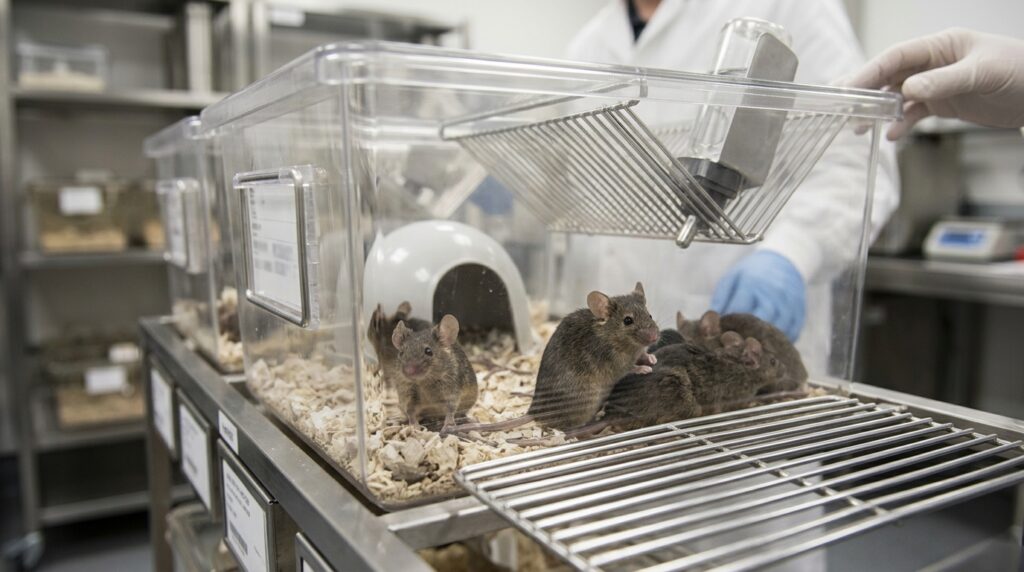
Mice on a low-protein diet supplemented with methionine showed the best health outcomes
Most curiously, this contradicts the conventional logic of weight loss. Mice on this diet could eat more calories but still lost fat and maintained muscle mass, but only when methionine levels were low yet sufficient. Tests also showed biomarkers of better cardiometabolic health, including increased activity of signaling molecules like GLP-1 — the very same one targeted by modern obesity and diabetes medications.
Why the “Sweet Spot” for Methionine Matters
The key takeaway of the study is not “the less, the better.” The scientists emphasize the need for a precise optimal level: too little methionine led to frailty, while too much negated the benefits. The effect only worked with the right balance.
This hypothesis was also supported by human data. In the USC sample, those who ate a lot of animal protein — and with it a lot of methionine and other essential amino acids — were more likely to suffer from obesity and had twice the risk of type 2 diabetes compared to those who ate little or no animal protein. The association persisted even with calorie restriction and an otherwise healthy, balanced diet.
As Longo put it, the total amount of protein may be less important than the intake of specific amino acids. This is the main paradigm shift: the question is not “how much protein,” but “which kind exactly.”
What Methionine Restriction Means for Humans and What Cannot Yet Be Claimed
All the main results were obtained in mice, and the authors themselves acknowledge this as a limitation. There are differences in how these metabolic pathways are regulated in rodents and humans, and the findings cannot be directly transferred.
The human portion of the study consists of observations that show an association but do not prove that adding methionine will extend the life of a specific person. The authors do not state by how many years such a diet could extend a human life. To determine this, a clinical trial involving human participants is needed — and Longo’s team is planning to conduct one.
Conclusion: in the conversation about protein and longevity, it makes sense to look not only at grams of protein but also at the source and amino acid composition. And whether there is a precise “dose” of methionine for healthy human aging — that is what future studies will need to determine.