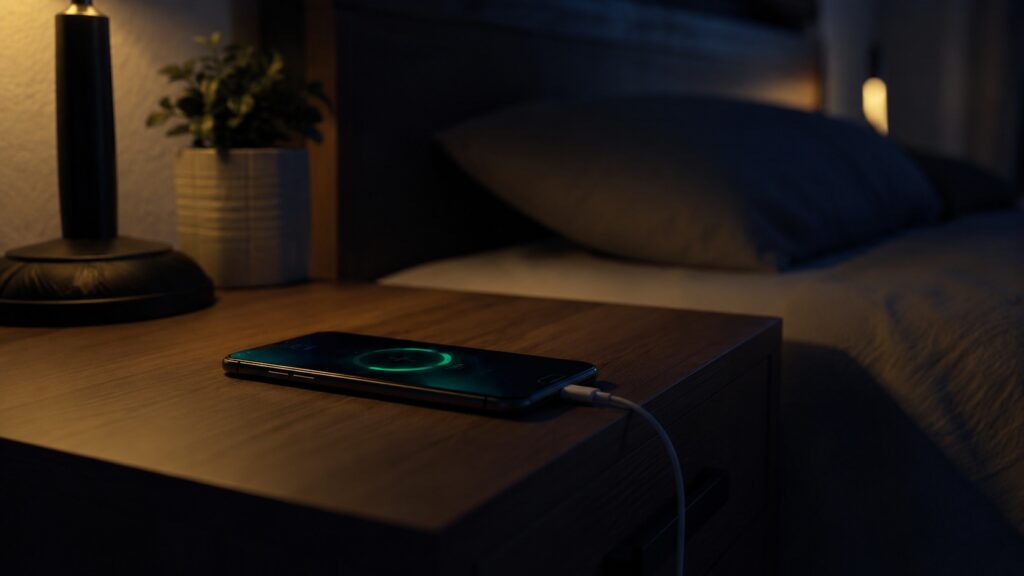
You can charge your smartphone overnight if you know a few rules
Many of us are used to plugging our smartphones in before bed to wake up with a full battery. For years, there has been a popular myth that if you leave your phone charging all night, it can “overcharge,” lose capacity, or even catch fire. To figure out whether you should change your habits, you need to look inside modern devices and understand how they work.
How the Power Controller Works in a Smartphone
The first and most important rule of modern electronics is that a smartphone cannot “overcharge” and explode simply from being plugged in for a long time. This is handled by a built-in power controller — a tiny chip that manages the flow of energy. When you first connect the cable, current flows quickly, but as the charge approaches the coveted 100%, the speed is artificially reduced.
Once the battery is fully replenished, the controller blocks the flow of current. The phone stops accepting energy from the cable and starts operating as if it were simply unplugged. Therefore, prolonged smartphone charging by itself cannot instantly kill your gadget.
What Causes Smartphone Battery Wear
Despite smart controllers, charging your smartphone overnight cannot be called ideal. The battery inevitably ages over time, and it feels worst in a state of maximum voltage — that is, at full charge. When a phone lies connected to the power supply for several hours, its charge can naturally drop to 99%. The controller immediately notices this and tops up the energy again.
These invisible battery top-ups increase smartphone battery wear in the long run. One or two times won’t change anything, but if the gadget spends every night at the 100% mark for years, the lithium-ion battery is subjected to significant stress. As a result, the nominal capacity decreases faster — first to 90%, then to 80% — and the phone starts dying by lunchtime.
Why Smartphone Overheating During Charging Is Dangerous
The biggest threat to your device lies not in the charge percentage but in temperature. For a battery, high temperature is far more destructive than the mere fact of being plugged in for a long time. When a phone charges, it inevitably generates heat.
If the device is lying on a cool nightstand, the heat dissipates freely. But if it’s hidden under a pillow, buried under a blanket, or in a very thick case, the body has nowhere to release the heat. Manufacturers note that using devices at temperatures above 35 degrees Celsius can irreversibly reduce the smartphone battery lifespan.
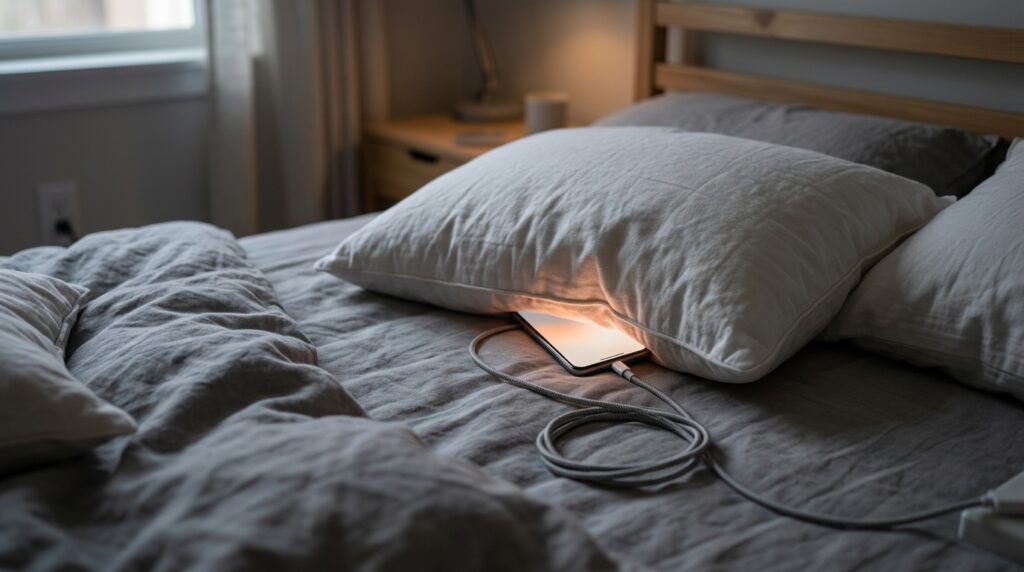
Leaving a charging gadget under a blanket or pillow is the worst idea for its battery
Why Cheap Smartphone Chargers Are Dangerous
A properly functioning gadget with an original power adapter almost never causes a fire. The real danger comes from low-quality accessories — for example, those bought cheaply at a market.
Using a damaged cable or cheap adapter significantly increases the risk of a short circuit. No-name chargers often lack surge protection systems. Safety officials regularly remind people that devices should be placed on hard, non-flammable surfaces, and cables should be kept in good condition.
Smartphone Battery Protection Technologies
To save users from having to wake up in the middle of the night and unplug the cord, manufacturers have developed software solutions. Current operating systems have built-in mechanisms that learn your habits and adjust the current flow to your lifestyle.
For example, smart smartphone charging delays filling the battery above 80% until the morning. This means your phone spends most of the night in a state that is safe for the battery, and only about an hour before you usually pick it up, the system gives the command to top up the remaining percentage.
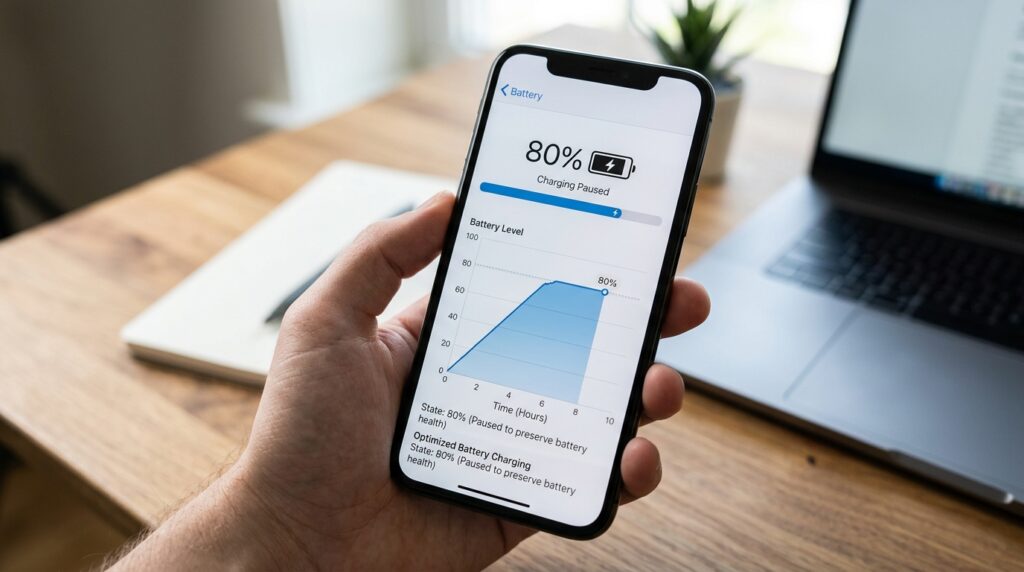
Smart charging allows the phone to gain the last 20% right before you wake up
How to Properly Charge Your Smartphone Overnight
Following basic safe charging rules will help preserve your battery health for a couple of extra years without sacrificing convenience. Don’t subject your device to extreme conditions.
Here’s how to charge your smartphone overnight:
- Leave the device only on hard, open surfaces: a desk, nightstand, or shelf;
- Remove thick protective cases if you notice significant heating on the back panel;
- Enable “Optimized Charging” in settings or set a charge limit at 85%;
- Use only original cables or certified alternatives from well-known brands;
- Avoid direct sunlight hitting the screen in the morning and don’t place the gadget near radiators.
You can plug your phone in overnight if you do it wisely. Modern technologies take care of most safety concerns. The main thing you need to do is ensure good heat dissipation, use quality accessories, and trust the built-in battery protection features.