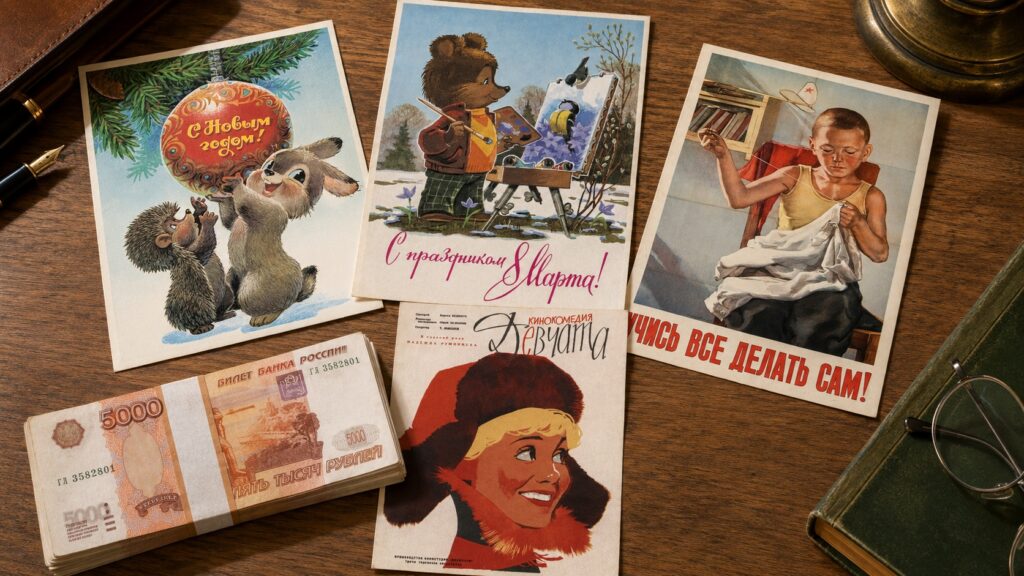
Postcards and posters from the USSR era can be worth a lot of money
Many of us keep boxes of old paper clutter in our closets, not suspecting that some of those scraps of paper have real value. It turns out that selling items from the 90s can be quite profitable if you understand exactly which artifacts collectors are hunting for. In the world of collecting, there’s a special category called ephemera. These are temporary printed materials that were never intended to be kept: flyers, programs, invitations, and menus. If you’re wondering what to sell to collectors, it’s worth going through your archives.
Which USSR Postcards Can You Sell to Collectors
The most straightforward option to start with is author-designed greeting cards from the late USSR and early Russia (1990–1992). Mass-produced pictures with flowers are worth pennies, but if you want to sell old postcards profitably, look for works by well-known artists. During this period, Vladimir Zarubin and Lidiya Manilova were still creating.
On online auctions, listing prices for some rare works by Vladimir Zarubin can reach thousands of rubles. Specimens in perfect condition — without folds, stains, or postal inscriptions — are especially valued.
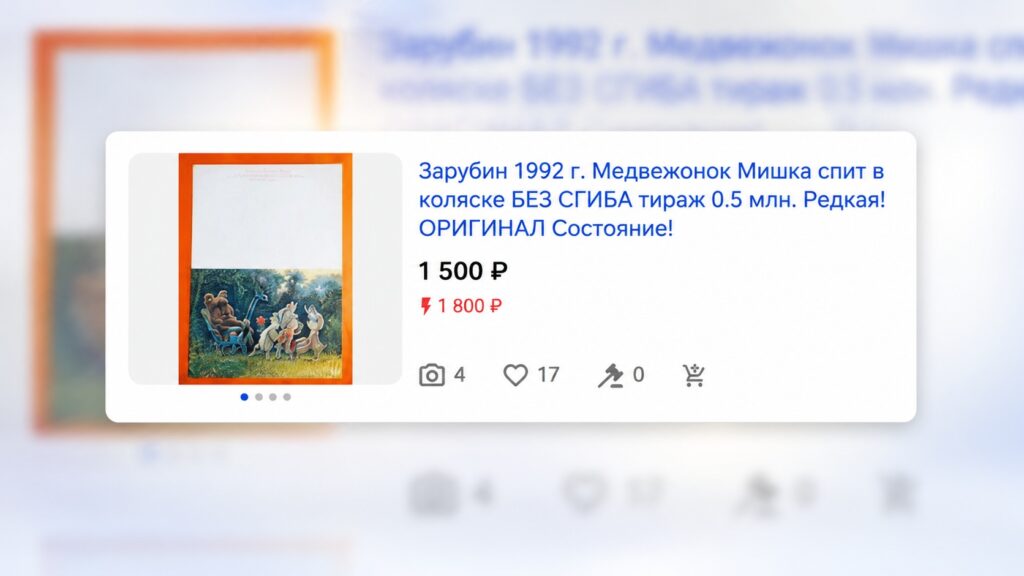
Listing for a rare Zarubin postcard on meshok.net
In addition to author works, collectors are interested in local history and business from those years:
- Views of small and industrial cities, closed enterprises, and vanished sanatoriums;
- Early advertising for banks, pager companies, computer clubs, and video salons;
- Promo cards related to Russian rock, early pop, or Sergei Bodrov;
- Postal cards with rare postmarks, transitional-period stamps, or from closed military towns.
Which Concert Tickets from the USSR Are Worth a Lot
If you already know the 5 signs of a rare and expensive book, a similar principle applies to tickets — cult status is what matters. The real gold mine is ticket stubs from concerts of legendary rock bands. Performances by “Kino” in 1990, early concerts by Nirvana, Metallica, “Grazhdanskaya Oborona,” or “Korol i Shut” have a huge fan base.
The story gets even more interesting with major festivals. For example, the legendary “Monsters of Rock” festival in Tushino in 1991 was free. That’s why regular tickets for it practically don’t exist, but passes, badges, and press materials from this event can be worth serious money.
Don’t write off ordinary public transport either. While single-ride passes from major cities are worth tens of rubles, complete monthly series of transit passes, the first magnetic metro tickets, and transitional money from 1991–1998 can certainly interest specialized collectors.
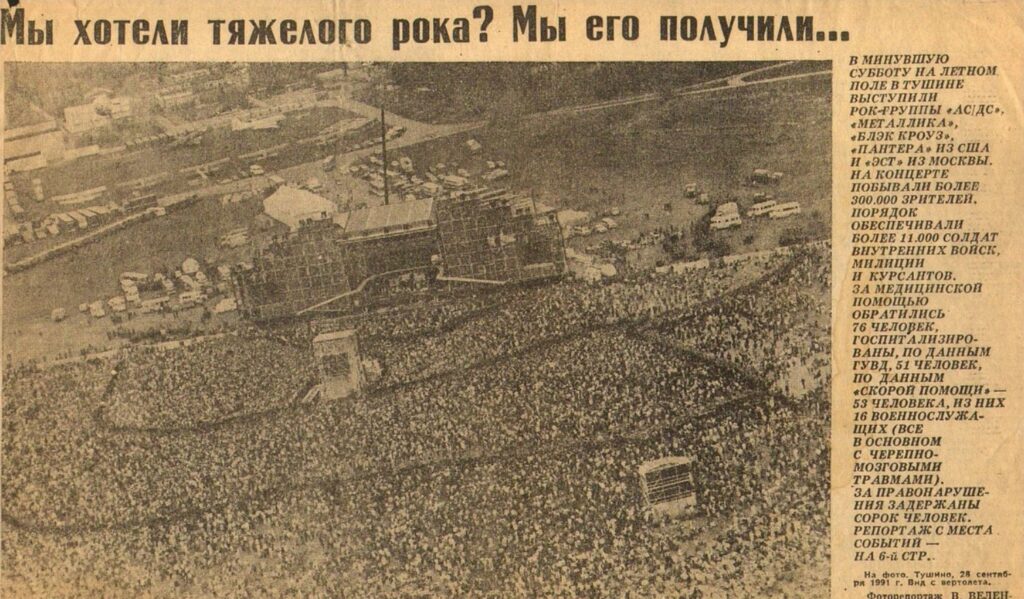
Old article about the Monsters of Rock festival in Tushino
Can You Sell Old Posters and Playbills
Original posters are one of the most expensive types of paper memorabilia. On the Western market, selling USSR posters and early Russian ones can fetch hundreds of dollars if it’s an original pre-concert poster for a famous band. It’s important that it be a genuine typographic print from that era, not a modern reprint from the internet.

You can sell original posters featuring Viktor Tsoi and other musicians for good money online
Beyond rock, demand for club culture is rapidly growing today. In the 90s, techno parties and the first raves were just emerging. Flyers were printed in small runs and immediately thrown away. Today, nightclub and disco posters are of interest to design collectors and electronic music researchers.
What else is sought after on the poster market:
- Original movie posters for cult films (Tarantino, Lynch, Balabanov, “The Matrix”);
- Political and social posters from the era of perestroika, elections, and privatization;
- Advertising from the “new Russia” with strange slogans, currency prices, and fax numbers.
How to Determine the Rarity of Old Postcards and Posters
Before thinking about what to sell on Avito or specialized auctions, you need to soberly evaluate your finds. Mass-produced March 8th postcards or torn posters for unknown events are of no interest to anyone.
To understand whether you have a potential hit in your hands, check your find against seven key indicators:
- An exact date and venue of the event are indicated;
- A cult name of an artist, director, or brand is present;
- It’s a genuine original from its time period;
- Small print run or narrow local ties;
- Good condition (no tape, pinholes, or sun fading);
- Presence of an autograph or verified provenance (e.g., a ticket plus a photo from the concert);
- The item has an active fan base.
If you’ve decided to sell old tickets or posters, prepare them properly for listing. Experts advise against rolling large sheets into a tight tube, because old paper can crack.
Photograph each item separately, showing the reverse side, defects, year, and postmarks. And most importantly, to sell old items successfully, write maximally specific titles. Instead of a vague “old piece of paper,” specify: “DDT Ticket Kazan 1996 Original” or “Zarubin Postcard 1991 Unused.” This will immediately attract the right nostalgia enthusiasts to you.