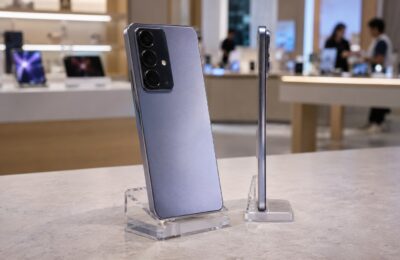
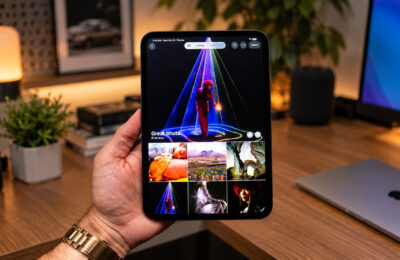
The new iPad mini, powered by Apple’s A20 Pro chip, is the biggest redesign of Apple’s small tablet in years. In a hands-on review, the source author says it gains an 8.5-inch OLED display, IP67 water resistance and a much thinner, lighter body. The weak points are a refresh rate fixed at 60Hz, a smaller battery and a starting price that has risen to $699. The author’s verdict is that owners of an A15-based iPad mini or older will notice a large upgrade, while owners of the A17 Pro model can reasonably wait.
What you need to know
- The new iPad mini weighs 255 g in its Wi-Fi version, down from 293 g, and is 5.4 mm thick, down from 6.3 mm.
- Its 8.5-inch OLED display reaches 600 nits in SDR and up to 1,200 nits peak for HDR, but the refresh rate stays at 60Hz with no ProMotion.
- The source describes it as the first iPad with official water resistance: IP67, rated for up to 30 minutes in fresh water at a depth of up to one metre.
- Prices start at $699, or $849 for the cellular version. Pre-orders are open, and the source says sales begin on November 6.
For years, iPad mini updates followed a familiar pattern: a new chip with little else changed. The source author argues that Apple has now reworked the tablet more thoroughly than in several previous generations combined. However, the author says the one thing buyers wanted most still has not arrived.
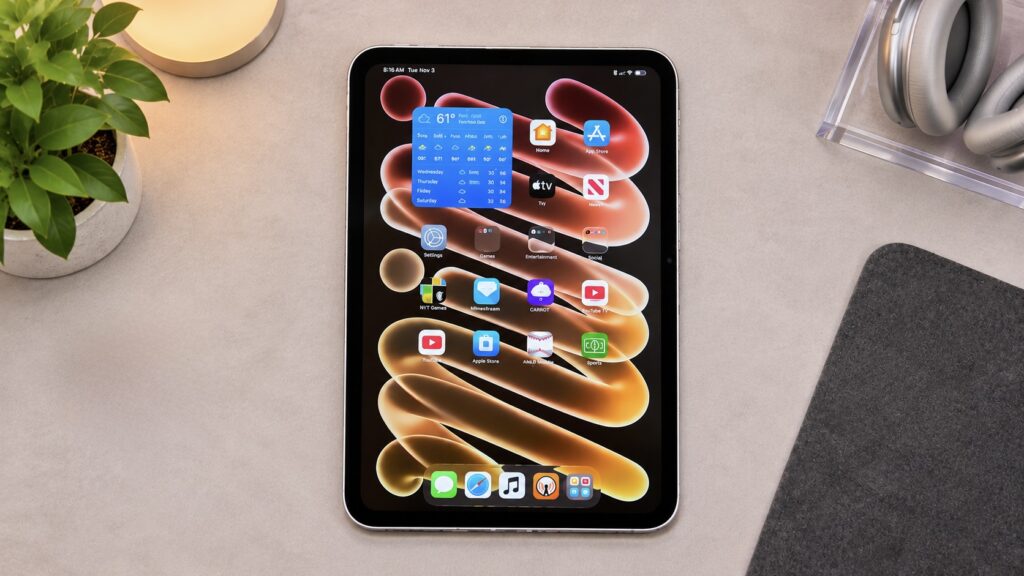
The new iPad mini with an OLED display on a table next to a flower, a lamp and headphones
In the hand, it feels closer to an iPad Pro than an Air
The source author says weight is the first thing you notice. The previous A17 Pro iPad mini weighed 293 g. The new model weighs 255 g, or 263 g for the cellular version. For a device this size, a difference of almost 40 g is significant, and the author describes the tablet as comfortable to hold in one hand, whether on public transport or lying on a sofa. That puts it at roughly the same weight as an unfolded iPhone Duo, which the source lists at 254 g.
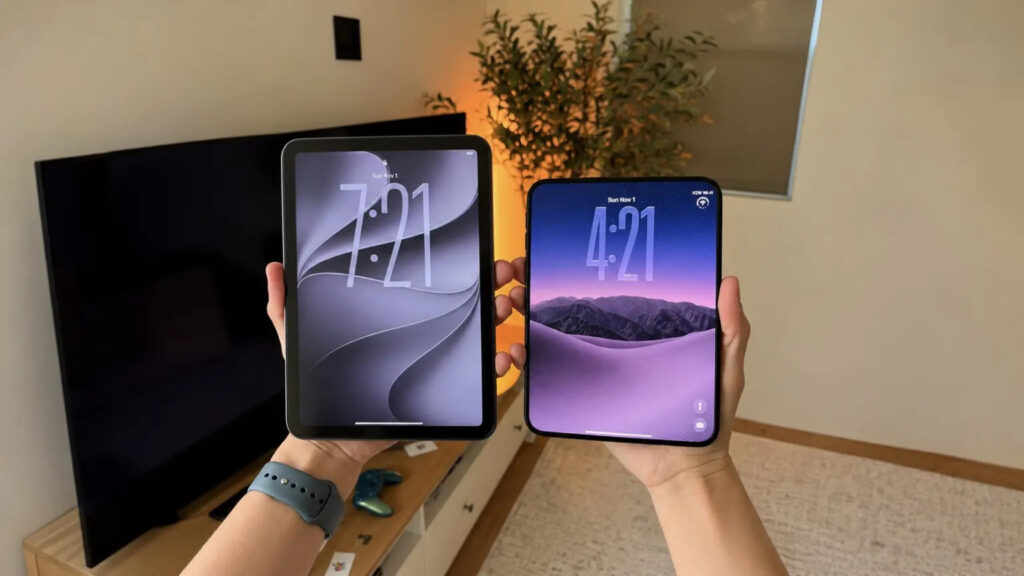
The new iPad mini and an unfolded iPhone Duo held in hand, both showing the lock screen
The change in thickness is even more striking. The body has gone from 6.3 mm to 5.4 mm. That makes the new mini thinner than the iPad Air at 6.1 mm and only slightly thicker than the 11-inch iPad Pro at 5.3 mm. The bezels are 24% narrower, and the tablet itself is about 2.2 mm narrower. Meanwhile, the screen has grown from 8.3 to 8.5 inches. According to the author, it feels like a scaled-down Pro rather than the entry point of the lineup, and it is no longer easy to mistake for an iPad Air or the base iPad.
Key differences from the previous generation
| Specification | iPad mini (A17 Pro) | iPad mini (A20 Pro) |
|---|---|---|
| Display | 8.3-inch LCD | 8.5-inch OLED |
| SDR brightness | 500 nits | 600 nits |
| Peak HDR brightness | None | 1,200 nits |
| Thickness | 6.3 mm | 5.4 mm |
| Weight (Wi-Fi) | 293 g | 255 g |
| Battery | 5,034 mAh | 4,900 mAh |
| Water resistance | None | IP67 |
| US price | $599 (since June) | From $699 |
Nearly every specification moves in the right direction. The two exceptions are the battery, which is smaller, and the price, which is higher.
The display is better in every way except smoothness
The source author calls the move from LCD to OLED the most important change. According to the source, this is the first iPad outside the Pro line to use this type of display. Blacks are truly black and colours are more saturated. Standard brightness rises to 600 nits, and HDR video can reach up to 1,200 nits, which the author says is more noticeable in films than any spec sheet suggests. Apple also says the pixels switch faster, so scrolling and animations look cleaner. The author reports that the difference from the old LCD is obvious right away.
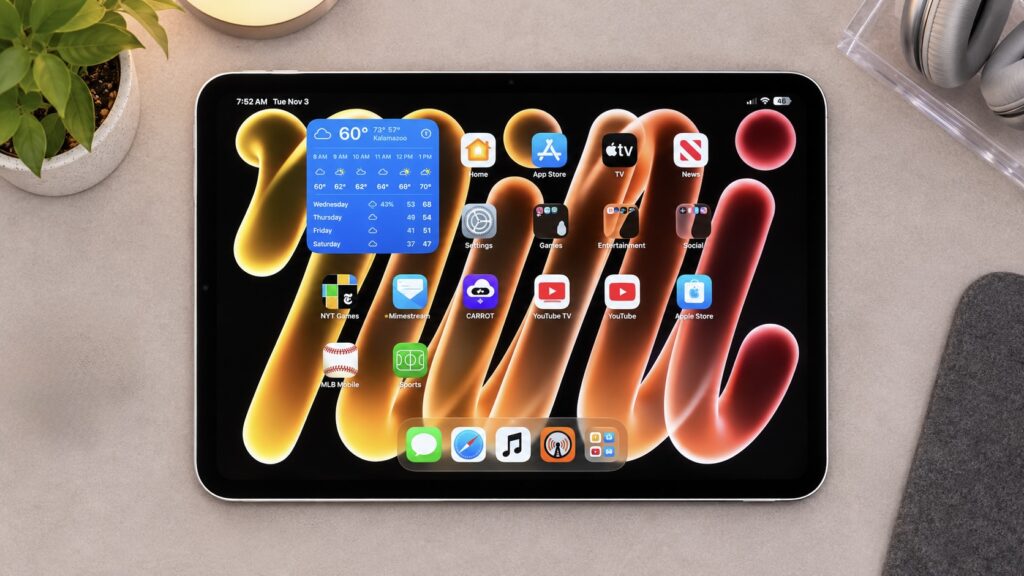
iPad mini in landscape orientation with a bright wallpaper and a weather widget on its OLED display
The disappointment, in the author’s view, is the fixed 60Hz refresh rate. There is no ProMotion and no 120Hz mode. The author says this is noticeable on every scroll for anyone used to a modern iPhone. According to the source, Apple has explained its reasoning, but the author does not find that explanation sufficient and calls a $699 tablet with a 60Hz screen in 2026 an odd choice.
The other display option is nano-texture matte glass. It costs an extra $100 and is available only on the 256 GB and 512 GB models. For a tablet that is often carried around and used outdoors, the author considers it a sensible choice because reflections almost disappear. Colours look slightly less vivid than on the glossy OLED panel, but the author says this matters little for reading and note-taking.
Sound comes from the screen, and the tablet is now water-resistant
The speakers use an unusual design that Apple calls Acoustic Display. The screen vibrates to produce low and mid frequencies, while small tweeters between the glass and the aluminium body handle high frequencies. The author describes the sound as decent for such a thin device. It is good enough for YouTube videos or podcasts without headphones, but for films, headphones are better, or an external speaker.
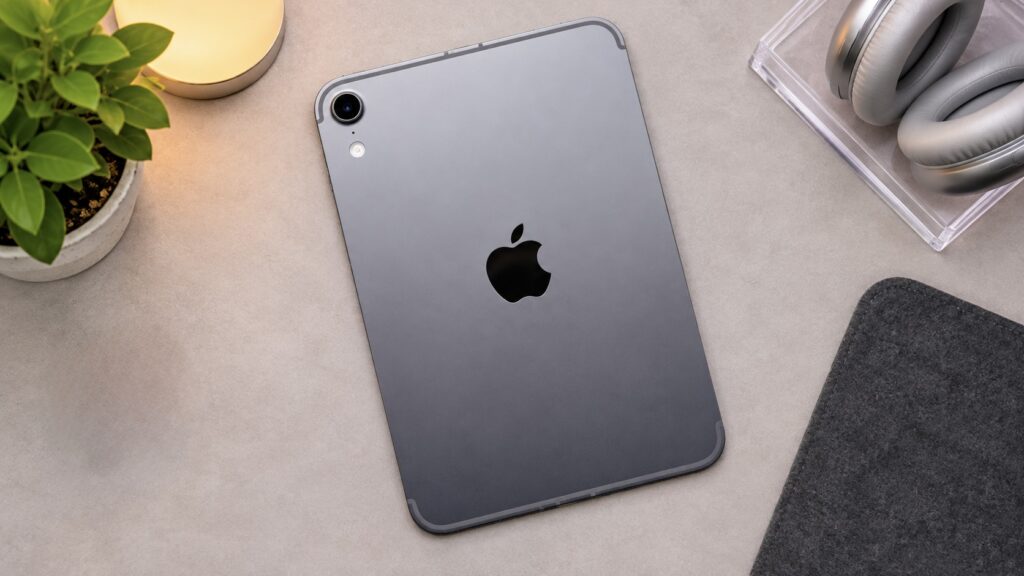
The aluminium back of the new iPad mini with its camera and flash
The author was more impressed by the IP67 rating. According to the source, this is the first iPad with official water resistance. It is rated to survive immersion in fresh water at a depth of up to one metre for 30 minutes. The author argues that this changes how the tablet can be used: reading in the bath, leaving it at the edge of a pool or using it in the rain. For a device many people use as an e-reader, the author sees this as exactly what was missing.
Full iPadOS features in a book-sized tablet
Apple says the A20 Pro is 60% faster than the A17 Pro in multithreaded tasks, with 2.7 times faster graphics and up to 4.5 times faster AI performance. These are Apple’s figures, not independent measurements. Configurations also differ. The 128 GB and 256 GB models have a five-core CPU. The 512 GB model has a six-core CPU and two 16-core Neural Engines. All versions have a seven-core GPU.
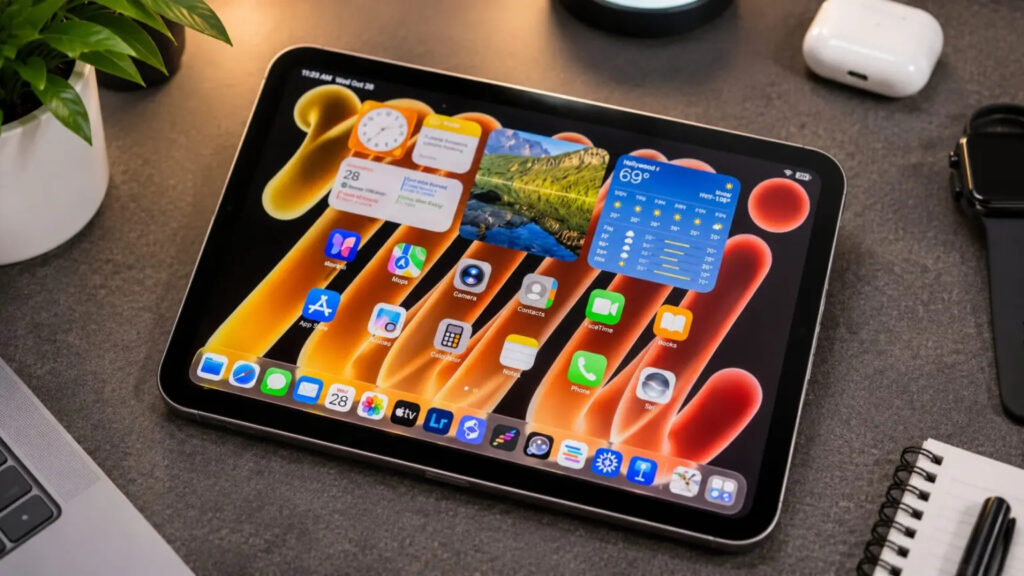
iPad mini on a table showing widgets and a long iPadOS Dock full of apps
According to the author, the more important point is that the small screen runs full iPadOS. That includes windows, the menu bar, extended-mode output to an external monitor and desktop-class Safari. The author had previously seen these as features for larger iPads. Other additions include:
- Apple Pencil Pro support
- A front camera on the long edge for landscape video calls
- Wi-Fi 7 via the N1 chip
- A C2 modem in the cellular version, which is eSIM-only
Taken together, the author says, these features turn the small tablet into a genuine work tool. The new body is thinner and narrower than before, so the author notes that older cases will not fit.
What the extra $100 buys
Pricing is the main drawback. According to the source, the iPad mini cost $499 at the start of 2026. In June, amid broader price increases, Apple raised it to $599. The new generation now starts at $699. The cellular version costs $849, and the matte display adds another $100.
Despite the higher price, the base model still has only 128 GB of storage and no Face ID. Battery capacity has also fallen, from 5,034 mAh to 4,900 mAh. Apple still claims up to 10 hours of battery life, but the author notes that this will need to be verified in real-world use.
The available colours have also been reduced to two, listed in the source as “dark night” and “shining star.” Pre-orders are already open, and the source says the tablet goes on sale on November 6.
Who should upgrade
The author concludes that this is not the iPad mini Pro they hoped for, even though it is a major upgrade for fans of the format. The body, display and water resistance feel Pro-level, but the 60Hz refresh rate and the price hold it back.
- Owners of an iPad mini with an A15 chip or older who read, draw or watch video on the go will, in the author’s view, see a huge upgrade. The OLED screen and lower weight are noticeable from day one.
- Owners of the A17 Pro model are advised not to rush. There are real differences, but the author finds it hard to justify paying more while the refresh rate stays at 60Hz.
The author suspects Apple is saving ProMotion for a future generation. This is speculation, and the source notes that nothing has been officially announced.